
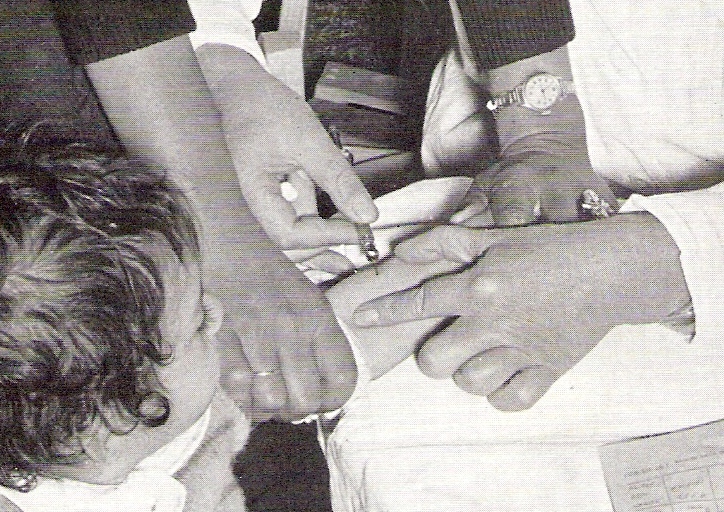
Look at the historical photograph beside this article: a child receiving polio vaccination in Israel in 1958. Behind such ordinary scenes lay one of medicine’s most consequential changes—the ability to prevent some devastating infections before they struck. To understand health in 2026, you need neither blind faith in institutions nor reflexive suspicion of them. You need a way to distinguish mechanism, evidence, risk and marketing.
Vaccines and antibiotics solve different problems
A vaccine prepares the immune system to recognize a particular threat. Different vaccines use different technologies: weakened or inactivated organisms, proteins or components, genetic instructions, or other approaches. Protection is not identical for every disease or person. Some vaccines greatly reduce infection; others are especially valuable because they reduce severe illness, complications or transmission. Schedules and recommendations vary with age, pregnancy, medical conditions, exposure and location.
Antibiotics work against susceptible bacteria, not viruses. They are useful for bacterial infections when prescribed appropriately. They do not cure the common cold or influenza. Misuse and overuse help select resistant bacteria, making later infections harder to treat. When a clinician recommends an antibiotic, ask what infection is suspected, what benefit is expected, and how to take it correctly; do not self-prescribe or share leftovers.
How to read a frightening medical headline
- Ask what was actually measured. Is the claim about infection, hospital admission, death, a laboratory marker or a survey answer? Those are not interchangeable.
- Distinguish absolute from relative risk. A reported 50% reduction sounds dramatic; its practical meaning differs if a risk falls from 2 in 100 to 1 in 100 versus 2 in 10,000 to 1 in 10,000.
- Look at the comparison group. Was it a randomized trial, carefully controlled observational study, case report or anecdote? Each can be useful, but they support different levels of confidence.
- Check benefits and harms together. Real medicines and vaccines can have side effects; questions about safety deserve serious evidence rather than slogans. Also ask what risk comes from leaving the disease untreated or unprevented.
- Check who published it and whether independent groups agree. A preprint, press release and peer-reviewed systematic review have different evidentiary weight. Funding and conflicts matter, but a conflict alone does not prove a result false.
A personal health decision checklist
Know which vaccines are currently recommended for you by a trusted national health authority or clinician; keep a record of medications and allergies; ask for explanations you understand; seek urgent care when symptoms indicate a serious emergency. For ongoing symptoms or complex decisions, use qualified medical advice instead of letting an algorithm diagnose you. If evidence changes, responsible guidance may change too. That is often a sign of learning, not proof that no one knows anything.
The aim of scientific literacy is not to win arguments. It is to make better choices with imperfect information while remaining open to correction.
Sources and further reading
- WHO: What is vaccination?
- CDC: Explaining how vaccines work
- WHO Europe: Antimicrobial resistance and antibiotics
Featured historical photograph: A child receiving polio vaccination in Israel in 1958; historical archival photograph. Image source and rights are identified in the media caption. The photograph illustrates the historical context, not the events of 2026.
Explore more essential knowledge through Start Here. If this work helps you see the world more clearly, subscribe to DEPTH for free or support independent writing.
Discover more from The Confessor
Subscribe to get the latest posts sent to your email.
