
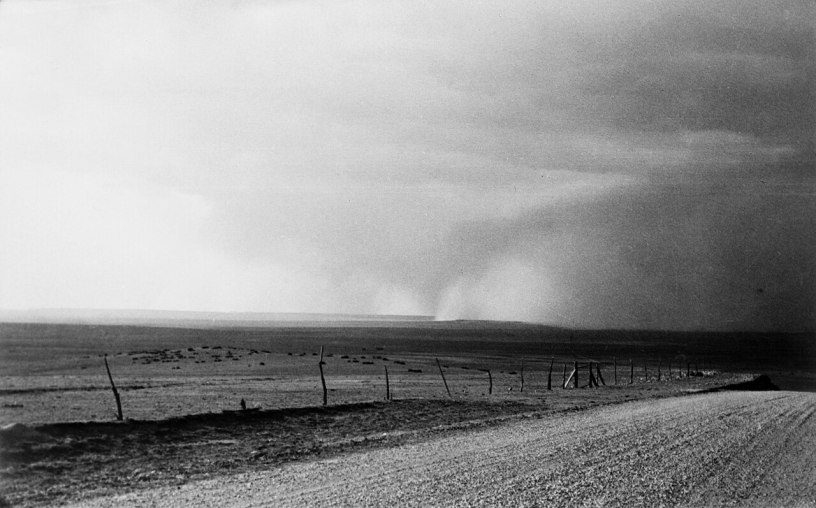
The photograph accompanying this article shows a dust storm approaching Mills, New Mexico, in 1935. The Dust Bowl was a catastrophe shaped by drought, vulnerable soils and destructive land-use practices. It should not be presented as proof that today’s greenhouse-gas-driven climate change caused that storm. It offers a different, vital historical lesson: environmental hazards become disasters through the way human societies manage land, water, poverty and risk.
In 2026, the scientific foundation is clear: human activities, chiefly greenhouse-gas emissions, have warmed the planet. The Intergovernmental Panel on Climate Change (IPCC) has found that this warming is already affecting many weather extremes. What that means for your street, farm, home and insurance policy is a more specific question—and one you can act on.
Five distinctions everyone should understand
- Weather is not climate. Today’s snowfall or heat does not, by itself, prove or disprove a long-term global trend. Climate is assessed across many observations, places and years.
- Global warming changes risks, not just averages. Hot extremes have grown more frequent and intense across most land areas; heavy rainfall has intensified in many regions. Effects on drought and storms vary by place and phenomenon.
- Attribution is not a courtroom verdict on one storm. Researchers compare how likely or intense an event is in today’s climate against a hypothetical world without human-caused warming. The result is generally a change in probability or magnitude, not a claim that nature could never have produced a similar event.
- Exposure and vulnerability matter. A floodplain, badly maintained building, elderly resident without cooling, or household with no savings may experience the same weather very differently.
- Mitigation and adaptation do different jobs. Reducing emissions limits future warming; adapting to existing hazards reduces damage already becoming harder to avoid. Both matter.
A practical climate-risk audit
Start locally. Find out whether your home sits in a flood-prone area, how hot the rooms become in a heatwave, and what happens if electricity or water fails. Identify reliable local weather alerts. Ask whether your insurance covers the risks you actually face. Know the safest route out of your building, and check on people whose health or mobility makes extreme heat especially dangerous.
At a larger scale, assess the local authority’s plans for drainage, shade, public transport, emergency communication and water supply. Individual recycling alone cannot replace effective infrastructure and public policy. Collective planning often determines who can survive an extreme event with dignity.
How to reject both panic and complacency
Be wary of a chart with no baseline, a prediction presented without a date, or a photograph used as proof of a completely different event. But do not confuse uncertainty about one location or one storm with uncertainty about the overall warming trend. The sensible question is not whether everything is doomed or nothing is happening. It is: Which risks are growing, who is most exposed, and which actions reduce harm?
A livable future requires evidence, cooperation, adaptation and emissions cuts—not the comforting fantasy that one household choice or one technological invention will solve everything.
Sources and further reading
- IPCC: AR6 synthesis report, Summary for Policymakers
- IPCC: Weather and climate extremes and attribution
- European Commission: Preparedness Union strategy
Featured historical photograph: Dorothea Lange’s 1935 photograph of a dust storm near Mills, New Mexico, during the Dust Bowl.. Image source and rights are detailed in its media caption. Historical photographs illustrate the background; they are not pictures of 2026.
Explore other essential subjects at Start Here. If this writing helps, subscribe for free or support independent writing.
Discover more from The Confessor
Subscribe to get the latest posts sent to your email.
