
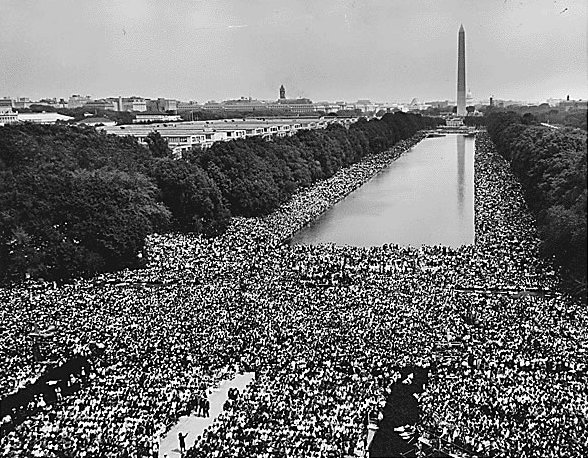
In August 1963, an enormous crowd assembled in Washington to demand jobs and freedom. The photograph on this page captures the March on Washington. Those people were not asking for a motivational slogan. They were insisting that the promises of law and citizenship should apply to human beings who had long been denied them.
In 2026, it is tempting to treat politics as a contest of personalities. But the more important question is what limits the power of whoever wins. Democracy without safeguards can produce leaders who escape accountability. Law without equal rights can formalize injustice.
Six safeguards you should recognize
- Equal protection. Rules must not be applied differently to people merely because of identity, status or political loyalty. Formal equality is not enough if people have no realistic way to enforce it.
- Due process. Government power over liberty, property or punishment should be constrained by fair procedures, notice of allegations, opportunities to challenge decisions and impartial adjudication.
- Independent courts. Judges must be able to decide cases according to law and evidence rather than intimidation or orders from the ruling party.
- Free expression and independent media. The right to criticize government and investigate power makes corruption and abuse harder to hide. These freedoms are not absolute in every legal system; restrictions must themselves satisfy applicable law and human-rights standards.
- Checks on the executive. Elected legislatures, public records, watchdogs, auditors and independent institutions should have meaningful power, not merely impressive titles.
- Participation beyond voting. Civil society, public-interest journalism, unions, peaceful assembly, local advocacy and access to information allow people to influence decisions between elections.
What you can do before a crisis
Find the constitution or basic law of the country where you live. Learn which institutions handle discrimination complaints, access-to-information requests, labour disputes and challenges to official decisions. Know whether deadlines apply, and how to document a decision, keep copies and ask for written reasons. If you face a serious legal problem, obtain qualified local advice: rights, procedures and time limits differ dramatically across jurisdictions.
When a politician claims that national survival requires silencing critics or setting aside courts, ask three questions: Who decides that there is an emergency? Who can challenge that decision? When, and by whose authority, do exceptional powers end? Those questions are not partisan. They are basic tests of accountable government.
The difference between legal and just
Some deeply unjust policies have been formally lawful. The history of civil-rights movements shows why the rule of law must also be measured against human rights, equality and actual access to justice. Citizens do not surrender moral judgment when they obey an administrative form. But neither can a society function if every official exercises power without rules.
The purpose of knowing your rights is not to win arguments online. It is to recognize when a neighbour, a stranger or you yourself has become vulnerable to unaccountable power—and to know which avenues can protect them.
Sources and further reading
- United Nations: What is the rule of law?
- United Nations: Access to justice
- United Nations: Rule of law and human rights
Featured historical photograph: A crowd at the 1963 March on Washington for Jobs and Freedom, photographed by the U.S. Information Agency.. Image source and rights are detailed in its media caption. Historical photographs illustrate the background; they are not pictures of 2026.
Explore other essential subjects at Start Here. If this writing helps, subscribe for free or support independent writing.
Discover more from The Confessor
Subscribe to get the latest posts sent to your email.
