
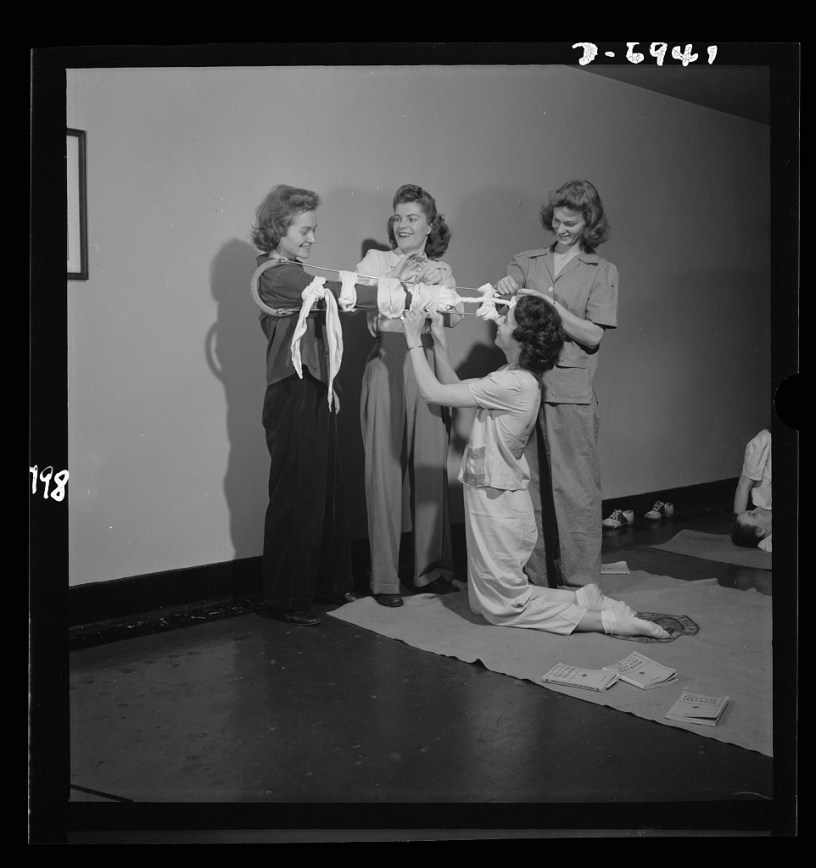
In a 1942 first-aid class, student nurses learned to respond when ordinary systems could no longer guarantee safety. The historical photograph here shows them practicing a splint. The world of 2026 has different hazards—floods, heatwaves, power failures, cyber incidents and displacement—but the basic lesson is the same: the first minutes are easier when you prepared before the emergency.
The European Commission’s 2025 preparedness strategy explicitly called for guidance that would help the population sustain itself for at least 72 hours. This is not an order to panic or to buy expensive survival equipment. It is a reminder that you may need light, water, communication and medication before regular services are restored.
Build a practical 72-hour household plan
- Water and food: store enough drinking water and no-cook food for your household’s actual needs, including infants and pets. Quantities vary with heat, health and activity.
- Medication and medical information: keep accessible essential medicines, prescription information, allergies and a small first-aid kit. Follow storage and expiry instructions.
- Light, power and communication: have a charged power bank, flashlight, batteries, a battery or wind-up radio where useful, and a paper list of contacts.
- Documents and money: keep copies of key IDs and essential records in a secure, accessible form. A modest amount of cash can help if payment systems fail.
- Exits and meeting points: know two ways out of home when possible, the local warnings system, and where family members will meet if phones stop working.
- Personalize the kit: glasses, mobility aids, hygiene supplies, menstrual products, baby food, pet provisions and seasonal clothing matter more than flashy gadgets.
First aid: three things worth learning
Check, call, care. Ensure the scene is safe. If an adult collapses and does not respond, call emergency services promptly; in the European Union, 112 connects you with emergency assistance. If the person is not breathing normally or is only gasping, follow the dispatcher’s instructions and begin CPR. The 2025 adult basic life-support guidance emphasizes immediate recognition, emergency calling and early compressions. An automated external defibrillator (AED), when available, gives spoken instructions; ask someone to fetch it.
For an unresponsive adult with abnormal breathing, press firmly in the centre of the chest at about 100–120 compressions per minute, allowing the chest to rise fully after each push. Use an AED as soon as possible. This is a concise refresher, not a substitute for hands-on training; procedures differ for children, infants, drowning and other situations. If someone is unresponsive but breathing normally, do not start chest compressions. Stay with them and follow dispatcher or first-aid guidance.
Preparedness is social, not just a cupboard
Know who in your building might need extra assistance and whom you can ask for help. Agree a simple check-in plan with neighbours or relatives. Revisit your supplies once or twice a year, replacing expired items and updating contacts. No individual can remove every hazard, but a prepared household and an attentive neighbourhood are far less helpless.
Sources and further reading
- European Commission: Preparedness Union strategy
- 2025 Adult Basic Life Support guidelines
- British Red Cross: First aid for an unresponsive adult
Featured historical photograph: Student nurses practicing first aid in a 1942 Red Cross training course, photographed by Fritz Henle. Image source and rights are identified in the media caption. The photograph illustrates the historical context, not the events of 2026.
Explore more essential knowledge through Start Here. If this work helps you see the world more clearly, subscribe to DEPTH for free or support independent writing.
Discover more from The Confessor
Subscribe to get the latest posts sent to your email.
