
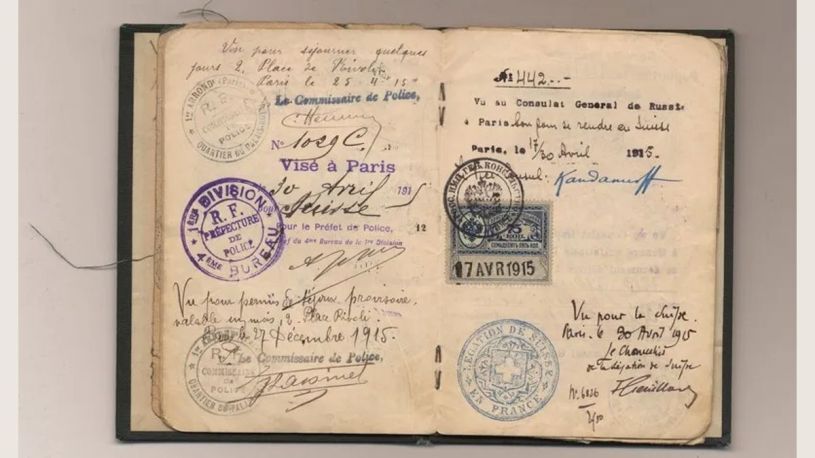
Before 1914, many Europeans crossed international borders with much less systematic document control than travellers face today. Passports existed long before the war, but the upheavals of 1914–18 helped turn identification, visas and official permission into routine features of international travel.
The world before mass passport controls
In the nineteenth century, European governments had periodically abolished or relaxed passport restrictions; practice varied by country and by the traveller’s status. Some people still carried passports, and colonial and racial hierarchies profoundly affected freedom of movement. There was never a universal age in which everyone crossed borders freely.
The First World War created a powerful new administrative incentive to identify people at borders. States feared enemy spies, military deserters, undocumented foreigners and political threats. They expanded requirements for documents and visas as wartime security measures.
An emergency that became normal
When peace returned, governments did not simply return to the earlier patchwork of relatively open travel. Photographs, consistent identifying details, standardized forms and visa procedures became more entrenched. The League of Nations convened a conference on passports and customs formalities in 1920, seeking some standardisation across countries.
States acquired something more consequential than a new booklet: an administrative system in which identity could be recorded, classified and checked before a person was allowed to move. It imposed burdens very differently on wealthy citizens, displaced people, refugees, colonial subjects and those whose state could not issue respected documents.
Why the historical shift matters
Passports became normal enough that it is easy to confuse their contemporary form with a timeless necessity. Border control existed before the First World War; the war did not invent nationalism or the state. But emergencies can change the administrative baseline, particularly when officials gain instruments they have little incentive to surrender.
A passport offers protection and proof of citizenship to some travellers. To others, its absence can close almost every door. The same state power that enables governments to know whom they admit can leave people stateless, stranded or excluded. The history of the document reveals how freedom of movement became conditional upon paperwork.
Sources and historical visual
US National Museum of American Diplomacy, a 1915 passport; Australian Department of Foreign Affairs, history of the passport; League of Nations 1920 passport conference overview. Featured image: authentic historical photograph, object or illustration, framed for the site’s homepage.
Support DEPTH
Support evidence-based historical investigation and accessible long-form writing.

Boost us
If you like our content help us to create more.
$5.00
Discover more from The Confessor
Subscribe to get the latest posts sent to your email.
