
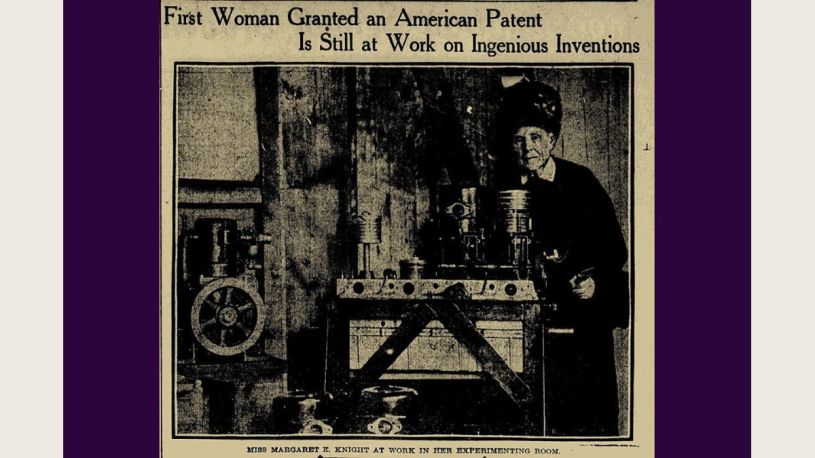
In the nineteenth century, paper bags were difficult to manufacture with the flat bottoms that make them useful for carrying groceries. Margaret E. Knight devised machinery to cut, fold and glue the paper into the familiar shape. Her idea was a practical revolution in an ordinary object.
While developing the machine, she encountered the danger faced by inventors without powerful commercial backers: a man named Charles Annan attempted to patent a similar mechanism after gaining knowledge of her work. Knight fought for recognition of her design.
Evidence about her mechanical development and work helped establish her priority in the patent dispute. She went on to obtain numerous patents. Popular versions quote a male opponent supposedly declaring that a woman could not understand machinery; the documentary record should take precedence over any polished quotation.
The larger significance is easy to miss. Invention is not only the creation of spectacular machines. It can consist of making an everyday task simpler, cheaper and more reliable for millions of people.
Knight’s story also reveals a legal truth: having an idea is not necessarily enough. The ability to document an invention and defend it against better-funded challengers can determine who receives the credit and the financial reward.
Sources and illustration
Smithsonian Lemelson Center, Margaret Knight. This post uses an authentic period photograph, engraving, archival illustration or related primary document for its featured image—not an AI reconstruction. The image is framed for wide homepage display.
Support DEPTH
If this kind of historically grounded writing is useful to you, support independent publishing.

Boost us
If you like our content help us to create more.
$5.00
Discover more from The Confessor
Subscribe to get the latest posts sent to your email.
