
You may be completely sincere and completely wrong. Intelligence does not immunize anyone against this. Neither does education, compassion, political sophistication or years spent studying a subject.
We do not perceive the world directly. We perceive fragments, interpreted through memory, language, expectation, fear and desire. The task of thinking clearly is to build methods that can correct what your mind gets wrong. Truth is not whatever your tribe believes, and skepticism is not the refusal to believe anything.
Begin with the kind of claim being made
A photograph may establish that a scene existed, but not necessarily when, where or why. A witness can tell us what they experienced, but may not know another person’s intention. A statistic describes a measured population under specific definitions; it does not automatically establish causation. A moral judgment tells us what someone values and may need ethical argument rather than a laboratory test.
Before deciding whether a claim is true, ask: is this a direct observation, a document, a measurement, an expert interpretation, a prediction or an accusation? These categories require different standards of evidence.
Learn the evidence hierarchy without worshipping it
A contemporaneous document may be stronger than a memory formed decades later. Multiple independent witnesses may be stronger than a single anonymous allegation. A large well-designed study may be stronger than a dramatic anecdote. But no form of evidence is magical: documents can be forged, studies can be flawed, and several reports can all repeat one original mistake.
Ask whether sources are independent. Ten websites quoting one interview are not ten corroborations. When an extraordinary detail goes viral, trace it to the earliest identifiable record and inspect the context.
Beware of the mechanisms that make false beliefs feel certain
Confirmation bias makes supporting evidence easier to welcome than conflicting evidence. Motivated reasoning makes a conclusion attractive because of what it means for your identity. Availability bias makes vivid stories loom larger than dull but representative data. Group pressure can make disagreement socially expensive.
These tendencies are human, not the property of one political faction. The remedy is not to declare yourself unbiased. It is to create friction between your first impression and your final belief.
Write down the strongest argument against your position. Look for an independent source you would normally distrust, then examine its actual evidence. Ask how confidently you would judge the same behavior if the people involved had exchanged identities.
Understand numbers before quoting them
A percentage without a denominator may mislead. A relative risk increase can sound enormous when the underlying absolute risk is small. A rising total may reflect population growth rather than a rising rate. A correlation can arise because one factor causes another, because both share a cause, or through coincidence.
A useful statistical question is: compared with what? Then ask how the sample was selected, what was measured, what timeframe applies and what uncertainty remains.
Separate uncertainty from helplessness
You do not have to know everything to act. You can be highly confident that something happened and uncertain about motive; confident about an injustice and uncertain about the most effective remedy. Different parts of one narrative can have different confidence levels.
Use language that matches the evidence: confirmed, strongly supported, plausible, disputed, unverified, contradicted. There is dignity in saying ‘I don’t know.’ There is also danger in using uncertainty as an excuse never to reach a conclusion when the evidence is overwhelming.
Protect your attention
Information is not the same as understanding. An endless feed supplies fresh emotional triggers faster than you can investigate them. You can become more agitated without becoming better informed.
Choose a handful of trustworthy primary sources and serious analysts. Set aside time to read entire documents, not merely screenshots. Follow stories beyond their first viral day. Revise an opinion when the record changes instead of treating revision as humiliation.
A practical test for any claim
What exactly is alleged? Who first said it? What original evidence exists? Has anyone independent checked it? What alternative explanations fit the facts? What important fact might I be missing? What would convince me this claim is mistaken?
You will still make errors. Everyone does. The distinction that matters is whether your habits make error easier to expose or easier to defend.
A mind worth trusting is not a mind that never changes. It is one that changes for reasons.
Sources and further reading
UNESCO, media and information literacy
UNESCO, Media and Information Literate Citizens
National Academies, Reproducibility and Replicability in Science
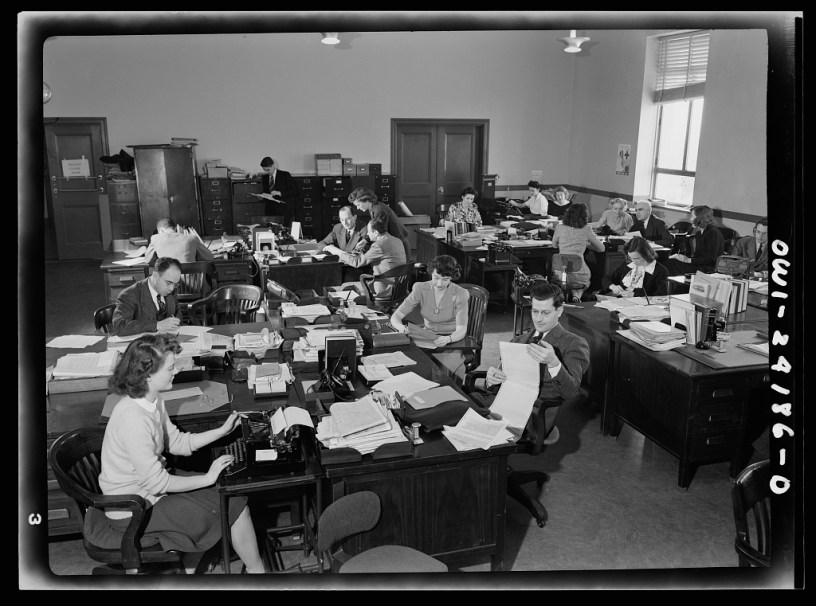
Featured photograph: Ann Rosener, research workers in Washington, DC, 1943, photographed for the US Office of War Information.
Support DEPTH
Independent, evidence-based writing takes time. Help keep these articles freely accessible.

Boost us
If you like our content help us to create more.
$5.00
Discover more from The Confessor
Subscribe to get the latest posts sent to your email.
