
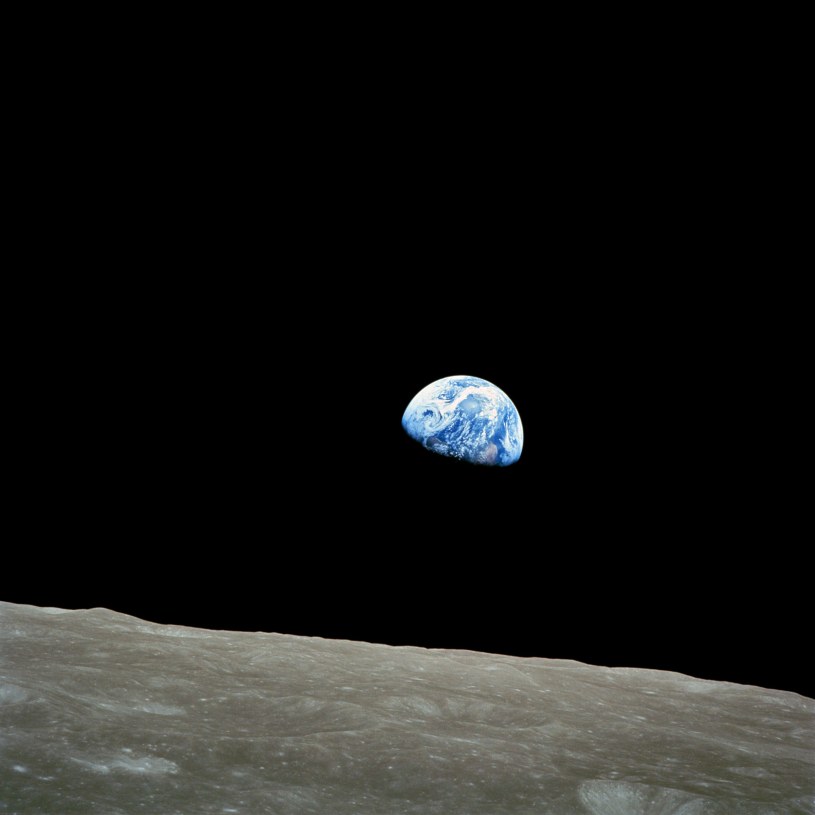
In December 1968, human beings photographed their home from the far side of the Moon. That blue world contained every empire, every language, every murdered child, every love story and every human achievement. None of it was visible from that distance.
To understand how humanity reached that moment, you need more than a parade of famous rulers. You need the history of energy, food, disease, trade, power, technology and ideas — and of the people whose names were never recorded.
Our species is ancient; civilization is recent
Evidence places the emergence of Homo sapiens in Africa roughly 300,000 years ago. For most of our species’ existence, people lived in communities sustained by hunting, gathering and other ways of obtaining wild food. They developed complex tools, language, relationships, cultural traditions and adaptations long before any known state or written archive.
Over many millennia humans spread across the world. Different populations confronted deserts, ice, tropical forests and coastlines, and developed diverse cultural responses. This is one human species, not a hierarchy of separate human kinds.
Farming transformed everything — without instantly improving everything
Beginning around 12,000 years ago, communities in several parts of the world domesticated plants and animals. Agricultural surpluses helped sustain larger settlements, specialized crafts, administrative systems and eventually states. They also made stored wealth and territorial control more consequential.
Agriculture could bring security and abundance, but it could also mean harder labor, new diseases, sharper hierarchies and greater vulnerability to crop failure. There was no single moment when humanity became ‘civilized.’ Societies changed through overlapping processes across different regions.
Writing, states and religions expanded human coordination
Writing enabled contracts, accounting, chronicles, laws and sacred literature. States organized irrigation, defense and taxation, while often monopolizing force and imposing class distinctions. Religions gave communities cosmologies, rituals, ethical systems and identities. They could inspire charity and resistance as well as justify exclusion and conquest.
The great ancient civilizations of Mesopotamia, Egypt, the Indus region, China, Mesoamerica and elsewhere were not chapters of one European story. They were centers of invention whose achievements grew through local experimentation and networks of exchange.
Empires connected the world through violence and commerce
Empires made it possible to move merchants, soldiers, ideas, pathogens and technologies across vast distances. They built roads and legal systems while extracting tribute, enslaving people and violently subjugating populations. Resistance mattered as much as conquest in shaping their limits.
The Silk Roads and Indian Ocean trade moved goods and knowledge long before modern globalization. African, Asian, American and European societies were never entirely isolated worlds, though connections varied greatly by era.
The modern world emerged from overlapping revolutions
Printing multiplied the circulation of texts. Oceanic expansion connected continents more permanently, while European colonization, the Atlantic slave trade and Indigenous dispossession caused devastating violence. Scientific methods gradually strengthened the ability to test explanations against evidence.
Industrialization transformed production by harnessing fossil fuels and machinery at unprecedented scale. It accelerated urbanization, wealth creation, environmental damage and new forms of labor conflict. Political movements challenged monarchies, slavery, colonialism and exclusions based on property, race and sex — with achievements that were incomplete and frequently contested.
The twentieth century made humanity both safer and more dangerous
Two world wars, genocide, nuclear weapons and totalitarian projects demonstrated modern society’s capacity for organized destruction. Decolonization ended many formal empires, but unequal influence and economic dependency persisted in new forms.
At the same time, vaccination, sanitation, antibiotics, improved nutrition and wider education radically changed life chances. Our World in Data estimates average global life expectancy at about 32 years in 1900 and about 73 years in 2023. That progress was not universal or inevitable, but it was real.
The future is not guaranteed by the past
Today, interconnected economies, digital networks, climate change, biotechnology and artificial intelligence place enormous power in human hands. The same knowledge that prevents suffering can create new threats when institutions fail to control it.
A useful history of humanity therefore refuses two comfortable myths: that the past was a paradise ruined by modernity, or that technological advance guarantees moral improvement. Human beings have produced astonishing forms of cooperation and astonishing cruelty, often within the same societies.
History’s central lesson is that our world was made by people living under particular constraints. It can be changed by people too.
Sources and further reading
Smithsonian, Humans Change the World
Our World in Data, life expectancy
Our World in Data, technological change
Featured photograph: NASA / William Anders, Earthrise, Apollo 8, 24 December 1968 (public domain).
Support DEPTH
Independent, evidence-based writing takes time. Help keep these articles freely accessible.

Boost us
If you like our content help us to create more.
$5.00
Discover more from The Confessor
Subscribe to get the latest posts sent to your email.
