
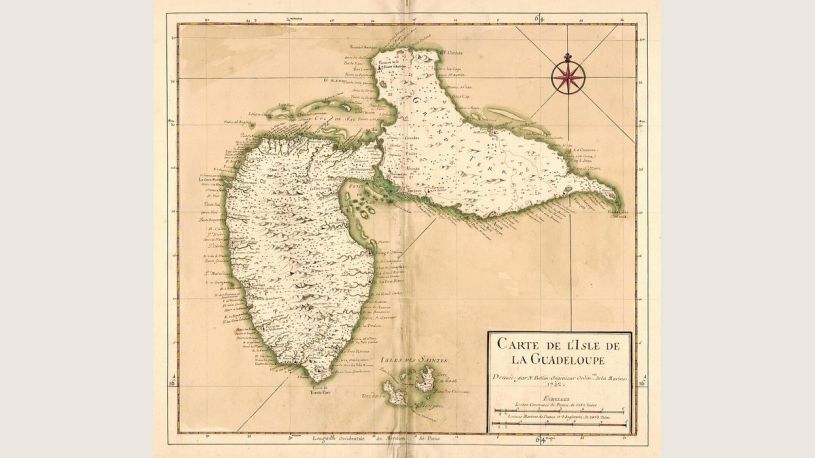
Eight years after revolutionary France abolished slavery in its colonies, French soldiers landed in Guadeloupe to re-establish imperial authority. Their campaign culminated in the defeat of fighters defending the freedom they had been promised. The man behind the expedition was Napoleon Bonaparte.
Liberty could be reversed
In February 1794, the National Convention abolished slavery in France’s colonies. On Guadeloupe, emancipation was a reality, though neither equality nor social stability was secure. When Bonaparte took power, he sought to restore colonial profits and metropolitan authority across the Caribbean. Legislation of 20 May 1802 maintained slavery where the 1794 decree had not taken practical effect; in Guadeloupe, it was reimposed by a separate process of military conquest and administrative decrees.
The expedition under General Antoine Richepance arrived in May 1802. Black and mixed-race officers who had served the French Republic had to decide whether to accept the removal of rights and the return of racial hierarchy or fight the government they had once defended.
Louis Delgrès chose resistance
Louis Delgrès led armed resistance, issuing a proclamation in the name of universal liberty. His fighters were outmatched. At Matouba, on 28 May 1802, Delgrès and those who remained with him blew up their defensive position rather than surrender. Accounts differ on the precise number who died. The symbolic fact is clear: soldiers fighting under the ideals of the French Revolution died resisting France itself.
In July 1802 the French authorities imposed measures stripping free people of colour of rights and restoring slavery in practice. A consular order dated 16 July supplied the legal basis, though it was not published immediately. Abolition would come again only in 1848.
A revolution’s unanswered question
The episode should not be collapsed into the claim that Napoleon simply restored slavery everywhere by one signature: different colonies had distinct circumstances, and France failed to reconquer Saint-Domingue, where Haiti won independence. The Guadeloupe story is more revealing when the distinctions are preserved.
The deeper contradiction is that a state could proclaim universal emancipation and then use its army to make freedom conditional on metropolitan interests. An empire’s declared values meant little when the people supposedly granted rights could not defend them against the centre.
Sources and image provenance
Fondation pour la mémoire de l’esclavage: Napoleon and the re-establishment of slavery; Laméca: contemporary decrees and proclamations, 1794–1802; Laméca: chronology of the 1802 revolt. Featured image: period photograph, map or primary document, prepared as a landscape image with the original content fully visible.
Support DEPTH
Independent, source-based historical writing takes time. Your contribution supports more accessible investigations.

Boost us
If you like our content help us to create more.
$5.00
Discover more from The Confessor
Subscribe to get the latest posts sent to your email.
