
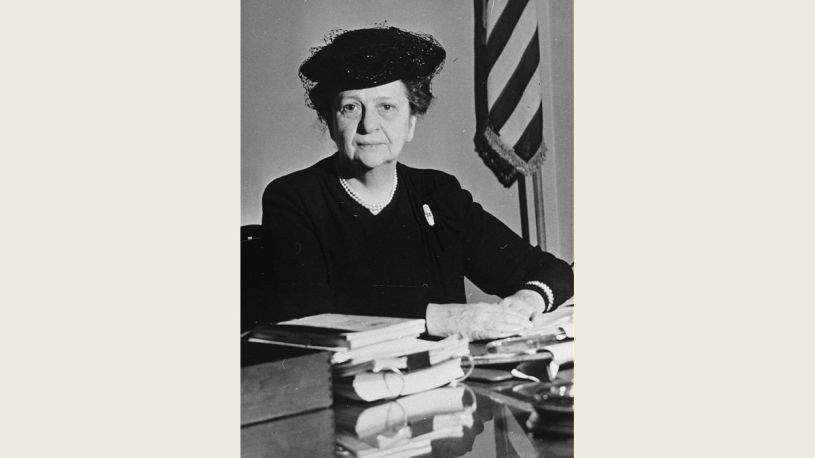
In March 1911, a fire broke out at the Triangle Shirtwaist Factory in New York. Workers, many of them young immigrant women, died as flames spread through the upper floors and escape became impossible for many. Frances Perkins witnessed the catastrophe.
She had already been active in social reform, but the fire strengthened her determination to change the laws governing workplace safety. In New York state she became involved in labour investigations and reform. She understood that an unsafe factory was not an unfortunate accident outside politics; it was often the predictable result of inadequate enforcement and power imbalances.
In 1933 Franklin Roosevelt appointed her Secretary of Labor, making her the first woman to serve in a US presidential cabinet. She played an important role in the development of New Deal social insurance, labour standards and unemployment protections.
Perkins was not solely responsible for the Social Security Act or every reform associated with the period. These laws emerged through political struggle, trade-union organising, legislators, social movements and Roosevelt’s administration. Her role was unusually sustained and important.
Her story connects the sight of people dying behind factory doors to the apparently technical design of a welfare state. Institutions become humane only when somebody turns moral horror into enforceable rules.
Sources and image provenance
Frances Perkins Center, biography and public policy legacy. The featured image is a historical photograph or primary historical document; attribution details are stored with the image in the site’s media library.
Support DEPTH
If you want more rigorously researched history on Project Authenticity, support independent publishing.

Boost us
If you like our content help us to create more.
$5.00
Discover more from The Confessor
Subscribe to get the latest posts sent to your email.
