
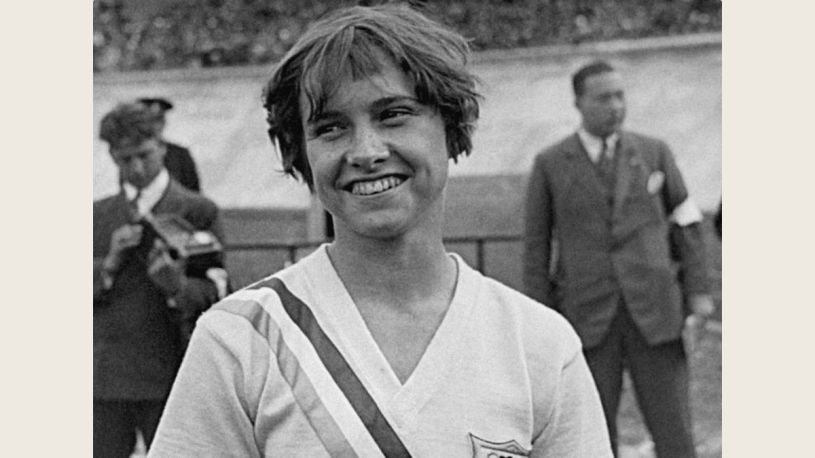
Betty Robinson was seventeen when she became the first Olympic champion in the women’s 100 metres, winning gold at the 1928 Amsterdam Games. Her sprinting career appeared to promise years of extraordinary competition.
In 1931 an aircraft accident left her gravely injured. Reports describe a period when she was initially believed dead, although sensational versions of the rescue have been exaggerated in later accounts. Recovery was slow, and she struggled to regain the physical function needed for elite sprinting.
Robinson could no longer start a race comfortably from the crouched position required in an individual sprint, but the relay gave her a way back. At the 1936 Berlin Olympics she ran in the American 4×100 metre relay team that won gold.
Her comeback was not the simple triumph of determination over biology. It involved lasting injury, altered ability, years of rehabilitation and a change in the kind of event she could contest.
Robinson’s story is valuable precisely because she did not become the athlete she had been before the accident. She found another way to compete at the highest level. A return to meaningful achievement need not resemble a return to an earlier life.
Sources and image provenance
Olympics, Betty Robinson. The featured image is a historical photograph or primary historical document; attribution details are stored with the image in the site’s media library.
Support DEPTH
If you want more rigorously researched history on Project Authenticity, support independent publishing.

Boost us
If you like our content help us to create more.
$5.00
Discover more from The Confessor
Subscribe to get the latest posts sent to your email.
