
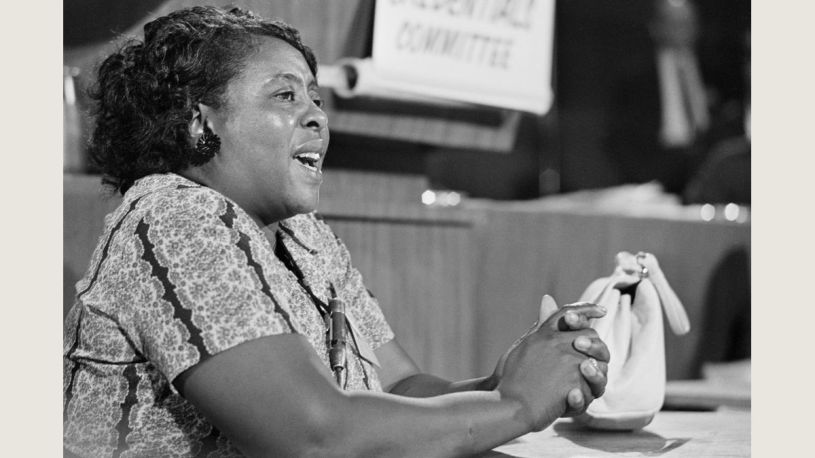
Fannie Lou Hamer grew up working on Mississippi plantations. When she tried to register to vote in 1962, she lost her job and faced intimidation. In 1963 she and other civil-rights activists were arrested in Winona, Mississippi; she was brutally beaten while in custody.
The injuries caused lasting damage. But the violence did not drive Hamer out of politics. She helped organise Black Mississippians excluded from the state’s official political institutions and became a leading voice of the Mississippi Freedom Democratic Party.
At the 1964 Democratic National Convention, Hamer testified about the persecution of people trying to exercise basic political rights. President Lyndon Johnson attempted to interrupt the live television coverage with an impromptu news conference. Her testimony nevertheless reached the country.
She exposed a contradiction at the centre of American democracy: a political party could publicly celebrate freedom while recognising state delegations selected through a system that prevented many Black citizens from voting.
Hamer’s power came not from elite credentials but from a voice rooted in experience. She showed how a person denied conventional power could change public understanding by making the concealed violence of a system impossible to ignore.
Sources and historical photograph
US National Park Service, Fannie Lou Hamer. Photograph: original image or collection. The archival subject is framed on a wide canvas to prevent homepage cropping.
Support DEPTH
Support independent writing about history and human lives. Contributions help make these stories available to everyone.

Boost us
If you like our content help us to create more.
$5.00
Discover more from The Confessor
Subscribe to get the latest posts sent to your email.
