
Published 15 November 2026. This is forward-looking reporting; official schedules and implementation details may change.
By 2027, millions of Europeans are likely to encounter a new question while opening a bank account, applying for a job, collecting a prescription or proving their age online: Do you want to use your European Digital Identity Wallet? The European Union expects member states to provide at least one wallet by the end of 2026, although national launches and available functions will vary. The most important distinction is that the state must offer the wallet; citizens are not generally required to adopt it.
What is the EU Digital Identity Wallet, exactly?
The wallet is meant to be a secure application on your phone that can hold and present verifiable identity information and other credentials. Instead of repeatedly uploading copies of your passport or identity card, you may be able to prove an attribute such as your name, professional qualification, residence status or age to a service that needs it. A wallet can also support qualified digital signatures, depending on implementation.
The goal is cross-border interoperability: credentials issued in one European country should be accepted by participating services in another. This is not a single compulsory EU account or a replacement for every existing ID card. The European Commission describes its use as optional for individuals. Some providers will be required to accept wallet authentication under the regulatory framework, subject to application rules.
The privacy question is not whether you trust a logo
Identity verification usually involves revealing more information than a particular transaction needs. A shop selling an age-restricted product may need to know you are older than a threshold, not your birthday and address. Wallet architecture aims to allow selective disclosure, with user consent and cryptographic safeguards so that only necessary data are presented.
Yet technical promises should be tested against practice. Which credentials can be issued? Can a user refuse unnecessary requests? Are relying parties allowed to correlate transactions? What happens when a phone is lost? Security will depend on national implementations, service-provider behavior and regulatory enforcement, not merely on the existence of encryption.
What happens in Germany, Slovakia and the rest of the EU?
The EU’s end-of-2026 obligation concerns making wallets available, not guaranteeing that every conceivable credential is usable everywhere on the first day. Germany’s official wallet project, for example, describes a first public version planned for early 2027, with further functions added in stages. Slovakia and other member states will have their own rollout arrangements.
People should follow their national government’s official digital-identity channels rather than download an unfamiliar application advertising itself as the mandatory European wallet. A wave of imitation apps and phishing sites would be a predictable risk when a widely promoted public service begins.
A practical test before using one
Before adding sensitive credentials, check who issued the wallet, what device security it requires, what information a service is asking for, whether you can refuse an excessive request, and how access can be revoked if your phone disappears. For many people the convenience could be considerable, particularly across borders. For others, digital exclusion, accessibility and institutional trust will remain real concerns.
The broader historical shift is worth noticing. Identity once meant showing a physical document to a person standing in front of you. It increasingly means a machine checking a signed claim about you. The political question is who gets to decide which claims must be presented before you can participate in ordinary life.
Sources and further reading
Council of the EU: The EU digital identity wallet
European Commission: European Digital Identity
Germany’s official wallet project FAQ
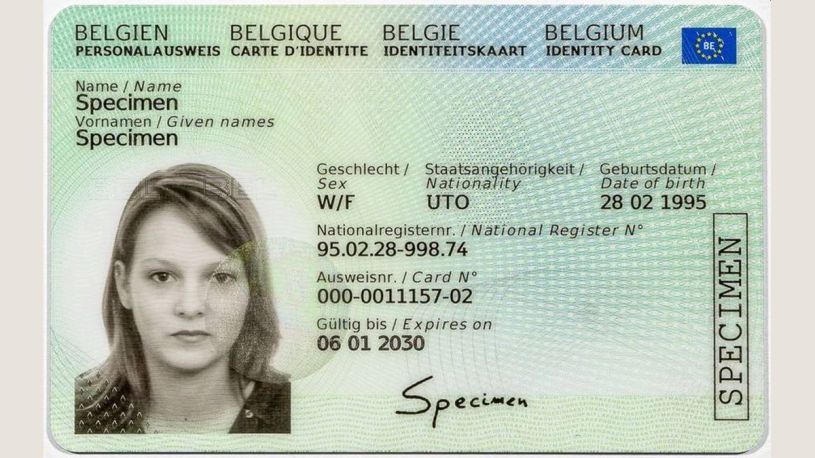
Featured image: authentic documentary image and attribution record. Illustrative photograph of a Belgian ID specimen—not a screenshot of the new EU wallet. The image was placed in a 1200 × 675 frame without cutting off the source.
Support DEPTH
Independent explanations grounded in primary sources take time. If this article helped you understand what is changing, you can support the work.

Boost us
If you like our content help us to create more.
$5.00
Discover more from The Confessor
Subscribe to get the latest posts sent to your email.

