
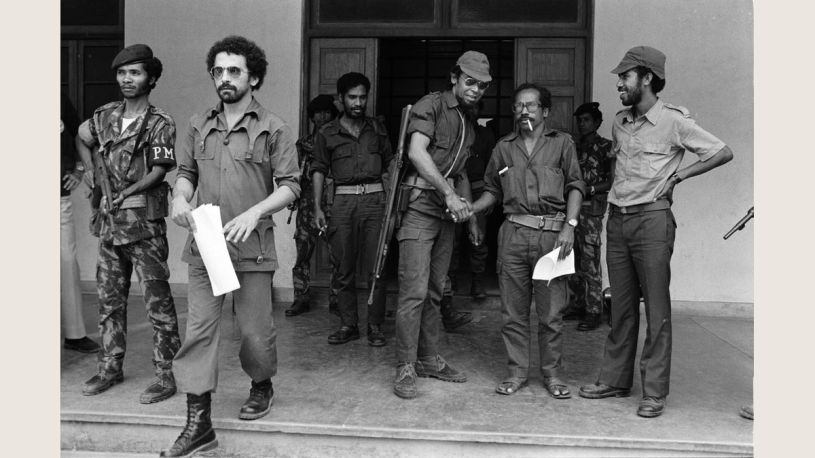
East Timor declared independence from Portuguese colonial rule on 28 November 1975. Just nine days later, Indonesian armed forces launched a full-scale invasion. The occupation would last nearly twenty-four years and cost an enormous number of lives. Yet the country survived as a political idea even when its independent state was destroyed.
Decolonisation collided with Cold War anxieties
Portugal’s 1974 Carnation Revolution opened the way to decolonisation. Timorese political movements competed over how independence should happen, and conflict erupted in 1975. FRETILIN emerged dominant and proclaimed independence in late November.
Indonesia’s President Suharto regarded an independent, left-leaning East Timor as a security threat. On 7 December Indonesian troops invaded Dili and launched a long occupation. Western governments, including the United States and Australia, prioritised relations with Indonesia in the Cold War context. Their policies helped limit effective pressure on Jakarta, although diplomatic positions varied over time.
An occupation that destroyed livelihoods as well as lives
Indonesian military campaigns forced people from homes and agricultural areas. Repression, killings, forced displacement, food shortages and disease killed many. Estimates of deaths vary sharply according to methods and whether indirect deaths are included; credible accounts describe well over 100,000 deaths, an immense proportion of a small population.
Timorese resistance operated through armed struggle, clandestine civilian networks, diplomacy and the Catholic Church. An important moment came when Indonesian troops killed protesters at Santa Cruz cemetery in Dili in 1991. Video evidence helped galvanise international attention to the occupation.
The vote that did not end violence immediately
After Suharto’s fall in 1998, international negotiations made a referendum possible. In August 1999 voters overwhelmingly rejected continued autonomy within Indonesia, effectively choosing independence. Pro-Indonesian militias, backed by elements of the Indonesian military, launched widespread destruction and killings.
An international security force then intervened under UN authority, followed by UN transitional administration. Timor-Leste became sovereign in May 2002. The larger lesson is that an invasion can seize a capital, install institutions and command troops for decades without destroying the political identity of the people it seeks to govern.
Sources and historical visual
Congressional Research Service: East Timor political development and international involvement; US military historical chronology: from Portuguese decolonisation to 2002; Jacobin, historical photographs and East Timor’s occupation. Featured image: authentic historical photograph, object or illustration, framed for the site’s homepage.
Support DEPTH
Support evidence-based historical investigation and accessible long-form writing.

Boost us
If you like our content help us to create more.
$5.00
Discover more from The Confessor
Subscribe to get the latest posts sent to your email.
