
Published 15 November 2026. Future-facing analysis; product availability, laws and implementation may change.
For centuries people kept letters, portraits and recordings after someone died. AI adds a new possibility: instead of listening to a recording of a parent, a person can pose a new question and receive a synthetic answer in the parent’s familiar voice. This is the emerging market for griefbots, deadbots and digital afterlives. It makes remembrance interactive—and introduces ethical problems no family photograph ever created.
The technology is not resurrection
A contemporary deadbot may combine archived messages, voice recordings, photographs and biographical information to create a conversational simulation. The software can produce sentences the person never spoke and respond to questions nobody asked while they were alive. Its apparent continuity is a statistical and design achievement, not evidence that the dead person’s consciousness persists.
That matters because an emotionally persuasive simulation can be factually wrong. A program may invent opinions, memories or assurances and present them through a voice the bereaved recognise. A person hearing ‘I forgive you’ from a synthetic version of someone deceased may find comfort, but the statement is not historical testimony from the person who died.
Three people, three competing interests
Cambridge researchers Tomasz Hollanek and Katarzyna Nowaczyk-Basińska describe the interests of the person whose data make the simulation possible, the individual controlling that data after death and the person who interacts with the resulting avatar. They may have very different wishes. A deceased person may not have wanted to be recreated; a relative might find comfort in it; another family member might find it disturbing.
Consent is especially complicated when a platform creates an avatar from correspondence to which several people contributed. Who owns a private conversation after one participant dies? Does permission to preserve a voicemail imply permission to train a commercial conversational product on it? The answers depend on law, contracts and genuine consent, not on technical feasibility alone.
What if the bot begins selling things?
A 2026 ethics paper on digital ghosts highlights the risk of treating grief as a market for engagement and targeted advertising. The same system that offers synthetic reassurance might eventually suggest a premium subscription or a product at moments of emotional vulnerability. In that scenario, the dead person’s apparent presence becomes a sales channel.
Other problems are subtler. What happens when an avatar’s tone changes after an update? Can family members disagree over its deletion? Can it be passed to children who never knew the original person? A service built around continuity must have an ethical way to discontinue interaction, with opportunities to pause, export and delete data.
A better design than pretending nothing is lost
A responsible digital memorial should explicitly identify generated material as simulation, require meaningful consent where possible, minimise the use of sensitive private messages, and explain what data are stored. It should never pretend that a newly produced response is a verified message from the deceased.
Memories have always included interpretation, and photographs do not perfectly reproduce a person either. But a photograph stays still. A generative avatar continually adds new material to the story of someone who can no longer correct it. The central question is not whether technology can make a dead person seem present. It is who should be allowed to keep speaking in that person’s name.
Sources and further reading
Hollanek and Nowaczyk-Basińska, Griefbots, Deadbots, Postmortem Avatars (2024)
Spitale and Germani, The making of digital ghosts (2026)
Cambridge University Press, Synthetic afterlives (2025)
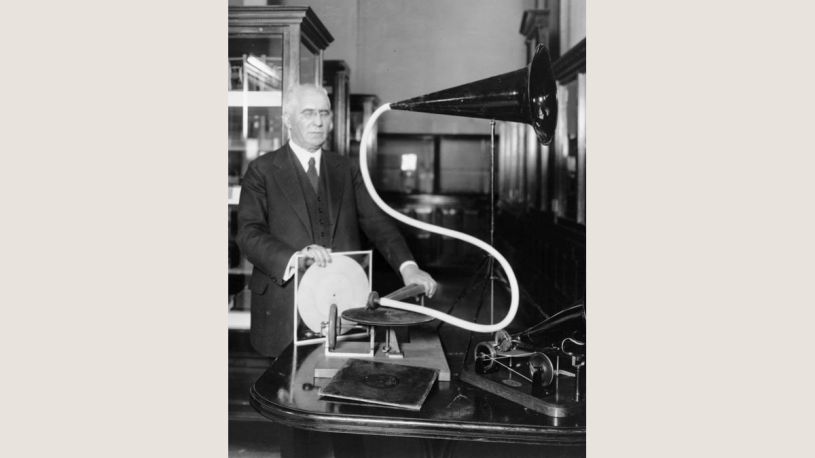
Featured photograph or archival image: source and attribution. Historic photograph of Emile Berliner and a sound-recording device—a reminder that preserving a voice predates generating new speech in it. Presented in a 1200 × 675 landscape frame without cutting off the original.
Support DEPTH
Help keep careful, sourced explanations available to everyone by supporting the work.

Boost us
If you like our content help us to create more.
$5.00
Discover more from The Confessor
Subscribe to get the latest posts sent to your email.

