
Published 15 November 2026. Future-facing analysis; product availability, laws and implementation may change.
Imagine speaking to an AI companion for a year: sharing daily worries, jokes, ambitions, frustrations and hopes. Then the company changes the model. The replies become colder, the remembered jokes disappear and the familiar voice feels like a stranger. Nobody has died. Yet the person who used the system may experience something remarkably close to separation distress.
What scientists have actually observed
A paper published in Nature Human Behaviour in September 2026 investigated reactions to two major AI-service changes: the removal of erotic roleplay features from Replika and the rollout of GPT-5 in ChatGPT. Researchers analysed 54,861 Reddit posts and data from 1,452 survey participants across seven surveys. They reported increased negative sentiment and expressions of loss around the updates, with the pattern especially pronounced in the Replika case.
That does not mean every user of a conversational AI develops a romantic bond, or that social-media posts represent everyone who uses these tools. The study describes observable reactions to platform changes and offers an attachment-based interpretation. It does not establish that an AI system is conscious or that every expression of grief has the same clinical significance.
Why attachment can arise even without another human
Humans become attached not only to people but to predictable sources of comfort, familiarity and response. A diary, childhood home, animal companion or long-running creative project can acquire emotional significance. Conversation intensifies this process because human beings are extraordinarily sensitive to what seems like attention and responsiveness.
An AI assistant may remember earlier exchanges, respond immediately, adapt to a person’s manner of speaking and never tire in the way humans do. These properties can produce a relationship-like experience even though the company controls the software and the system does not establish reciprocal human commitments. The feeling belongs to the user; the product relationship belongs partly to the platform.
The peculiar power of a software update
Ordinary relationships change through life, conflict and the decisions of two people. An AI relationship can change because a company revises safety rules, changes model weights, removes a feature or ends a service. The user may not have chosen the change and may have no practical way to restore the earlier version.
This makes the platform a third party in what the user experiences as an intimate relationship. A company that thinks it is adjusting a feature may be altering something a customer uses for emotional regulation or as a daily source of continuity. Responsible product design should therefore consider notices, export options, transition support and clear explanations when important companion functions change.
Is the solution to forbid emotional attachment?
That would misunderstand human psychology. Attachment is not switched on only after a rational committee decides it is justified. Nor is it necessarily pathological to feel sadness about a lost interaction. The relevant questions are whether the relationship crowds out wanted human connections, encourages emotional dependency, creates false beliefs about the system’s capacities, or becomes exploitative.
The US Federal Trade Commission opened an inquiry in September 2025 into AI chatbots acting as companions, particularly regarding children and teenagers, their data and the potential effects on wellbeing. Regulation and research are still evolving. As these products grow, people will need vocabulary for a new form of loss: a relationship-like experience that can be interrupted by somebody else’s software decision.
Sources and further reading
De Freitas and colleagues, Mourning the loss of AI companions, Nature Human Behaviour (2026)
US FTC: Inquiry into AI chatbots acting as companions, September 2025
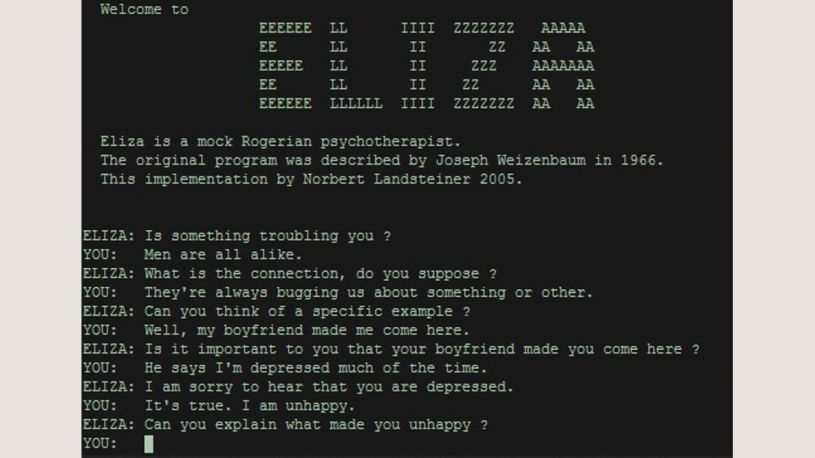
Featured photograph or archival image: source and attribution. An ELIZA chatbot conversation displayed in a modern reproduction; this is an illustration of the long history of machines imitating supportive dialogue. Presented in a 1200 × 675 landscape frame without cutting off the original.
Support DEPTH
Help keep careful, sourced explanations available to everyone by supporting the work.

Boost us
If you like our content help us to create more.
$5.00
Discover more from The Confessor
Subscribe to get the latest posts sent to your email.

