
Published 15 November 2026. Future-facing analysis; product availability, laws and implementation may change.
When a stranger sends you a message, how do you know there is a human behind it? The question used to be trivial. Now a language model can maintain hundreds of conversations, generate convincing personal stories and create images that seem like ordinary photographs. As automated accounts proliferate, platforms have stronger incentives to demand a new kind of credential: proof that you are a real, unique person.
Human, unique and identified are not the same thing
A conventional login proves that someone knows a password or controls a device. It does not prove the account belongs to a human being. Government identification can link an account to a legal identity, but not everybody wants their name known to every discussion board. Proof of personhood tries to solve a different problem: establishing that an account is controlled by a distinct human, perhaps without revealing which person it is.
Some systems use cryptographic credentials, in-person verification or biometrics. World ID, for example, promotes iris-scanning verification through a device called the Orb, generating a way for a participating service to check uniqueness under its architecture. That is the operator’s description of the product, not independent proof that every privacy risk has been solved.
Why bot-free spaces could become valuable
If a platform rewards popular posts, one actor can deploy many automated accounts to imitate popularity. If an online vote allocates resources, one person can create thousands of identities to distort the outcome. Identity verification can therefore protect systems in which the number of distinct participants matters.
But the need is not universal. A website publishing an essay does not have to demand biometric verification from each reader. Strong proof-of-personhood requirements can exclude people without compatible phones or access to verification equipment. They can also threaten the anonymity needed by whistleblowers, abuse survivors, dissidents and ordinary citizens who simply want privacy.
The biometric bargain
An iris pattern is not a password you can replace after a breach. Biometric verification therefore raises special questions about how images are processed, what derived data are retained, and whether the user can withdraw consent. Regulators have challenged specific Worldcoin practices. A German data-protection authority’s 2024 decision, published through the European Data Protection Board, addressed improper iris-code storage and demanded changes and erasures under specified conditions.
World ID says it uses privacy-preserving cryptography. That claim deserves technical inspection, and the regulatory history shows why people should not take broad marketing assurances as the end of the debate. Nor does criticism of one vendor settle whether all possible proof-of-personhood designs are unacceptable.
What to look for before verifying yourself
Ask five questions. Can you prove uniqueness without disclosing your real name? What biometric or identity data are collected? Can you delete them or revoke authorization? Can different services link your uses together? And is there an accessible non-biometric route for people who do not wish to provide sensitive body data?
Predictions that everyone will need an iris scan in 2027 are unwarranted. The more plausible scenario is a growing patchwork: some services stay open, others require a verified person for high-stakes activities, and an emerging market attempts to prove humanity without abolishing anonymity. The future political conflict will be between authenticity and the right not to be constantly identified.
Sources and further reading
World ID: Proof of Human, provider’s official description
European Data Protection Board: Worldcoin regulatory decision
Hong Kong privacy regulator: investigation findings regarding Worldcoin
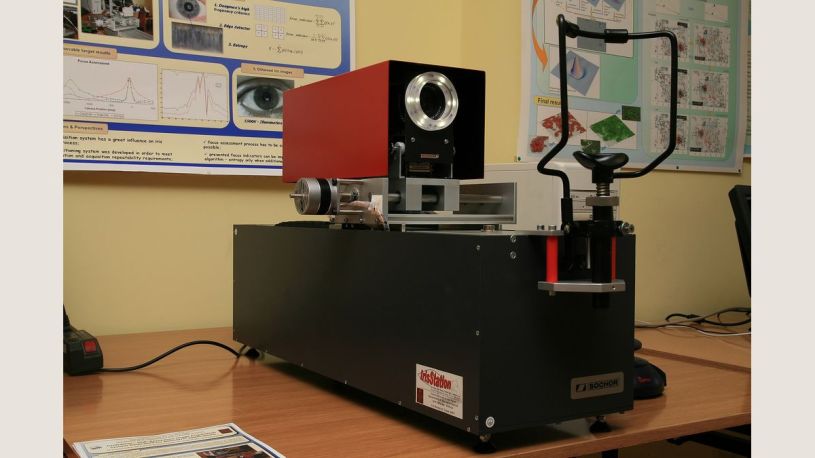
Featured photograph or archival image: source and attribution. Photograph of an iris-scanning instrument, illustrating the category of biometric equipment; not a photograph of a World ID Orb. Presented in a 1200 × 675 landscape frame without cutting off the original.
Support DEPTH
Help keep careful, sourced explanations available to everyone by supporting the work.

Boost us
If you like our content help us to create more.
$5.00

