
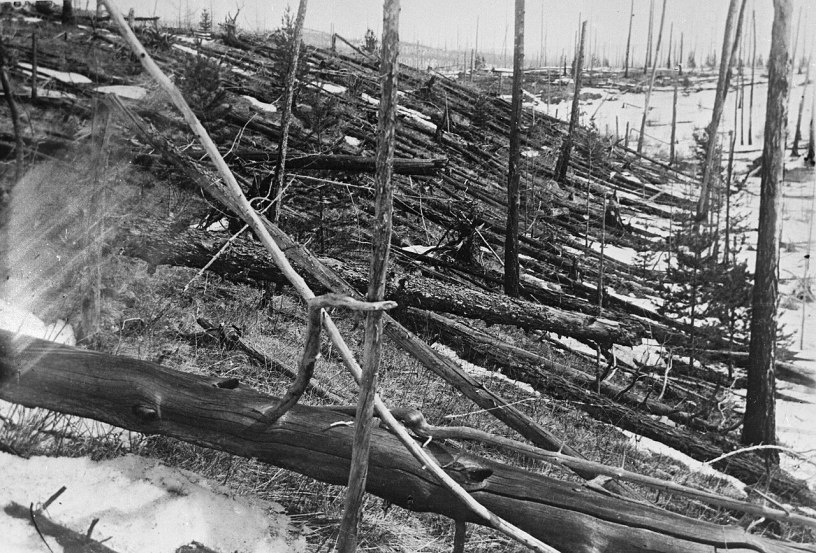
On 30 June 1908, an object from space exploded above a remote part of Siberia. Witnesses described a brilliant fireball and an enormous detonation. Forests were flattened across a vast region, yet no conventional impact crater appeared. The event became known as the Tunguska explosion, one of the most dramatic cosmic encounters in recorded history.
The region was so remote that the first scientific expedition did not reach the site until 1927. Investigators found miles of damaged and fallen trees. Modern research points to an asteroid that broke apart in the atmosphere, releasing its energy in an airburst instead of striking the ground intact.
Tunguska is a reminder that danger need not arrive as a familiar human enemy. Our planet passes through a solar system full of debris, and most incoming objects burn up harmlessly. In 1908 one did not. The ruined Siberian forest remains a warning written into the landscape.
- Historical source: NASA: the Tunguska asteroid airburst.
- Read next: Halifax Explosion of 1917: The ship collision that killed nearly 2,000, or explore the volcanic eruption that stole a summer.
Discover more from The Confessor
Subscribe to get the latest posts sent to your email.
