
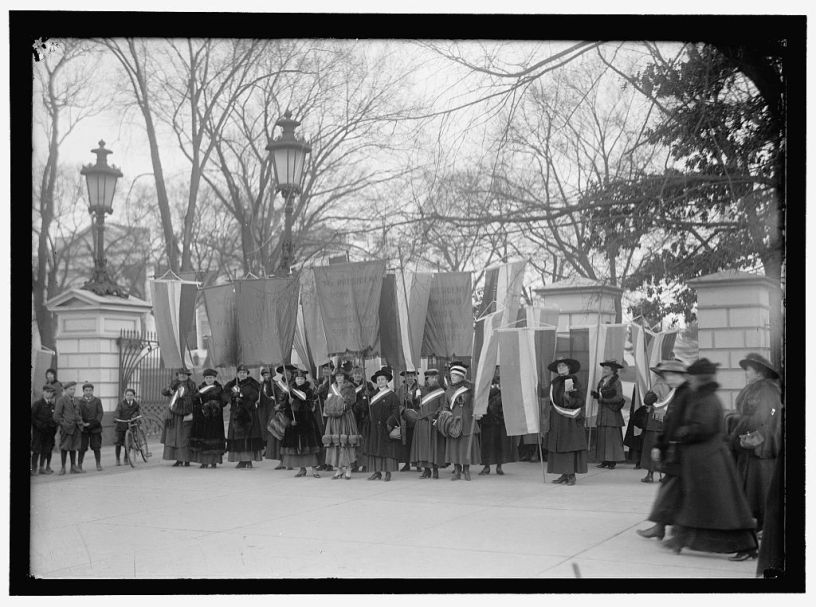
In 1917, women stood outside the White House demanding a political right that powerful institutions had denied them. The historical photograph on this page shows suffrage pickets. It is not a photograph of a romantic relationship. It belongs here because it makes visible a principle that matters in both public and private life: a person is not someone else’s property.
Healthy love does not require two people to agree on everything. It requires that disagreement, desire and vulnerability do not become excuses for domination. Relationships are complicated; people can act badly without being abusers. But there are recognizable patterns that demand attention.
What a healthy relationship makes possible
- Autonomy: both people can maintain friendships, interests, beliefs and reasonable privacy without punishment.
- Consent: sexual and physical intimacy is freely chosen, specific and reversible. Being a partner does not create a permanent entitlement to the other’s body.
- Honest conflict: disagreements can be expressed without threats, humiliation or intimidation. Repair involves taking responsibility and changing behaviour, not merely saying sorry.
- Mutuality: neither partner is always the judge, parent or subordinate of the other. Practical arrangements may differ, but control is not the same as care.
- Boundaries: each person can say no, ask for time, or change a plan without being made afraid of the consequences.
Warning signs of coercive control
The National Domestic Violence Hotline identifies patterns such as isolating someone from friends or family, controlling finances, monitoring time and activities, extreme jealousy, demeaning remarks, threats, sexual pressure and intimidation. These are not made harmless by jealousy being described as passion, or domination being described as protection. A single ambiguous quarrel is not proof of coercive control; an ongoing pattern of fear, restrictions and escalating demands is more informative.
Ask whether you feel free to disagree. Can you spend money, visit people, seek care or end a conversation without retaliation? Does the other person respect your refusal? Are apologies followed by lasting change? You can ask the same questions about your own behaviour. Love is not measured by how much freedom one person can force the other to surrender.
What to do when a relationship feels unsafe
If you fear retaliation, prioritize safety over winning an argument. Talk to a trusted person or a qualified local domestic-abuse service about a safety plan. Be cautious about devices or accounts someone may monitor; seek help through a safe channel if needed. If you face immediate danger, contact local emergency services. Avoid confronting a controlling person with an elaborate diagnosis when that could increase danger.
What to do when the problem is not abuse
Some relationships are painful because of incompatibility, stress, poor communication or unequal expectations rather than coercive control. Name the specific behaviour and its effect, ask for a concrete change, and observe what happens over time. Counselling may help when both people can participate freely and safely; couples counselling is not automatically appropriate when abuse or intimidation is present.
The aim is neither to label every difficult partner nor to normalize fear. It is to recognize that tenderness and freedom must be able to coexist.
Sources and further reading
- National Domestic Violence Hotline: Warning signs of abuse
- National Domestic Violence Hotline: Emotional abuse
- United Nations: Human dignity and rights
Featured historical photograph: Women demanding the vote outside the White House in 1917, from the Library of Congress.. Image source and rights are detailed in its media caption. Historical photographs illustrate the background; they are not pictures of 2026.
Explore other essential subjects at Start Here. If this writing helps, subscribe for free or support independent writing.
Discover more from The Confessor
Subscribe to get the latest posts sent to your email.
