
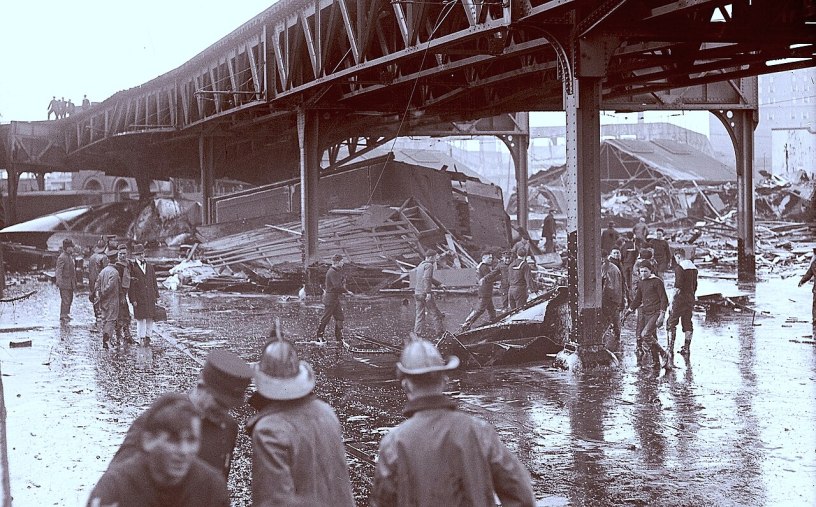
On 15 January 1919, a giant storage tank in Boston’s North End split open. Roughly 2.3 million gallons of molasses surged into the streets, smashing buildings, damaging the elevated railway and sweeping people and horses into the wreckage. It sounds like a grotesque joke until the final figure arrives: 21 people dead and about 150 injured.
Molasses is slow when poured from a jar. An enormous mass of it suddenly released from a tank was another matter. Rescuers struggled through sticky debris while families waited to learn who had survived. Some bodies were not recovered until days later. The Great Molasses Flood became one of the strangest—and most horrifying—industrial accidents in American history.
The cause was not an act of nature: an industrial tank had failed in a crowded neighborhood. The aftermath raised searching questions about construction, inspection and responsibility. A century later, the most important thing about Boston’s bizarre disaster is not the syrup but the ordinary people caught in its path.
- Historical source: Smithsonian Magazine: the 1919 molasses flood.
- Read next: Halifax Explosion of 1917: The ship collision that killed nearly 2,000, or explore the 1816 year without a summer.
Discover more from The Confessor
Subscribe to get the latest posts sent to your email.
