
In August 1982, after Israel had besieged and bombarded Beirut for weeks, the Palestine Liberation Organization agreed to evacuate its fighters. The agreement was negotiated by American diplomat Philip Habib. Yasser Arafat and the PLO leadership would relocate to Tunisia, while thousands of Palestinian fighters dispersed to several Arab countries. But there was one crucial condition: the Palestinian civilians left behind, including the fighters’ wives and children, had to be protected. The United States formally guaranteed their safety, relying on assurances from Israel and Lebanese armed factions. American, French and Italian troops arrived to supervise the evacuation. Between 21 August and 1 September, the PLO withdrew. President Ronald Reagan celebrated the operation as a triumph of American diplomacy. Yet the multinational force departed earlier than originally planned. On 10 September, the last American Marines left Beirut. The Palestinian civilians remained.
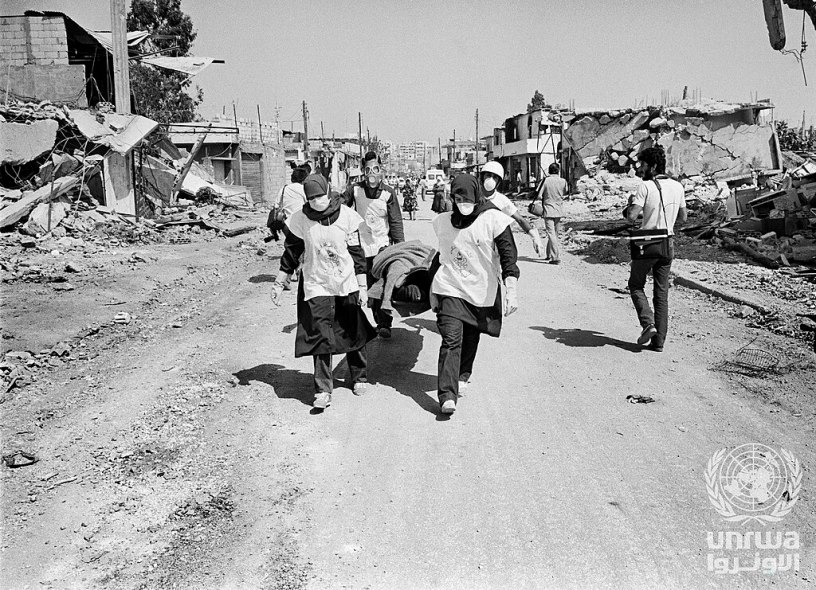
Four days later, Lebanon’s president-elect Bashir Gemayel was assassinated. On 15 September, Israeli forces entered West Beirut and surrounded the Palestinian refugee camps of Sabra and Shatila. The following evening, with Israeli authorization, Lebanese Christian militiamen entered the camps. For approximately 36 hours, they massacred civilians, including women and children. Estimates of the dead range from hundreds to several thousand. Israel’s own Kahan Commission subsequently established that the Lebanese Phalangists carried out the killings, found Israel indirectly responsible and held Defence Minister Ariel Sharon personally responsible for disregarding the foreseeable danger. The Palestinian fighters had departed under an agreement intended to protect the civilians they left behind. The Americans had guaranteed their safety. The peacekeepers had withdrawn. And the Israeli army had permitted the killers to enter. This is what makes Sabra and Shatila more than the history of a massacre. It is also the history of a promise made to people who had every reason to fear what would happen without it.
Sources: U.S. Department of State, The Reagan Administration and Lebanon, 1981–1984; U.S. Department of Defense history of the multinational force and the civilian protection guarantees; Kahan Commission report (1983).
Featured photograph: Medical personnel carrying a victim’s body in Shatila, 20 September 1982. © UNRWA Archive, photographer unknown, CC BY-SA 3.0 IGO, via Wikimedia Commons.
Discover more from The Confessor
Subscribe to get the latest posts sent to your email.


