
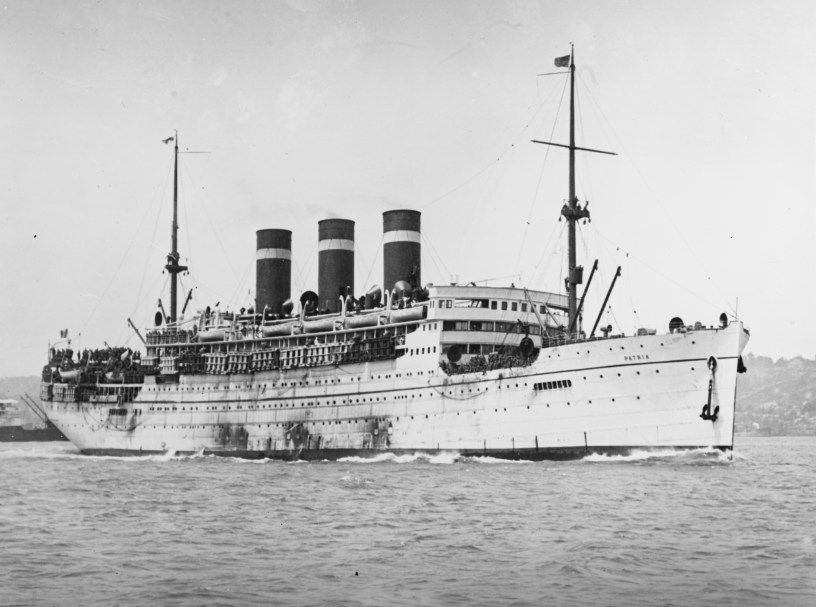
In November 1940, thousands of Jewish refugees fleeing Nazi persecution reached the coast of Palestine after a desperate journey from Central Europe. Many had departed from Bratislava, travelled down the Danube and crossed the Mediterranean in overcrowded ships. But Britain, which governed Palestine, had severely restricted Jewish immigration under its 1939 White Paper. Instead of granting the refugees entry, British authorities transferred many of them onto the SS Patria, a French passenger liner anchored in Haifa harbour. Their intended destination was Mauritius, a British colony in the Indian Ocean, where they would be detained rather than allowed to settle in Palestine.
On 25 November 1940, the Haganah, the principal Zionist paramilitary organisation in Palestine and a precursor of the Israeli army, detonated explosives aboard the Patria. Its intention was to disable the vessel and prevent the deportation, not to kill its passengers. But the explosive charge caused far greater damage than anticipated. Within approximately 15 minutes, the ship capsized and sank. More than 250 people died, overwhelmingly Jewish refugees who had escaped Nazi persecution. The Jewish Museum in Prague records 267 passenger deaths and another 172 injuries, although historical estimates of the death toll differ. People who had survived persecution in Europe drowned in a harbour where they had hoped to find safety.
The aftermath was bitterly paradoxical. British authorities eventually permitted the surviving Patria passengers to remain in Palestine, although they were initially detained at Atlit. Meanwhile, another 1,581 Jewish refugees were forcibly deported to Mauritius in December 1940 and confined there until 1945. The historical distinction matters: the Haganah did not set out to massacre Jewish refugees. It carried out a deliberate act of sabotage that catastrophically killed them. This tragedy cannot establish that Zionism as a whole was indifferent to Jewish lives, but neither can the movement’s stated intentions erase its responsibility for these deaths. The people aboard the Patria had already endured a struggle to survive. Their deaths deserve a place in history that no national mythology can obscure.

