
In 1865, America had just fought a civil war that killed hundreds of thousands of people.
Four million human beings were emerging from slavery.
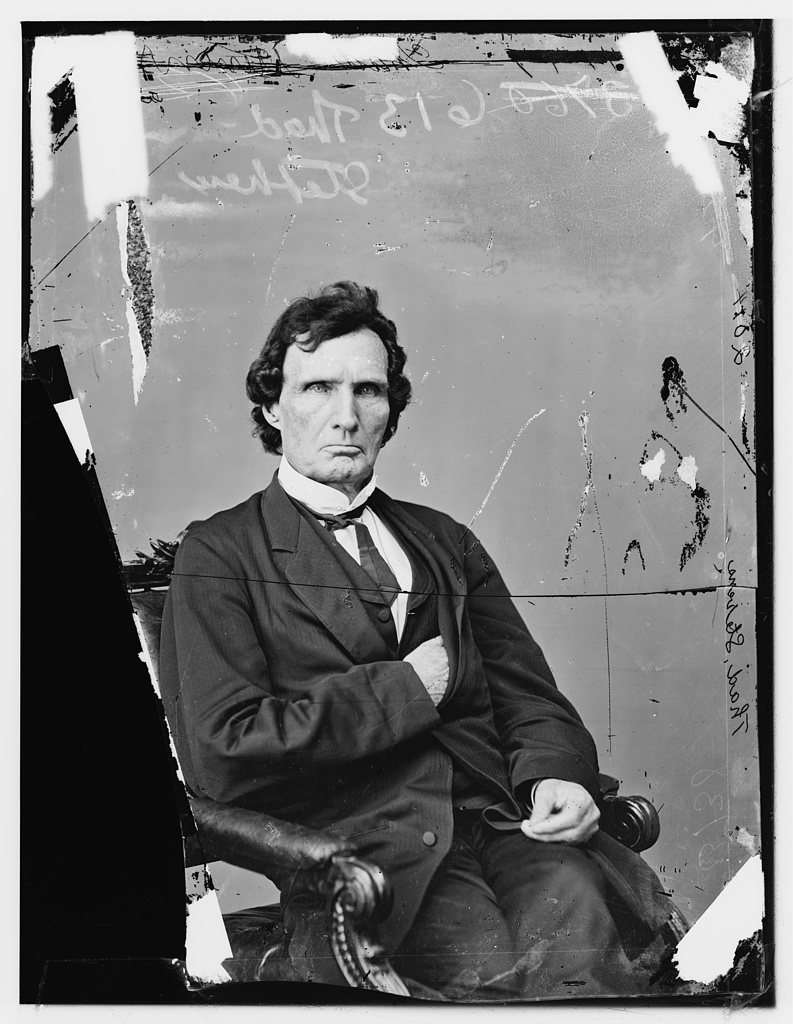
And a Pennsylvania congressman named Thaddeus Stevens understood something that most of his countrymen either failed to understand or preferred not to confront.
You could abolish slavery without abolishing the economic power of the slaveholders.
You could remove the chains while leaving the plantations intact.
You could declare a man free on Monday and leave him begging his former owner for employment on Tuesday.
Stevens wanted something considerably more radical.
Take the land.
Not from ordinary Southern farmers. Not indiscriminately from everyone who had supported the Confederacy.
From the wealthy landowning class that had helped build, finance and defend the slave system.
In a speech delivered in Lancaster, Pennsylvania, in September 1865, Stevens estimated that approximately 70,000 major Southern landowners controlled, together with the Southern states, some 394 million acres.
His proposal?
Confiscate the estates of the leading rebels.
Give forty acres to each adult male freedman.
Sell much of the remaining land to help pay the enormous costs of the war.
The overwhelming majority of Southern people, he argued, would retain their property.
The former slaves would receive something they had been denied for generations.
Not merely permission to work.
The means to work for themselves.
In 1867, Stevens put forward legislation providing forty-acre homesteads to eligible formerly enslaved people, including adult men and widowed heads of families, along with assistance to build homes.
He understood that political emancipation without economic independence could leave millions of people exposed to the power of the very men who had previously owned them.
He demanded more than a new legal status.
He wanted a different distribution of power.
And he knew exactly where that power resided.
In land.
In property.
In the ability to decide who worked, who ate, who borrowed, who obeyed.
Stevens warned:
“The whole fabric of southern society must be changed.”
It was an extraordinary recognition.
Slavery had been a system of ownership. Ending ownership of human beings did not, by itself, end the domination made possible by ownership of everything else.
And what happened?
President Andrew Johnson reversed wartime land redistribution measures and restored much confiscated land to former owners.
Stevens’s broader redistribution programme never became law.
Millions of formerly enslaved people entered freedom without the land that might have allowed them to establish genuine economic independence.
Some acquired property through extraordinary effort. Many others became tenant farmers or sharecroppers, often trapped in debt and dependence.
The old order had been defeated militarily.
Much of its economic structure survived.
I keep coming back to this story because it raises a question that reaches far beyond nineteenth-century America.
What does freedom actually mean when you possess the legal right to leave, but nowhere economically viable to go?
When someone no longer owns your body, but still controls the conditions under which you can survive?
Stevens died in 1868.
He never saw the transformation he had demanded.
More than a century and a half later, America is still reckoning with the consequences of emancipation without widespread land redistribution.
The slaves were freed.
The plantations largely remained in the hands of the people who had owned them.
That distinction deserves a place near the centre of how we remember the American Civil War.
Historical sources
- Thaddeus Stevens, Lancaster speech on land reform, September 7, 1865 (primary source).
- U.S. National Archives, “No Pensions for Ex-Slaves” — the 1867 Stevens bill, land policy and Andrew Johnson’s restoration programme.
- Digital History, University of Houston — excerpts from Stevens on Reconstruction.
- Library of Congress — historical portrait of Thaddeus Stevens.

