
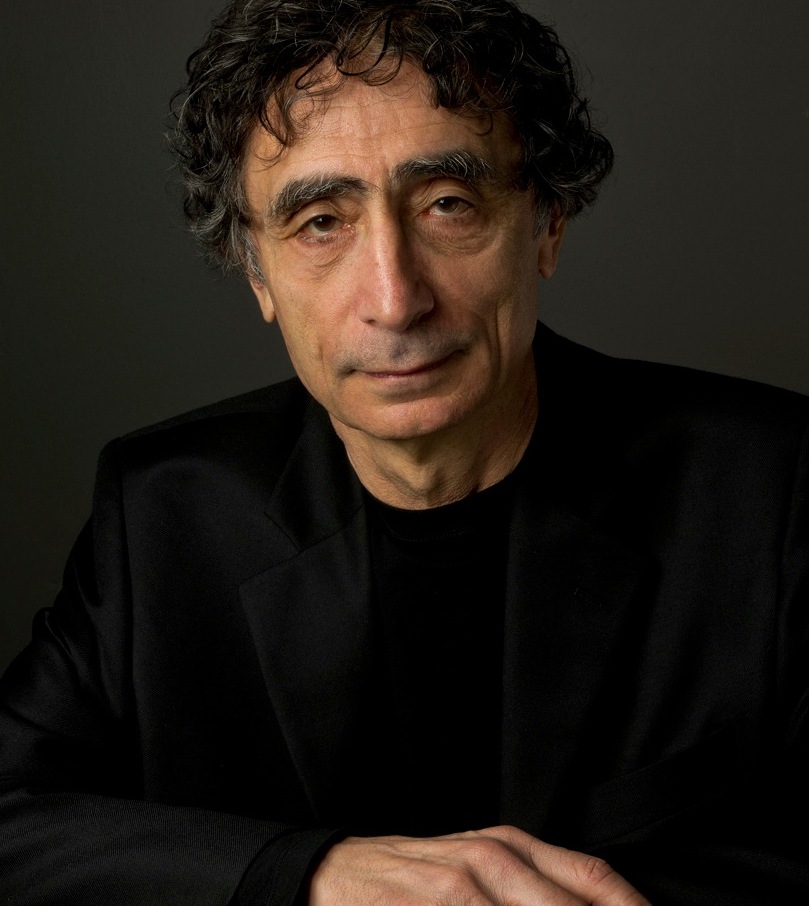
Gabor Maté is a Jewish Holocaust survivor. His grandparents died at Auschwitz. He was an infant when the Nazis occupied Hungary. He subsequently became a Canadian physician known for his work on trauma, addiction and the ways human beings learn to protect themselves from pain.
Which makes his recent criticism of Israel particularly arresting.
In a monologue published by Double Down News on 8 November 2026, Maté described Israel through the language of psychopathy and impunity. He was not offering a clinical diagnosis of seven million individual people. He was using a psychological metaphor to condemn what he regards as state violence protected from consequences.
Since the attacks of 7 October 2023 and the devastation of Gaza that followed, he has made a sustained argument in interviews with PBS, Al Jazeera, The Wire, Frank Barat and Double Down News.
What follows are ten of his most striking criticisms. Direct quotations are kept short and identifiable. The explanations are my synthesis of his arguments—not invented words placed in his mouth.
1. Israel, he argues, acts within an infrastructure of impunity
The extraordinary accusation in the title comes from his November 2026 Double Down News monologue. Maté borrows the idea of an infrastructure of impunity from Arundhati Roy: a network of political, military and diplomatic protections that allows a government to continue conduct that would otherwise produce serious consequences.
The word psychopath is not a formal diagnosis of Israel or of Israelis. It is Maté’s indictment of conduct he considers profoundly indifferent to the suffering of others. The less restrained the power, the less it is forced to recognise the humanity of those beneath it.
2. A people can suffer terribly—and still become dangerously attached to victimhood
Maté calls the phenomenon a “culture of entitled victimhood”. His concern is not that Jewish persecution was imaginary. He speaks about the Holocaust from within his own family history.
His criticism is that historical victimisation can be converted into perpetual moral permission. Every action by one’s own side becomes self-defence; every challenge becomes further proof of persecution. That psychological escape from accountability, he says, is one of the most dangerous forms of collective blindness. Source: Double Down News, November 2026.
3. For some institutions, loyalty to Israel has displaced Jewish spirituality
Maté argues that “Israel has replaced Jewish spirituality” for some Jewish organisations and individuals. He objects to making fidelity to a state the central test of Jewish identity.
A government is an institution, not a sacred object. It can make decisions, injure people, tell falsehoods, be criticised and be held to account. Maté’s point is that when criticism of that government is treated as rejection of Judaism, the space for Jewish ethical dissent becomes narrower. Source: November 2026 monologue.
4. The Holocaust should enlarge our compassion, not narrow it
His own grandparents were killed at Auschwitz. He refuses to turn that loss into permission to dismiss Palestinian suffering.
Maté has sharply criticised political uses of Holocaust remembrance that, in his judgment, centre Jewish vulnerability while obscuring the trauma inflicted on Palestinians. In his conversations with Frank Barat in October 2024 and Michel Martin on PBS in January 2025, he insisted that acknowledging one historical catastrophe should not make another people’s suffering less visible.
The deepest warning is not that Jewish memory is false. It is that true memory can still be deployed for morally destructive purposes.
5. The history of Palestine did not begin on 7 October 2023
Maté condemned the killing of civilians by Hamas on October 7. He also rejected discussing those atrocities as though the preceding generations of displacement, occupation, blockade and violence had never happened.
In his January 2025 PBS interview, he made the simple point that history did not begin with that date. Context does not absolve those who murdered civilians. It does require examining what had happened to Palestinians before the attacks—and why their experiences are so often absent from public narratives.
Maté’s argument is that empathy stripped of history can become a method of deciding whose lives count.
6. Palestinian children cannot recover from trauma while the trauma continues
This is the part of his analysis in which his clinical work becomes unmistakable. Speaking about the West Bank, he recalled being told that “the trauma is never post”. It is ongoing.
Imagine treating an injured child while the source of injury continues every day. The nightmares, the anxiety, the dread of death: these cannot be discussed as though they belong safely to yesterday.
Maté has cited research from 2004 describing widespread traumatic symptoms among Palestinian children—long before October 2023 and before Hamas took control of Gaza. Those studies require careful interpretation: symptoms in a research sample are not the same as confirmed severe PTSD in an entire population. The central observation remains devastating. PBS interview; The Wire, September 2025.
7. He came to use the word genocide after initially resisting it
One of the more revealing aspects of Maté’s position is that he says he did not initially welcome the term genocide in relation to Gaza. He associated the word with the specific machinery of the Holocaust. He subsequently changed his assessment after considering the legal definition and the arguments of genocide scholars.
In The Wire’s September 2025 interview, he explained why he now describes Israel’s conduct in Gaza as genocide. A United Nations commission of inquiry reached that conclusion in September 2025. Israel rejects the allegation, and the separate case at the International Court of Justice had not received a final judgment on the merits as of November 2026.
That distinction is essential: Maté’s assertion, an investigative commission’s finding and a final judicial determination are not interchangeable.
8. Domination can damage the moral life of those who practise it
Maté’s concern is not confined to what oppression does to its victims. He is equally concerned with what decades of unequal rights and coercion do to the people administering them.
A society cannot continuously treat another population as having fewer rights without hardening itself against that population’s suffering, he argues. He situates the brutalisation he sees in Gaza within a longer history of Jewish and Israeli warnings about the consequences of occupation.
In an October 2024 conversation with Frank Barat, he predicted that Zionism would ultimately be remembered as a grave disaster in Jewish history. It is an alarming claim from someone whose own family included Zionists, but it is a political and historical assessment, not a prediction that Jewish people themselves have no future. Original discussion with Frank Barat.
9. Western powers are not neutral spectators, and support for Israel is not evidence of a Jewish conspiracy
Maté argues that Israeli governments have long relied on backing from powerful states—first the British Empire, and then especially the United States. For him, the question is one of strategic interests, military assistance and international influence, not an ethnic conspiracy.
He has explicitly rejected the claim that Jews control the United States. His criticism is directed instead at the decisions of governments, the incentives of imperial power and the practical consequences of supplying political and military protection while Palestinian civilians suffer. Interview with Frank Barat, 2024; Double Down News, 2026.
10. When the powerful are portrayed as perpetual victims, the powerless become the accused
Maté believes much mainstream reporting has inverted the moral frame: the overwhelming distribution of power drops out of view, and Palestinians appear primarily as threats rather than as people with histories, homes and rights.
In his September 2025 interview with The Wire, his criticism of world leaders who knew what was happening but continued to enable it was scathing. He described them as opportunistic, hypocritical and cowardly.
But he also refuses the idea that compassion must belong to one community alone. In his PBS conversation, he spoke of the Jewish prophetic tradition: the obligation to challenge power when power violates ethical principles.
What makes these criticisms different?
Maté does not begin from the position that historical suffering is unimportant. His entire life’s work is about the fact that suffering matters.
He begins with a harder question. What happens when genuine trauma is turned into a permanent exemption from examining the harm one does?
His account is controversial; several of his conclusions are contested. But anyone attempting to understand his position needs to confront the argument itself: fear can be real, historical pain can be real, and the injury inflicted on someone else can also be real.
To acknowledge one is not to erase the others.
That is the nerve at the centre of his criticism.
Watch, read and verify the interviews
- Double Down News — Gabor Maté’s November 2026 monologue, including the psychopath/impunity remark
- Double Down News — entitled victimhood, November 2026
- PBS Amanpour & Company — Holocaust, Israeli and Palestinian trauma, January 28, 2025 (video and transcript)
- The Wire — full September 16, 2025 interview transcript
- Al Jazeera Centre Stage — Gabor Maté on trauma and Palestinian suffering, June 26, 2025
- Frank Barat interview with Gabor Maté — October 14, 2024 recording
- El Salto — Spanish transcription of the Frank Barat interview, November 9, 2024
- UN Commission of Inquiry — September 2025 findings
- International Court of Justice — May 2026 procedural order in South Africa v. Israel
Editor’s note: The language of psychopathy in the title is Maté’s political metaphor, not a medical diagnosis of a national population. All ten points refer to public statements made after October 7, 2023; the November 2026 publisher date does not establish the exact recording date. Direct quotations are clearly marked, and links are provided to the primary interviews and legal sources.


