
On April 12, 1861, Confederate artillery opened fire on Fort Sumter in South Carolina.
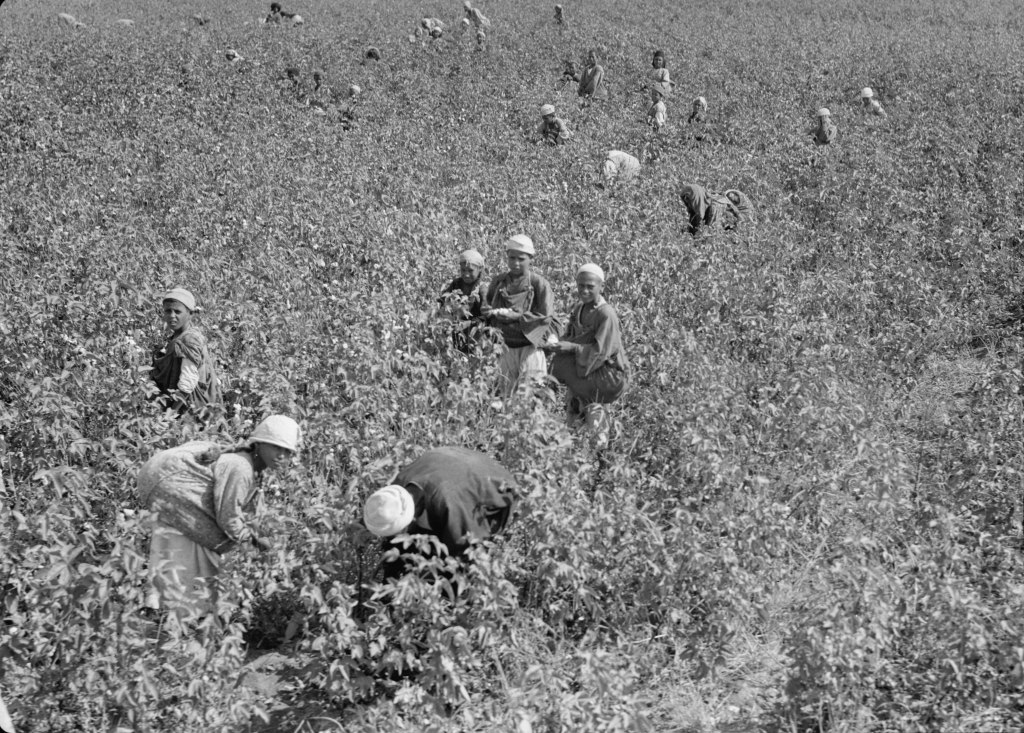
Thousands of kilometres away, in the villages of the Nile Delta, Egyptian farmers had no idea that a war in America was about to transform their lives.
Some would become rich.
Others would lose their independence.
Thousands more would be enslaved.
And the Egyptian state would embark on a financial adventure that eventually helped deliver the country into the hands of the British Empire.
The American Civil War didn’t merely change America. It helped remake Egypt.
1. When America’s cotton disappeared, Egypt struck gold
Before the war, the slave plantations of the American South supplied approximately 80% of the cotton used by British textile manufacturers.
Manchester’s factories depended on it.
So did the fortunes of merchants, bankers, shipowners and industrialists across Europe.
Then the Union Navy blockaded Confederate ports.
Southern cotton exports collapsed.
British mills began running out of raw material.
And cotton prices exploded.
Egypt, already famous for its exceptionally fine, long-staple cotton, suddenly found itself in possession of something Europe desperately needed.
Landowners began planting cotton wherever they could.
Merchants flooded into Alexandria.
The authorities encouraged production, invested in transport and imported new machinery.
By 1865, Egyptian cotton production and exports had approximately quadrupled.
A civil war on another continent had created an enormous economic boom along the Nile.
2. An American diplomat witnessed the transformation
On November 5, 1862, William Thayer, the American consul in Alexandria, wrote to Secretary of State William Seward.
He described trains and boats carrying enormous quantities of cotton from Egypt’s agricultural districts to the ports.
He recorded a remarkable increase in prices.
In July 1861, cotton had been selling for approximately $13.50 per cantar, a unit of around 99 pounds.
By September 1862, the price had reached $49.
More than three and a half times as much.
The consul also described cotton-cleaning establishments multiplying rapidly.
In June 1862, Egypt had approximately 24 steam-powered cotton-cleaning establishments completed or under construction.
By November there were about 50.
And Thayer noticed something revealing about the new economy.
Prices in Alexandria rose and fell according to news arriving from Liverpool about the course of the American war.
A Union victory could depress Egyptian cotton prices.
An American battlefield had become an economic event in an Egyptian village.
3. The war that helped end American slavery also expanded slavery in Egypt
Here is the part I find most extraordinary.
The American Civil War culminated in the destruction of chattel slavery in the United States.
But the disruption it created in world cotton markets encouraged the expansion of slavery elsewhere.
Including Egypt.
Historian Mohamed Saleh of the London School of Economics examined Egyptian population censuses from 1848 and 1868.
His findings are astonishing.
39,762 enslaved people in rural Egypt in 1848.
144,592 in 1868.
More than three times as many.
The booming cotton economy was a major cause.
Wealthier rural landowners who had access to money purchased enslaved workers, many imported through African slave-trading networks.
Meanwhile, politically connected large landowners could exploit another source of labour.
Egyptian peasants.
The powerful could use the state to compel local agricultural workers to labour on their estates, sometimes without pay.
Saleh’s research identifies two systems flourishing alongside each other: privately owned enslaved labour and state-enforced coercion.
A war thousands of kilometres away was reshaping who could control whom in the Egyptian countryside.
Human beings were being emancipated in America while demand for enslaved human beings was rising along the Nile.
That is a remarkable, deeply uncomfortable chapter of global history.
4. Egypt grew wealthier. But who actually became rich?
The cotton boom wasn’t simply a catastrophe for ordinary Egyptians.
Some small farmers initially benefited from higher prices.
People improved their homes, purchased goods, paid for pilgrimages and accumulated savings.
But the distribution of wealth and power was enormously unequal.
Large landowners expanded their holdings.
Merchants and financial intermediaries prospered.
Foreign traders, especially Europeans and Levantines, became increasingly influential in Alexandria and the cotton trade.
And as more land was devoted to producing cotton for export, Egypt became increasingly exposed to fluctuations in international demand and prices.
The country was growing richer.
But its economy was also becoming more dependent on one commodity, foreign buyers and international credit.
There is a distinction between a country exporting more valuable goods and a country becoming more economically independent.
Egypt was discovering that distinction.
5. Khedive Ismail decided to build a modern Egypt
In 1863, Ismail Pasha became Egypt’s ruler.
He wanted a modern, technologically advanced country.
Railways.
Telegraph lines.
Irrigation canals.
New neighbourhoods.
Public buildings.
European-style institutions.
He wanted Cairo to rival Europe’s great capitals.
Some of his projects brought real improvements. Others were extravagant, expensive and poorly financed.
And with cotton revenues booming, Ismail and his predecessors could increasingly attract loans from European financiers.
In 1862, Egypt had already contracted a £2.2 million foreign loan in London.
More loans followed.
The Suez Canal, whose construction had begun in 1859, opened in 1869. Its construction and associated obligations were among the factors adding to Egypt’s financial burden.
The extraordinary cotton boom had helped create the appearance that borrowing on a grand scale was sustainable.
But the American war was coming to an end.
6. Then the cotton boom collapsed
In April 1865, the Confederacy’s principal armies surrendered.
American cotton began returning to international markets.
The extraordinary prices Egyptian growers had enjoyed during the war could not be sustained.
Prices fell sharply from their wartime peaks.
Egypt continued producing cotton, and its export economy survived. This was not the disappearance of its cotton industry.
But the sudden windfall was over.
And the government had accumulated enormous financial obligations.
Ismail continued borrowing, facing expensive development commitments, mounting interest payments and increasingly difficult international financial conditions.
The global financial crisis of 1873 made borrowing more difficult.
The Ottoman financial crisis of 1875 worsened confidence.
By 1876, Egypt had approximately £69 million in funded debt and another £26 million in floating debt.
Around £95 million in total.
A staggering burden for the period.
Egypt was losing control of its finances.
7. Britain acquired the Suez Canal shares. Then came the occupation.
In November 1875, Ismail was desperately seeking money.
He sold the Egyptian government’s 176,602 shares in the Suez Canal Company to Britain for approximately £4 million.
The transaction gave Britain about 44% of the company’s shares.
A waterway built through Egypt had become an enormously valuable strategic asset.
And the Egyptian government had been forced to sell its stake in the company operating it.
In 1876, Egypt effectively defaulted and submitted to an international debt-control arrangement.
British and French financial influence grew.
Foreign creditors obtained extraordinary influence over Egyptian public revenues.
Resistance to foreign intervention, resentment within the Egyptian army and the rise of the nationalist movement led by Ahmed Urabi brought the crisis to a head.
In 1882, British forces bombarded Alexandria and invaded Egypt.
The occupation lasted for decades.
Britain did not invade Egypt simply because of the American Civil War.
The Suez Canal’s strategic importance, imperial rivalry, debt, Egyptian domestic politics and British decisions all mattered.
But the chain of events is unmistakable.
The American war had produced a cotton boom.
The boom helped accelerate Egypt’s development and international borrowing.
Its end exposed the vulnerabilities of an economy and government increasingly dependent on foreign markets and creditors.
Debt provided European powers with growing leverage.
And financial domination became entangled with military occupation.
The historical irony
What fascinates me most about this story is not simply that one country’s war affected another country’s economy.
It is how the consequences moved in different directions.
In the United States, slavery was abolished.
In Egypt, the cotton boom contributed to increased enslavement and coerced labour.
In Britain, manufacturers desperately searched for alternative supplies.
In Egypt, landowners planted more cotton to satisfy them.
European bankers financed Egyptian development.
Then European powers asserted control over Egypt’s finances.
And eventually Britain occupied the country.
Consider the chain.
An American war over the future of slavery helped enrich Egyptian cotton producers.
That enrichment encouraged new forms of exploitation and dependence.
The temporary prosperity helped sustain borrowing that ultimately threatened Egyptian sovereignty.
No one in South Carolina in April 1861 could have planned that sequence of events.
And that is one of the most extraordinary things about history.
The consequences of human actions rarely remain within the borders of the people who carry them out.
A cannon fires in Charleston.
Cotton prices surge in Alexandria.
An Egyptian farmer changes what he plants.
Another human being is purchased.
A ruler borrows millions.
A government loses control of its revenues.
And twenty-one years after Fort Sumter, British soldiers occupy Cairo.
The American Civil War ended in 1865.
In Egypt, some of its consequences were only beginning.
Historical sources
- Mohamed Saleh, “Trade, Slavery, and State Coercion of Labor: Egypt during the First Globalization Era,” The Journal of Economic History (2024) — the cotton boom, slaveholdings and forced labour.
- London School of Economics — “Rise of Egyptian cotton market tripled rural slave population 1848–68”.
- U.S. Department of State — William Thayer to William Seward, Alexandria, November 5, 1862 — contemporary cotton prices and mechanisation.
- International Monetary Fund, “Public Debt Through the Ages” (2019) — Egypt’s borrowing and debt crisis.
- Smithsonian Magazine, “How the American Civil War Built Egypt’s Vaunted Cotton Industry and Changed the Country Forever” (2016).
- U.S. Department of State — December 1875 diplomatic report on Egypt’s sale of Suez Canal shares.
- Library of Congress, “Egypt. Types & agriculture. Picking cotton” — historical photograph, c. 1934.

