
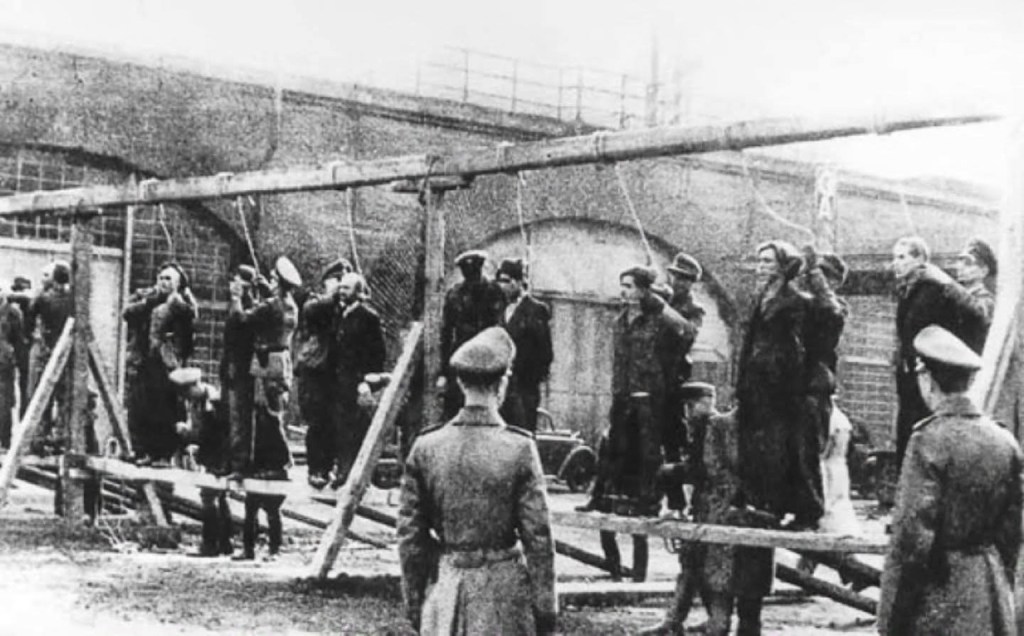
On 10 November 1944, the Gestapo and SS publicly hanged thirteen people beside Ehrenfeld railway station in Cologne. Five were teenagers, sixteen or seventeen years old. One was Bartholomäus Schink, a sixteen-year-old roofer’s apprentice. Some had belonged to the Edelweiss Pirates, working-class youths who rejected the discipline and conformity of the Hitler Youth; others were members of the armed underground around concentration-camp escapee Hans Steinbrück. All thirteen were executed without trial.
Their history is not spotless. The armed group was involved in shootings, including of innocent people. None of that excuses what happened beneath those ropes. The regime erected a gallows in the street and turned killing into a public warning: this is what happens to people who defy us. Look at the photograph. Men in uniform. Ropes around necks. A state so accustomed to its own power that it could arrange the killing of teenagers in daylight.
Today, on the 82nd anniversary of their deaths, I am going to kpBUNT in Bratislava at 18:00 to hear Yuval Dag of the Israeli organisation Zochrot present a proposal for the return of Palestinian refugees from Gaza to their historic homeland. I am not equating two different historical situations. I am thinking about the price individuals pay when they refuse to obey. Written in a taxi on the way to listen to an Israeli who refused to serve in the IDF and went to jail for his moral conviction.

