
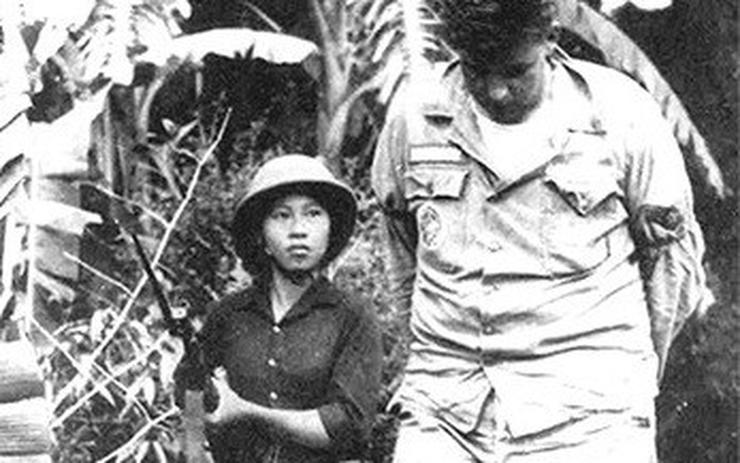
Look at the photograph. Look at the girl. Now look at the man walking in front of her.
She is Nguyễn Thị Kim Lai. Seventeen years old. Barely 1.5 metres tall. Around 37 kilograms.
He is William Andrew Robinson, a 22-year-old American airman, well over two metres tall.
She carries a rifle. His hands are bound. His head is lowered.
It is one of the most arresting images of the Vietnam War. But the astonishing part of this story happened thirty years after the photograph was taken.
The girl in the forest
In September 1965, U.S. aircraft were bombing targets in Hà Tĩnh province, North Vietnam. Robinson was serving aboard an American rescue helicopter when it was shot down. He survived and was captured on the ground.
Kim Lai was a member of the local militia. She had left school and joined others digging shelters, standing guard and searching the countryside during air attacks.
According to her later account, she heard a noise near a rock crevice while searching the forest with fellow militia members. She saw an American hiding there. She fired three warning shots into the air. He surrendered. Other members of her unit came to help take him into custody.
Photographer Phan Thoan then captured the scene that would travel around the world: the small Vietnamese teenager escorting the enormous American prisoner.
The image became a symbol of resistance. It was exhibited, inspired a poem by Tố Hữu and appeared on a Vietnamese postage stamp in 1967.
But photographs, even extraordinary ones, cannot explain a whole war. Nor should Kim Lai’s account of the capture be treated as the only account: historian Glenn Robins notes differences between Vietnamese recollections and Robinson’s own version. The photograph documents the escort, not every moment that preceded it.
2,703 days
The moment lasted seconds. Its consequences lasted years.
Robinson spent 2,703 days as a prisoner of war in North Vietnam, enduring harsh conditions and torture. He was released in 1973. His imprisonment was exceptionally long for an American enlisted serviceman.
Kim Lai’s life moved elsewhere. She continued her wartime service, trained as a nurse and eventually worked in healthcare. She married and raised three children.
They were not friends. They were not pen pals. For decades they were two people in a photograph, living different lives in countries once at war.
Thirty years later
In 1995, Japanese broadcaster NHK helped arrange a reunion for a documentary. Robinson returned to Vietnam to meet Kim Lai and the photographer whose picture had made their encounter famous.
One morning in September, Kim Lai was visiting a neighbour with a grandchild when someone called her home. A foreign visitor had arrived.
It was Robinson.
The giant from the photograph was standing there again. And the small girl with the rifle was now a grown woman, a mother and grandmother.
They embraced. Robinson joked that she had not grown much. They exchanged stories about family, hardship and the years that had passed.
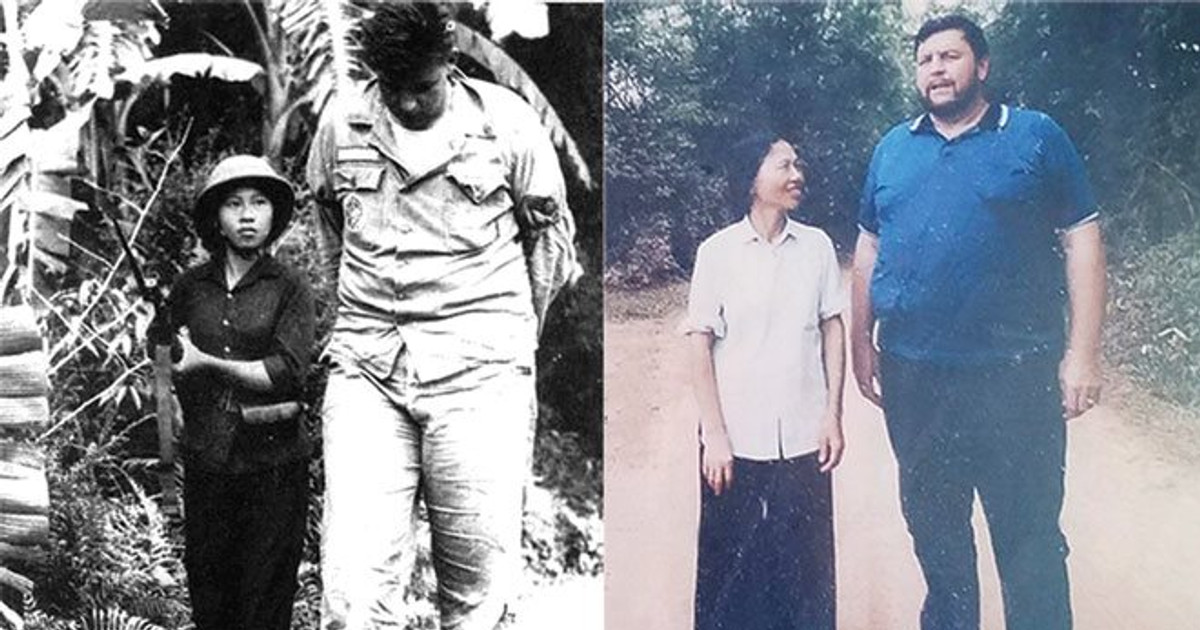
Robinson told her that if either of them had aimed and fired at the other in 1965, they would not be having this conversation thirty years later. He also expressed a wish that no photograph like theirs would ever have to be taken again.
This was not a sentimental ending that erased his captivity. It did not undo the bombing of Vietnamese villages, the dead, the injuries or the years stolen from human lives. Nor did one reunion reconcile two nations by itself.
It was smaller than that. And, for precisely that reason, more human.
A seventeen-year-old girl had once walked through a forest carrying a rifle behind a prisoner. Thirty years later, neither needed the rifle, the handcuffs or the pose the camera had preserved.
Once, one of them had been made to walk with his head bowed. Now they could stand side by side.
Sources and further reading
- Glenn Robins, The Longest Rescue, chapter 6, “An Iconic Image” (University Press of Kentucky, 2013) — historical context, competing accounts and the 1995 documentary.
- Glenn Robins, The Longest Rescue: The Life and Legacy of Vietnam POW William A. Robinson — Robinson’s imprisonment and biography.
- VnExpress, “O du kích nhỏ – chuyện đời sau bức ảnh” (2018) — Kim Lai’s recollections of the capture and reunion.
- Doanh Nhân Sài Gòn, Nguyễn Văn Mỹ (2024) — later interview with Kim Lai and the human story behind the photograph.

