
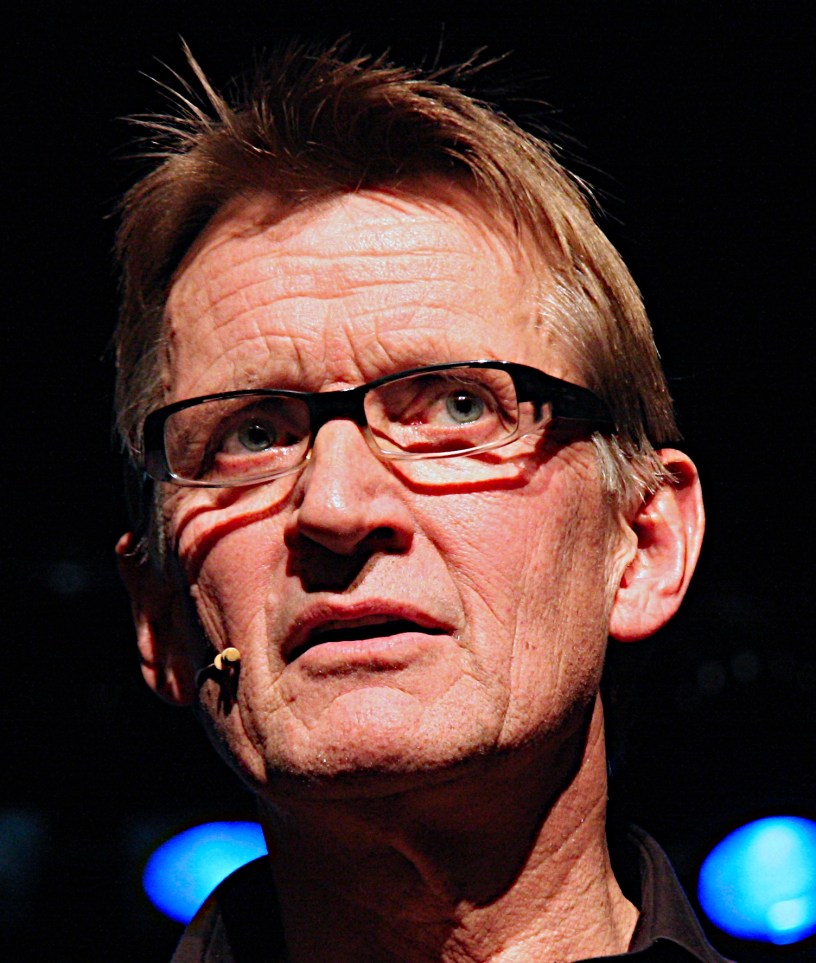
Featured photograph: Dr Mads Gilbert, 2009, by Bjarne Thune, licensed CC BY 3.0. This is a portrait, not a photograph from the incidents described below.
A child died in his hands. Surgeons operated in corridors. When the electricity failed, they used the light from mobile phones to see what they were cutting.
Norwegian emergency physician Dr Mads Gilbert spent years working alongside Palestinian colleagues at Gaza’s al-Shifa Hospital. He was there during the 2008–09 and 2014 wars, documenting what arrived through the emergency doors and what happened when the hospital could no longer keep pace.
He did not need to invent the horror. The emergency department was doing that work for him.
What follows are ten episodes and observations from Gilbert’s firsthand accounts, reported interviews and 2014 book Night in Gaza. The dates matter: these accounts concern 2009 and 2014, not firsthand treatment inside Gaza during the war that began in October 2023.
1. A boy died in his hands after a market was bombed
On January 4, 2009, casualties from the bombing of a vegetable market came pouring into al-Shifa. Gilbert and his colleagues worked on one boy, but could not save him. Then they had to turn to the next casualties.
The operating rooms filled. More people arrived. Gilbert went back to the entrance and was told yet another wave was coming. He later recalled that for a moment he did not know whether he had any strength left to be a doctor.
It is one thing to be unable to save a child. It is another to hear that the next ambulance is already at the door.
2. The surgeons were operating on two people per room — and in corridors
During the same 2009 emergency, there were more injured patients than operating rooms could hold. Gilbert described surgeons operating on two patients in one room, with additional work taking place in hallways.
His colleague Dr Erik Fosse told The Guardian that on one early day of the assault the hospital received around 300 patients and performed some 80 operations. The numbers are almost meaningless until you imagine the work hidden inside each one: anaesthesia, cleaning, transfusions, stitches, hours of surgery, and someone waiting outside for news.
3. After the Shuja’iyya bombardment, hundreds flooded al-Shifa
On July 20, 2014, intense Israeli shelling struck the Shuja’iyya neighborhood of Gaza City. Gilbert said approximately 400 to 500 casualties came into al-Shifa in the aftermath. That estimate describes hospital casualties, not a confirmed count of the dead.
The United Nations later documented dozens of civilian deaths, including children, in the Shuja’iyya fighting on July 19 and 20. The staff at al-Shifa had to decide where to put the injured, who could still be helped and who would have to wait. Gilbert’s 2015 testimony records the scale.
4. The cleaners had to remove the blood before the next wave arrived
In his July 2014 letter from al-Shifa, Gilbert described blood pooling on the emergency-room floor and workers clearing blood-soaked bandages, clothing and discarded medical equipment to make room for the next casualties.
Those cleaners were not peripheral to the effort. Without them, even a surgeon with a steady hand could not keep working in the emergency room. And before they had finished, the bombardment was sending more people toward the hospital.
5. Two little boys arrived with burns across their faces and heads
In an excerpt from Night in Gaza published by The Guardian, Gilbert recalls two boys, one perhaps two or three years old and the other around seven. They arrived with burns and numerous small shrapnel wounds on their faces and necks.
A Palestinian colleague called for the children to be rushed to intensive burn care. Gilbert picked up the younger boy and carried him, watching his scorched hair, swollen eyelids and the blood coming from one ear. He feared there might be a penetrating injury to the skull.
Outside, drones could still be heard. Inside, the child needed a doctor to keep moving.
6. When operating-room lights went out, mobile phones replaced them
Al-Shifa possessed trained surgeons and specialized operating rooms, but repeated power cuts interrupted care. As Gilbert explained to the Associated Press and to Britain’s Council for Arab-British Understanding, the hospital relied on aging generators short of fuel and spare parts.
During surgery, the lamps could suddenly go dark. The staff would take out their phones and shine the screens onto the operating field while waiting for power to return.
Not because Palestinian surgeons lacked knowledge. Because the electricity was failing around them.
7. Injured children were stitched with inadequate pain relief
Gilbert reported that some children with lacerations requiring stitches could not receive the general anaesthesia or adequate local pain relief that would have been routine in a well-equipped Norwegian hospital.
Some, he said, were fortunate to receive a little local anaesthetic. Others had to endure treatment without enough. The staff were managing a mass influx of injuries while anaesthetic drugs and operating-room capacity were scarce.
He was explicit that this was not indifference from Palestinian doctors. It was a consequence of the medical crisis.
8. A man with hundreds of shrapnel injuries died before surgery
In a July 25, 2014, interview, Gilbert described a man struck by hundreds of fragments. They had penetrated his body and caused catastrophic bleeding. He died before he could reach the operating table.
The injuries were too severe for the team to save him. There was nothing cinematic about the episode: no last-minute rescue, no reassuring ending. The doctors had to move on to the living.
9. Hospital workers kept coming despite months without wages
In testimony about 2014, Gilbert said staff members at al-Shifa had not been paid their normal wages for months. Doctors, nurses, ambulance crews, cleaners and other hospital workers were sometimes paying out of their own pockets just to reach work.
The fighting coincided with Ramadan. Many were fasting, exhausted and worried that the next ambulance might contain someone from their own family.
Yet they showed up. For Gilbert, the extraordinary achievement at al-Shifa was the professionalism and solidarity of the Palestinian medical teams.
10. He invited President Obama to spend one night in the hospital
On July 20, 2014, Gilbert wrote an anguished open letter from al-Shifa, describing the wounded, the exhausted staff and the blood being cleared from the treatment rooms.
He addressed the American president directly, asking him to come and spend one night in the hospital, even disguised as a cleaner.
The proposition was not that one visit could resolve the conflict. It was that a person insulated from the consequences of political decisions might see those consequences differently after standing among the wounded.
And when the war ended, Gilbert refused to let his memories become private. He documented them in photographs and in Night in Gaza. The names of individual patients were often missing. The scale of what was happening to them was not.
The horror was real. So was the dignity.
Gilbert is also a longstanding political activist for Palestinian rights; his political judgments are not the same thing as independent forensic findings. His firsthand accounts, however, are supported in important respects by contemporaneous reporting from the Associated Press, other physicians and United Nations investigators.
His testimony is strongest when he describes what was in front of him: a dead child, an overflowing emergency room, a dim phone held over a surgical wound, a Palestinian nurse returning to work while her own life was falling apart.
Remember the phone light. Remember the child who died. Remember the people who kept operating.
Sources and original testimony
- The Guardian, January 16, 2009: “This is what hell must look like” — Gilbert and Erik Fosse on the 2009 vegetable-market casualties, the boy who died and surgeries in corridors.
- Council for Arab-British Understanding, June 2015: Gilbert’s testimony about the 2014 war — Shuja’iyya casualties, phone-light surgery, anaesthetic shortages and unpaid hospital staff.
- Associated Press, republished by The Times of Israel, July 21, 2014 — contemporaneous independent reporting on emergency-room overcrowding and phone lights during surgery.
- The Guardian, June 23, 2015: Gilbert discusses Night in Gaza — the two burned boys, brutal triage and medical workers’ resilience.
- Qantara, July 25, 2014: “Nobody is safe in Gaza” — Gilbert’s account of serious shrapnel injuries, overwhelmed wards and power cuts.
- Medact, July 22, 2014: Dr Mads Gilbert’s open letter to President Obama — his original account from al-Shifa.
- Al Jazeera, July 20, 2014: Shuja’iyya bombardment — contemporaneous reporting on the neighborhood’s casualties.
- Book review in Medicine, Conflict and Survival: Night in Gaza: From the Front Line — context for Gilbert’s detailed 2014 record.
Editorial note: These incidents occurred during the 2008–09 and 2014 Gaza wars. Numbers quoted from Gilbert are his reported estimates at the time. They should not be confused with casualty counts from 2023–26 or treated as precise historical totals.


