
One night in Gaza, a British-Palestinian surgeon amputated limbs from six children. One was three years old. He lost an arm and a leg. Nobody at the hospital even knew his name.
There are descriptions of war that get weaker the more adjectives you add. Dr Ghassan Abu-Sittah’s testimony is the opposite. The facts alone are almost unbearable.
Abu-Sittah, a plastic and reconstructive surgeon with decades of experience in conflict zones, entered Gaza in October 2023 and spent 43 days treating wounded people in hospitals including Al-Shifa and Al-Ahli. Afterward, he described what he had witnessed in interviews with PBS, the Washington Post, and doctors and researchers at Harvard.
These are ten of the things he reported seeing and doing. They are not imagined scenes or quotations invented for dramatic effect.
1. Six children needed amputations in a single night
Abu-Sittah told PBS he operated on roughly ten to twelve patients a day, about half of them children. During one particularly horrific night, he performed amputations on six children. The work did not end when the limbs were removed. Those children would face repeated operations, rehabilitation, disability and, for some, the loss of everyone who might ordinarily care for them.
2. A three-year-old lost an arm, a leg and his family
One of those six children was a three-year-old boy. Abu-Sittah removed one upper limb and one lower limb. The child was the only known survivor of his family. The staff did not know his name.
When the surgeon checked on him the following day, a woman whose own son was injured in a neighboring bed had taken the little boy onto her lap. She was feeding him together with her son.
The boy had lost two limbs. A stranger made room for him.
3. He treated a little girl whose face had been torn apart
He remembered a girl, perhaps eight or nine, whose father worked as a doctor at Al-Shifa. Her father and two siblings had been killed. She was alone and severely wounded; large parts of her face had been destroyed.
As Abu-Sittah carefully cleaned debris from her wounds and hair, he noticed her braids and a small flower-shaped hairband.
A detail belonging to an ordinary little girl, surviving inside a scene no child should ever have to enter.
4. The wounded arrived faster than he could operate
Even after an exhausting day of surgeries, another strike could send dozens more patients into the emergency department. Abu-Sittah described waves of approximately 80 to 150 wounded people arriving after attacks.
Imagine finishing twelve operations and discovering that the queue for surgery has grown while you were working. There were days when saving people felt almost indistinguishable from falling further behind.
5. He washed open wounds with detergent and vinegar
As hospital supplies dwindled, the medical teams improvised. Abu-Sittah described mixing detergent, vinegar and water to clean contaminated injuries when ordinary antiseptics were unavailable.
At a Harvard discussion, he recalled children screaming as he cleaned their severe wounds because the infections could otherwise become fatal. These were procedures doctors knew how to do safely; what had disappeared were the materials that made that possible.
6. He had to decide who would be left to die
In his PBS interview, Abu-Sittah said the collapse of surgical capacity forced clinicians to choose which patients could still be saved. People with major head injuries were sometimes left without the operation they needed; severe burn patients could not all be treated.
There is a form of carnage in which the doctor knows the operation, the patient still has a chance, and the hospital no longer has the means to try.
7. The hospital itself became a scene of mass casualties
Abu-Sittah was working at Al-Ahli Hospital when a devastating explosion struck its grounds on October 17, 2023. He described hearing the blast and treating the aftermath. The cause and responsibility for that particular explosion were disputed; his firsthand account establishes the human consequences he witnessed, not a conclusive forensic attribution.
For medical workers already overwhelmed by the injured, the place to which people had fled for shelter was now another place from which the injured were arriving.
8. He reported burns he believed were caused by white phosphorus
Abu-Sittah said he recognized distinctive injuries resembling white-phosphorus burns from his experience treating patients in earlier wars in Gaza. Human Rights Watch also raised concerns about the use of white-phosphorus munitions during the conflict.
Israel’s military denied the allegation of unlawful use in Gaza. A surgeon’s assessment of an injury is important medical testimony, but identifying the precise munition in an individual case calls for further forensic evidence. His account deserves investigation rather than an automatic conversion of suspicion into proof.
9. His colleague was killed. The colleague’s son became the family caretaker
Abu-Sittah also recalled losing a fellow plastic surgeon, Dr Medhat Saidam, when a house was struck. Saidam’s injured wife and surviving children were later brought to the hospital.
The eldest child was twelve. With his father dead and his mother injured, he started looking after his younger siblings, arranging help, running errands and caring for the family.
Twelve years old. Already required to act as the adult.
10. He still witnessed people trying to keep one another alive
In another episode, a nineteen-year-old pregnant woman arrived with a penetrating abdominal wound. The surgeons feared that treatment could end her ability to bear children. They found an obstetrician who could perform a Caesarean section. A baby was born.
Amid months of injuries and deaths, Abu-Sittah heard a newborn cry.
He also spoke of sharing food, medicine and shelter, of strangers adopting the needs of orphaned children, of people trying to preserve one another in a world organized around their destruction.
What does this testimony establish? It establishes what a surgeon says he directly witnessed: children with devastating wounds, hospitals running out of essential supplies, impossible clinical decisions and extraordinary acts of care. Some of his broader conclusions about the intent behind the destruction are interpretations, not details a single doctor can prove by treating injuries.
But one does not need to settle every contested interpretation to confront the central fact.
Six children had amputations in one night. One was three years old. His name was unknown. And someone else’s mother fed him.
Sources: Dr Ghassan Abu-Sittah’s firsthand testimony
- PBS NewsHour, December 18, 2023: Interview with Ghassan Abu-Sittah — the six children, daily operations, injuries, shortages and triage decisions.
- Harvard Magazine, December 12, 2023: The collapse of Gaza’s healthcare system — a three-year-old’s amputations, detergent and vinegar, and the collapse of hospital services.
- The Washington Post, December 15, 2023: A doctor went to Gaza to help — detailed firsthand recollections, the injured girl, the three-year-old, his colleague and the birth of a baby.
- The Guardian, November 27, 2023: The surgeon who witnessed Gaza’s hospitals cease to function — the Al-Ahli explosion, hospital conditions and his reported observation of burns resembling white-phosphorus injuries.
- Rosa Luxemburg Stiftung: Extended interview with Dr Ghassan Abu-Sittah — the 43 days and the disappearance of surgical capacity.
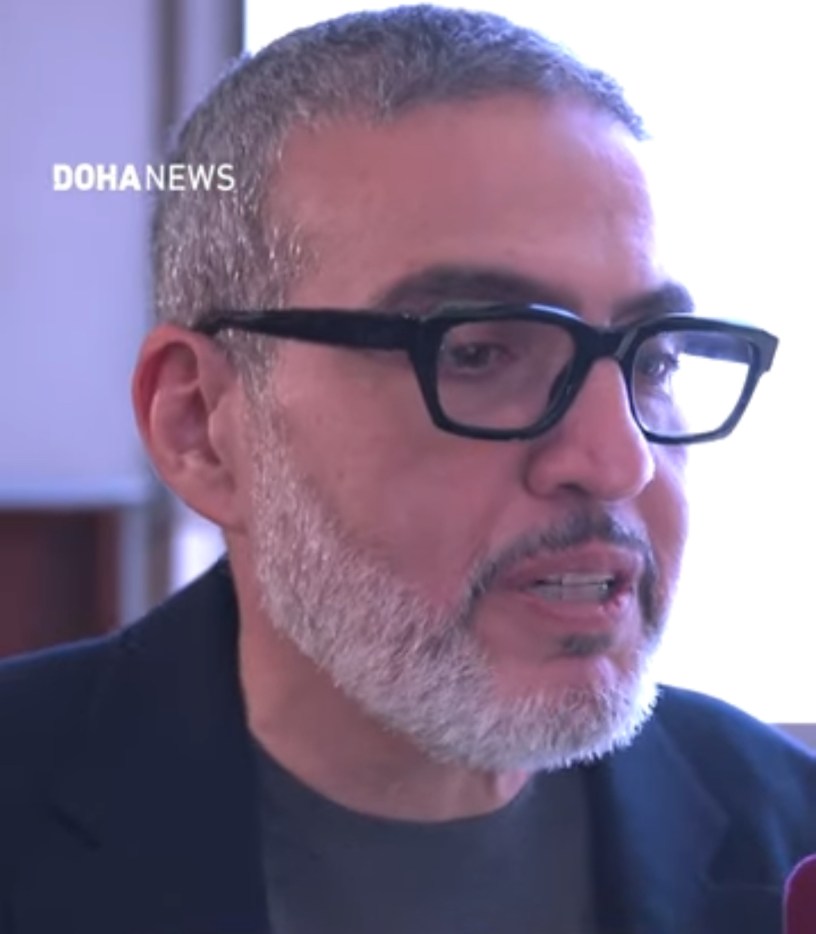
Featured image: Dr Ghassan Abu-Sittah interviewed by Doha News, December 7, 2023. Doha News Official / Wikimedia Commons, CC BY 3.0. No photographic scene in the article is represented as an image of one of the patients.


