
On March 18, 2025, a surgeon saved a sixteen-year-old boy’s life in Gaza. Five days later, just before that boy was due to leave the hospital, an Israeli airstrike killed him in his bed.
His name was Ibrahim Sami Jumaa Barhoum. His surgeon was Dr Feroze Sidhwa, an American trauma and critical-care specialist who had volunteered at Gaza’s European Hospital in 2024 and returned to Nasser Hospital in Khan Younis in March 2025.
The surgeon had repaired injuries to Ibrahim’s colon and rectum after a blast. He had given him a colostomy, a surgical opening that allows stool to leave the body while the injured bowel heals. Ibrahim was recovering exceptionally well, without the serious infection that was so common among the hospital’s wounded patients.
He was sixteen. He wanted to go home. His twin brother had already been killed.
On the evening of March 23, Sidhwa was walking downstairs to change Ibrahim’s dressings when another doctor stopped him: a different patient in intensive care appeared to be bleeding internally. Sidhwa went to examine that patient.
Then the building shook.
The strike struck the men’s surgical ward, where Ibrahim was recovering alongside Ismail Barhoum, a Hamas political official who was also receiving medical treatment. The Israeli military acknowledged the strike and said Barhoum was its target. Ibrahim was also killed.
After the lockdown lifted, Sidhwa saw a body brought into the emergency department. He recognized the boy he had operated on five days earlier.
In the surgeon’s later account, the bitterest fact was almost banal: Ibrahim was supposed to be discharged the following morning. The Airwars incident assessment independently identifies the sixteen-year-old among those killed by the declared Israeli strike. The circumstances are also reported by The National and The Independent.
This episode was not an isolated horror in Sidhwa’s account. Across two missions he documented what happens when children arrive wounded faster than a hospital can treat them. These are ten parts of that testimony, with clinical observations separated from his conclusions about who was responsible.
1. He operated on Ibrahim on March 18. Ibrahim was killed on March 23.
The boy’s bowel had been torn by fragments from a strike. On March 18, Sidhwa operated, repaired what he could and created a protective colostomy. By March 23, Ibrahim was sitting up, healing and preparing to leave.
Sidhwa had intended to check his dressings. A colleague’s request for help delayed him by a few minutes. The Israeli strike hit Ibrahim’s ward before he arrived.
The military said it was targeting an injured senior Hamas figure in that room. That explanation is relevant to the question of intended target, but it does not settle the legal question of attacking a hospital ward containing other patients. Medical facilities and wounded patients are protected under international humanitarian law, subject to specific rules; the precise legality of this strike requires examination of its circumstances.
2. The surgeon survived because he was needed by another patient.
Dr Hanib, a colleague in intensive care, had asked Sidhwa to evaluate a sixteen-year-old boy named Mohammad who appeared to be bleeding inside his abdomen. Sidhwa examined him and agreed that he needed another operation.
The delay kept Sidhwa upstairs. He later said he would probably have been in Ibrahim’s room when the missile struck if he had continued down the stairs.
One patient was saved from being left unattended. Another was killed in his bed. The doctor survived because an emergency interrupted his routine.
3. A three- or four-year-old girl arrived with fragments in her head.
In the early hours of March 18, Israeli forces resumed large-scale aerial attacks after weeks of ceasefire. The blast pressure from explosions near the hospital jolted Sidhwa awake. He went downstairs to help triage the influx of wounded people.
The first patient he described was a girl of about three or four. She had penetrating injuries to her head and face, very weak signs of circulation and the irregular breathing that can precede death. No neurosurgeon was available to rescue her.
Sidhwa explained to the child’s father that she would not survive. He then picked her up and placed her in her father’s arms. The father took her toward a space where families could stay with children whom the medical team could no longer save.
4. A six-year-old’s heart stopped. Surgeons restarted it. He died twelve hours later.
Later that morning, Sidhwa and Irish trauma and vascular surgeon Dr Morgan McMonagle treated a six-year-old boy with two shrapnel wounds to the right ventricle of his heart. Blood compressed the heart and prevented it from working properly.
The child’s heart stopped as he was moved toward the operating room. McMonagle opened his chest, repaired the injury and managed to restart it. They found additional catastrophic injuries to the liver, stomach and intestines.
The operation brought him to intensive care alive. He died about twelve hours later. In a hospital that could provide sustained critical care, the team might have had more options; Sidhwa did not claim certainty that this child could have survived elsewhere.
5. A woman’s pelvis was torn apart. The team could not keep her alive.
Among the patients Sidhwa operated on during the March 18 mass-casualty emergency was a twenty-nine-year-old woman with extensive damage to her pelvis and lower organs. The wound left her bleeding heavily and required complex emergency surgery.
Sidhwa later learned she was the sister of one of the hospital’s physicians. His team managed to get her out of the operating room and into intensive care. She too died within approximately twelve hours.
An operating room can stop the bleeding that is immediately visible. Survival afterward also requires blood products, infection control, specialists and resources that had been depleted by the war.
6. Another six-year-old reached the operating room with a severed leg artery.
A different six-year-old had been struck by fragments in the chest, abdomen and leg. The team opened his abdomen and was relieved to find no major internal bleeding there. But a crucial artery behind the knee had been severed.
McMonagle repaired the artery. Unlike some of the other children, the boy survived the immediate operation. Sidhwa did not provide a verified long-term outcome in the contemporaneous statement.
This was the other side of the hospital’s work: not every child died, and survival was still being fought for minute by minute.
7. He performed more paediatric trauma surgery in one night than in a year at home.
Sidhwa said the hospital received roughly 130 patients during the first six hours of the March 18 emergency. He performed six urgent operations that morning and several more over the rest of the day. About half of the patients he operated on were children.
He had treated victims of the 2013 Boston Marathon bombing during his medical training. He told +972 Magazine that even that experience had not prepared him for the scale of trauma arriving at one Gaza hospital.
The Palestinian doctors, nurses and triage staff were not passive victims of the crisis. He repeatedly credited their professionalism and their capacity to keep treating patients while facing danger themselves.
8. During his earlier mission, thirteen small children arrived shot in the head or chest.
During Sidhwa’s first Gaza mission, from March 25 to April 8, 2024, he wrote down thirteen cases of young children arriving with gunshot wounds to the head or chest. He said nearly all died.
Initially, he thought the cluster might be linked to a single shooter near the hospital. Later, when he met doctors who had served at other facilities, he heard similar accounts. That led him to survey and organize testimony from dozens of foreign volunteer healthcare workers.
The resulting New York Times essay, published October 9, 2024, reported testimony from sixty-five doctors, nurses and paramedics. Many described serious paediatric gunshot injuries, malnutrition and severe psychological distress.
These are crucial medical observations. Wounds to the head or chest do not, by themselves, establish who fired each bullet or whether a given shot was deliberate. Sidhwa’s concerns about systematic targeting demand independent investigation rather than being presented as a settled verdict for every individual case.
9. In 2024, the hospital had become a vast camp for displaced families.
During his first mission at Gaza European Hospital, Sidhwa saw a medical centre intended for hundreds of patients overwhelmed by wounded people and by families who had nowhere safer to sleep.
In a CNN interview, he estimated that between ten and fifteen thousand displaced people were sheltering on the grounds and that only four toilets were available to them. The number was his estimate, not an independently counted census.
He described the collision of ordinary domestic survival and intensive medicine: displaced families trying to prepare food in spaces where doctors needed to treat the wounded. This was no longer just a hospital coping with casualties. It was a hospital also functioning as a refuge.
10. He stood before the United Nations to describe children the world had not met.
On May 28, 2025, after returning from his second mission, Sidhwa addressed the United Nations Security Council. He spoke not only about individual injuries but also about healthcare workers, destroyed facilities and the implications of attacks on hospitals.
He described treating young children with fragments penetrating vital organs, and pregnant women whose injuries were beyond what most trauma specialists in wealthy countries encounter in a lifetime.
In later interviews he continued to talk about Ibrahim. A teenager who should have gone home. A boy who had endured surgery, learned to live temporarily with a colostomy and recovered well enough to be discharged. A life that survived one attack and was ended inside the place where he was recovering.
The name that should not disappear into the casualty totals
There are important distinctions in these accounts. Sidhwa personally treated many of the patients described above. Some wider patterns emerged from conversations with colleagues, and some claims about intention and legal responsibility remain disputed. Israel said its March 23 attack was aimed at a Hamas official. The strike on Nasser Hospital and Ibrahim’s death, however, are corroborated events.
The central cruelty of this story is not something the reader has to infer from rhetoric.
On March 18, Ibrahim was gravely wounded. Doctors operated and kept him alive. On March 23, he was nearly ready to go home. He died that evening in the surgical ward.
A sixteen-year-old boy had survived the blast that injured him. He did not survive the attack on the bed in which he was healing.
Sources: firsthand testimony and independent reporting
- Democracy Now!, July 7, 2025: Sidhwa describes Ibrahim’s surgery, death and the Nasser Hospital strike
- The National, March 27, 2025: Sidhwa’s narrow escape and the boy killed in the hospital
- Airwars: March 23, 2025 Nasser Hospital strike, named casualties and independent incident assessment
- The Independent, March 24, 2025: Interview with Sidhwa following the strike
- +972 Magazine / Local Call, April 9, 2025: Sidhwa’s detailed account of March 18 and March 23
- Antiwar.com, March 19, 2025: Full text of Sidhwa’s firsthand March 18 medical statement
- MedGlobal, March 18, 2025: Medical charity statement with Sidhwa’s contemporaneous account
- The New York Times, October 9, 2024: “65 Doctors, Nurses and Paramedics: What We Saw in Gaza,” by Feroze Sidhwa
- CNN transcript, October 14, 2024: Sidhwa on thirteen wounded children and displaced families
- Foundation for Middle East Peace, recorded May 30, 2025: Peter Beinart interviews Sidhwa about both missions
- Dr Feroze Sidhwa’s official biography and publication links
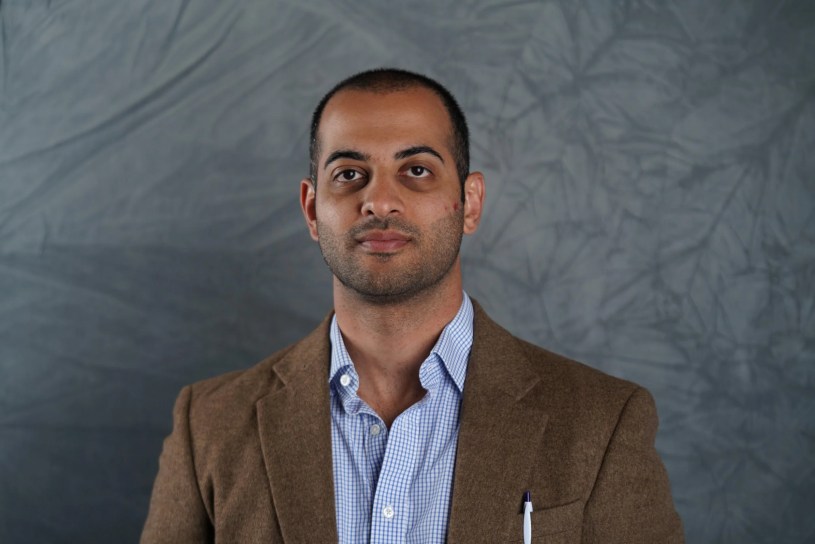
Featured photograph: Portrait of Dr Feroze Sidhwa from his official website. The photograph is an editorial portrait, not an image of Ibrahim or of the March 23 hospital strike.
Editorial note: The 2024 and 2025 episodes occurred on separate missions. Where patient numbers are given, they are attributed to the relevant clinician or investigation. Allegations about intent, military responsibility for other shootings and legal violations are distinguished from independently documented deaths, injuries and attacks.

