
In 2008, a 28-year-old Palestinian journalist named Bassam al-Wahidi was going blind.
He lived in Gaza, had recently married, and needed medical treatment outside the territory. He still had some vision in his left eye. His right eye was deteriorating badly.
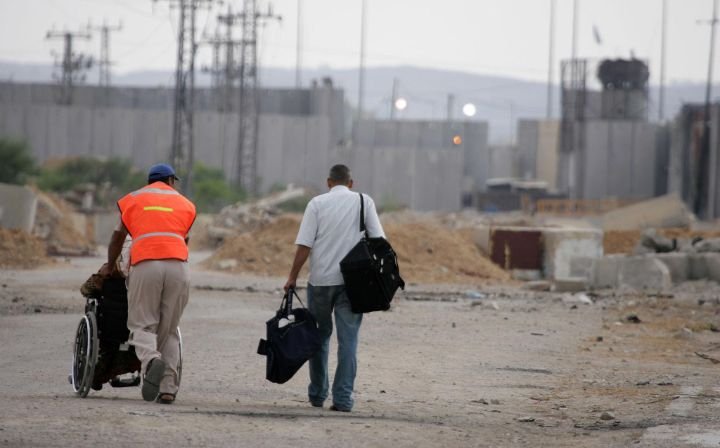
To get treatment, he needed permission to pass through the Israeli-controlled Erez crossing.
Instead, according to his sworn testimony, he was taken through underground passages into an interrogation room.
An Israeli intelligence officer introduced himself as Moshe.
He wanted information.
Not about Bassam’s eyes. About other Palestinians.
Bassam described being told that if he agreed to cooperate, he could receive treatment. Otherwise, he would be left blind and become a burden to his family and friends.
Think about that for a moment.
A 28-year-old man. Newly married. Losing his eyesight. Sitting opposite an intelligence officer who knows exactly what he needs.
Bassam refused.
He returned to Gaza without treatment. By the time his testimony was reported in August 2008, he was completely blind in his right eye and losing vision in the other.
He feared his disability might destroy his marriage.
This wasn’t an isolated allegation.
That August, the Israeli organisation Physicians for Human Rights published an 80-page investigation called Holding Health to Ransom.
It had collected testimonies from 32 Palestinian patients who described interrogations, pressure to provide intelligence, and medical permits being withheld after they refused to cooperate.
The patients included people with serious illnesses who needed treatment unavailable in Gaza.
In 2009, the British Medical Journal reported that at least 438 Gaza patients had been interrogated by Israel’s Shin Bet between January 2008 and March 2009.
Israeli authorities insisted the interrogations were legitimate security screenings and denied conditioning medical treatment on becoming an informant.
But the patients’ accounts described something quite different.
They described a security service exploiting the vulnerability of sick people to obtain information about their neighbours, relatives and communities.
You don’t have to bomb a hospital to use medicine as a weapon.
Sometimes all you need is an exit permit, an interrogation room, and a man who is terrified of never seeing his wife’s face again.

