
On July 23, 1944, the Gestapo arrested a 19-year-old French Resistance fighter who had shot a German soldier in occupied Paris. She was tortured and faced execution.
One month later, on her twentieth birthday, she helped capture 80 German soldiers. Then she drank the champagne they had been carrying back to Germany.
Her name was Madeleine Riffaud. Her Resistance codename was Rainer, after the poet Rainer Maria Rilke. She was born on August 23, 1924, and joined the struggle against Nazi Germany while still a teenager.
German occupation was not an abstraction to her. As a girl, she had been kicked and humiliated by a German soldier. She later described the incident as one of the things that pushed her toward resistance. By 1944, she was working with the Francs-tireurs et partisans, carrying out clandestine operations in Paris.
A shooting in broad daylight
On July 23, 1944, Riffaud cycled onto the Pont de Solférino in Paris with a revolver. The massacre of civilians at Oradour-sur-Glane the previous month had hardened the resolve of her Resistance group. Their campaign called for attacks on members of the occupying forces.
She approached a German soldier on the bridge and shot him. Then she tried to escape on her bicycle.
She did not get far. French police working under the collaborationist regime intercepted her and handed her over to the Gestapo.
She was interrogated and tortured. The men questioning her wanted the names of other Resistance members. She did not betray them. She expected to be shot.
Instead, after narrowly escaping execution, she was moved to Fresnes prison and later placed on a deportation train bound for Ravensbrück. Other women helped her jump from the train. German forces recaptured her, but she had avoided that transport. A prisoner exchange negotiated through Swedish consul Raoul Nordling finally secured her freedom in August.
She returned to the fight almost immediately.
Four Resistance fighters against a German military train
Paris rose against the German occupation in August 1944. On August 23, Riffaud was assigned to a mission near the Buttes-Chaumont: intercept a German train attempting to leave the city.
She was the leader of a tiny detachment: four fighters, including herself. In a 2024 interview with the French government, she recalled being given little more than an order to get the job done.
The train was trapped near a railway tunnel. From a footbridge above, her group threw their three packets of explosives at it.
According to Riffaud’s account, 80 Wehrmacht soldiers surrendered. Four Resistance fighters had captured an entire trainload of Germans.
They collected the soldiers’ weapons and opened the cargo crates.
Inside were champagne and foie gras, destined for Germany.
So they ate and drank.
Only during the celebration did Madeleine remember the date.
August 23, 1944. Her twentieth birthday.
Weeks earlier she had been in a Gestapo prison, expecting to die before turning twenty. Now she was drinking champagne seized from the army that had occupied her country.
She kept fighting after Paris was liberated
Two days later, she fought in the battle for the Place de la République. A young fellow Resistance fighter, the violinist Michel Tagrine, was killed. While Paris celebrated liberation, Riffaud mourned the comrades who had not survived to see it.
After the war she became a poet and journalist. She covered the Algerian and Vietnam wars, opposed colonial violence, and kept telling younger generations about the Resistance.
Madeleine Riffaud died on November 6, 2024, aged 100.
At nineteen, she was tortured and expected to be executed. At twenty, she helped liberate her city.
And she celebrated the birthday she had nearly lost with the champagne of a defeated enemy.
The Musée de la Libération de Paris preserves an original portrait of Madeleine Riffaud taken by an American soldier on August 27, 1944, four days after the train operation.
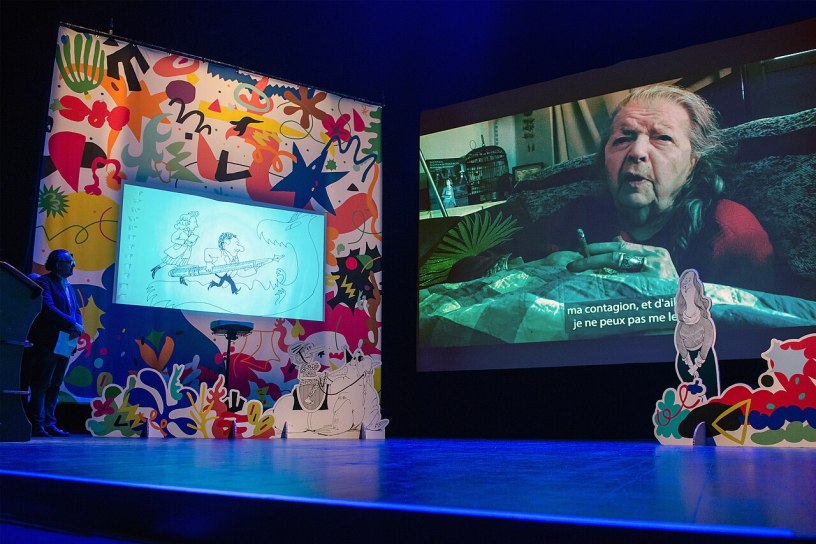
Featured photograph: Madeleine Riffaud at the Angoulême comics festival in 2022. Photograph by Selbymay, licensed under CC BY-SA 4.0. This photograph was taken decades after the events described.
Sources
French government: Madeleine Riffaud interview (June 2024) — her first-person account of her Resistance activity, the capture of the German soldiers, and her twentieth birthday.
Centre d’Histoire de la Résistance et de la Déportation, Lyon — museum account of her clandestine activities and the July 23, 1944 shooting.
Le Monde: obituary, November 6, 2024 — her arrest, escape from deportation, and later life.
The Guardian: interview with Madeleine Riffaud, August 21, 2004 — her role in the liberation of Paris and memories of the war.
Support DEPTH
Independent research and writing take time. If these stories matter to you, you can help keep them coming.

Boost us
If you like our content help us to create more.
$5.00
Discover more from The Confessor
Subscribe to get the latest posts sent to your email.

