
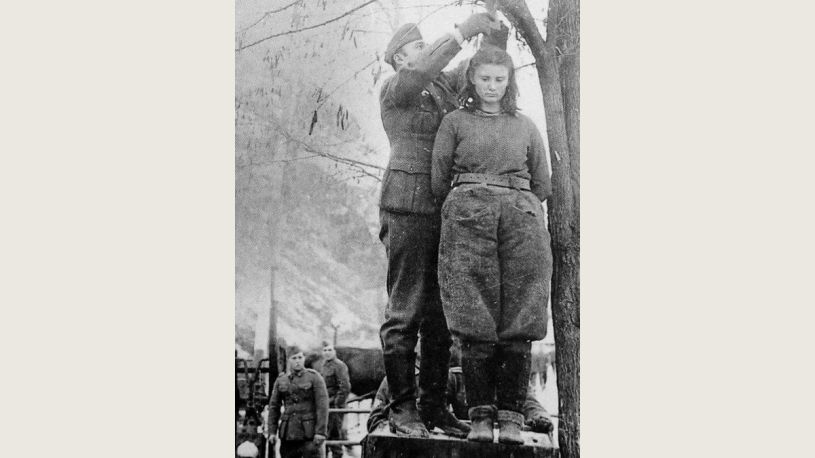
There are photographs of Lepa Radić from the final hours of her life. She was seventeen. German forces had captured her during fighting in occupied Yugoslavia. Instead of treating her as a child, they prepared to execute her as an enemy.
Radić had joined the Yugoslav Partisans after her family’s involvement in anti-occupation activity. Partisan war in Bosnia was waged amid German military campaigns, local collaborators, mass reprisals and enormous civilian suffering. Resistance fighters carried weapons, but they also supported civilians and helped move people away from immediate danger.
She was hanged in Bosanska Krupa in February 1943. Accounts of her final moments describe attempts to obtain information about other partisans and her refusal to provide it. The surviving photographs make the event unusually hard to turn into an abstract statistic. One can see a young person facing a public killing.
After the war Radić was honoured as a People’s Hero of Yugoslavia. The commemoration reflected the political culture of the victorious Partisans, but the historical fact does not require romanticising the whole movement: a teenager was executed for opposing a murderous occupation.
The deeper question is how a society reaches a point where a seventeen-year-old must decide whether to preserve her own life by betraying others. Heroism is real; the conditions that demand it remain a human failure.
Sources and photograph
Wer ist Walter?, Death by Hanging: Martyrs of Resistance. Historical photograph or documentary image: original image source.
Support independent history writing
If you value independently researched historical stories, you can help keep DEPTH publishing by making a contribution.

Boost us
If you like our content help us to create more.
$5.00
Discover more from The Confessor
Subscribe to get the latest posts sent to your email.

