
You can work extremely hard, become exceptionally competent and still have no financial security. You can publish thousands of words, answer thousands of messages and finish the year more exhausted than wealthy. The problem is not always effort. Sometimes it is the structure connecting effort to reward.
Financial freedom is not the same thing for everyone. For one person it means food, rent and freedom from dangerous debt. For another it means control over working hours, the ability to refuse degrading conditions and enough resources to care for family. Money is most valuable when it buys real options.
Know the difference between income, wealth and freedom
Income is what comes in. Wealth is what remains after liabilities are accounted for. Freedom is the practical ability to choose without immediately threatening your basic security.
A high income can vanish into fixed expenses and debt. A modest income can support stability when obligations are low, though this depends greatly on housing costs, family needs and access to services. Begin with facts: what do you earn, what do you own, what do you owe, and what costs must you cover each month?
Count your effective hourly rate after preparation, commuting, administration and recovery. A nominally lucrative job may pay poorly once every hidden hour is included.
Stop selling every hour only once
Trading time for money is a sensible foundation. It becomes fragile when earnings stop immediately whenever you stop working. Build additional ways for successful effort to keep delivering value: a useful product, software, intellectual property, a business process, a trained team, a diversified investment portfolio or a service people return to.
None is effortless or guaranteed. Products require distribution. Businesses require customers. Investments carry risk. The point is to build systems whose future output is not always tied one-to-one to today’s working hours.
Solve a problem people will pay to solve
An audience is not automatically a business. Views, likes and admiration can be emotionally gratifying without generating sustainable revenue. Ask what specific problem a defined group has, how costly it is for them, what result they value, and why they might trust you to help.
Test demand before producing a large inventory. Offer a small, clearly described service or product to a real customer. Track inquiries, sales, repeat purchases, referrals and net profit rather than confusing visibility with demand.
If you provide a high-touch professional service, charge in a way that reflects the actual preparation and expertise involved, within ethical and legal boundaries. A high fee without clear value is not leverage; it is merely a price.
Build a financial floor before chasing spectacular returns
Unexpected expenses can transform a temporary difficulty into expensive borrowing. A readily accessible emergency reserve offers protection. The appropriate size depends on job stability, dependents, insurance, debts and local living costs.
High-interest debt can undermine financial progress; review its actual costs before allocating money to riskier investments. Avoid gambling that one speculative asset will rescue your finances. The U.S. Securities and Exchange Commission’s Investor.gov explains how diversification across and within asset classes can help manage risk, although it does not eliminate it.
Investment decisions should respect time horizon, taxes, fees, local regulations, liquidity and your ability to bear losses. No responsible article can promise a particular return.
Protect your calendar as seriously as your bank account
Time is finite and cannot be stored. A growing number of low-value obligations can quietly consume the hours required to create higher-value work. Audit a normal week: which activities generate income, skills, enduring assets, relationships, health or genuine joy? Which merely create motion?
Set working boundaries that make room for concentrated production and human life. Delegate or automate only when doing so truly saves time after the cost of managing the system is counted.
Avoid the false choice between success and ethics
Financial ambition does not require exploiting people. Businesses can earn money by reducing frustration, improving access, teaching skills, producing art or solving important technical problems. Fair treatment of customers and workers helps build the trust on which durable enterprises depend.
Conversely, it is not inherently noble to remain financially precarious. Security can make people freer to refuse corruption, help others and pursue work with longer-term public value.
An actionable order of operations
First, calculate your household’s essential monthly costs and your current financial position. Second, improve or stabilize a reliable source of income. Third, build emergency reserves and address damaging debt. Fourth, test one offer with actual paying customers. Fifth, reinvest in the channels that demonstrably produce value. Sixth, diversify long-term assets according to your situation.
Revisit the plan quarterly. If a project receives hundreds of hours but generates little meaningful return, change its economics or its role in your life. Do not automatically add more effort to the same broken model.
The goal is not to work as little as possible. It is to make your work produce something that survives the hour in which you did it — and to regain the freedom to decide what deserves your life.
Sources and further reading
Consumer Financial Protection Bureau, financial well-being
Consumer Financial Protection Bureau, emergency savings
Investor.gov, asset allocation and diversification
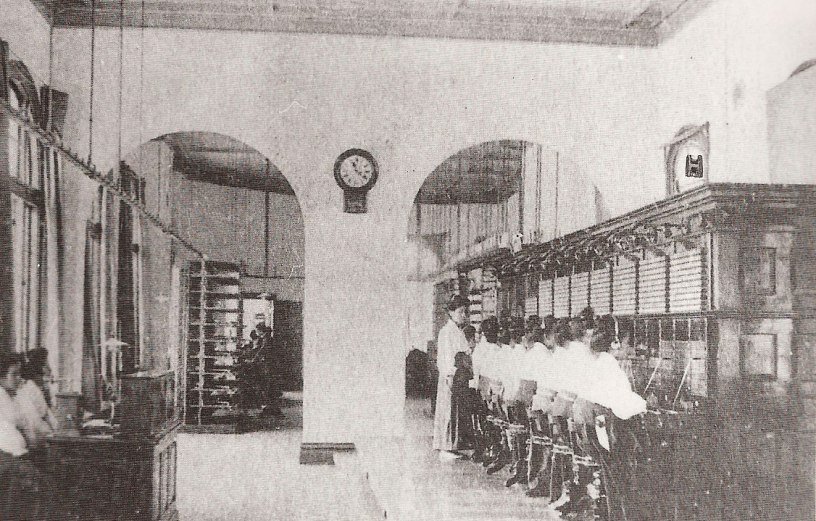
Featured photograph: Historical photograph of telephone switchboard operators at work in 1902, from the site’s existing historical media archive.
Support DEPTH
Independent, evidence-based writing takes time. Help keep these articles freely accessible.

Boost us
If you like our content help us to create more.
$5.00
Discover more from The Confessor
Subscribe to get the latest posts sent to your email.
