
Someone can understand their childhood, name their wounds, recognise every destructive pattern in their relationships—and still live exactly as before. Habib Davanloo’s discovery was that insight often fails because the problem is not merely what we do not know. It is what we cannot bear to experience. A person may know perfectly well that rejection hurts him, yet protect himself from that pain through contempt, obsessive analysis, withdrawal or self-attack. Those strategies may have once kept overwhelming feelings at bay. Now they maintain the suffering. Davanloo, an Iranian-born psychiatrist working in Montreal, developed Intensive Short-Term Dynamic Psychotherapy (ISTDP) by studying recordings of actual sessions and asking a clinical question: what, precisely, happens between the moment a feeling is stirred and the moment a patient escapes it?
The machinery of avoidance
His answer can be expressed through two simple maps. The triangle of conflict contains three elements: feeling, anxiety and defense. A feeling begins to emerge—for instance anger toward someone you love. Because the anger clashes with your love, loyalty, self-image or past experiences, anxiety rises. A defense then steps in: you intellectualize the relationship, laugh, blame yourself, go numb, become sarcastic or decide you feel nothing. The defense reduces immediate discomfort but cuts you off from information and energy that could help you act. The triangle of persons asks where this cycle repeats: with people in your present life, with important people from your childhood, and with the therapist sitting in front of you. The two triangles together turn apparently unrelated troubles into a pattern that can be observed—not simply theorized about.
The therapist therefore works differently from the familiar image of an analyst quietly collecting stories. Davanloo’s therapist asks about this moment: ‘What do you feel toward her when you describe that?’ If the patient replies with a beautiful explanation of human attachment, the therapist may say, in effect, ‘That is an explanation. What are you feeling?’ This is pressure: a persistent invitation to experience rather than describe. When a defense appears, the therapist identifies it and makes its cost visible: ‘Notice how, just as you approach something painful, you turn against yourself. Does that help you get closer to what you want?’ This is clarification and challenge, not a demand that the patient submit to the therapist. In skilled ISTDP, the patient chooses whether to relinquish a defense; the therapist is allied with the patient’s capacity to do so.
The body provides the therapist with moment-to-moment feedback. Anxiety may show up in tense hands, shallow or sighing respiration and tightening muscles. With greater dysregulation a patient might develop nausea, dizziness, confusion or a sense of drifting away. These signs are clinical clues, not infallible diagnostic tests, and they can have other causes. A competent therapist monitors them and reduces pressure when the person can no longer think and feel clearly. Sometimes treatment must begin with helping the patient recognise anxiety and build the capacity to regulate it. This is why ‘intensive’ should never mean simply driving someone harder. The work is calibrated, not a contest to produce the biggest emotional explosion.
What ‘unlocking the unconscious’ means
Davanloo noticed that the therapy relationship itself often activates the same conflicts. A patient who longs for help may simultaneously feel furious that the therapist asks difficult questions, suspicious of depending on anyone, guilty about the anger, and deeply grateful to be taken seriously. These are mixed transference feelings. When the person can stay with them instead of escaping through habitual defenses, images, memories and previously unacknowledged emotions may become available. Davanloo called a powerful version of this an unlocking of the unconscious. The important distinction is that expressing a fantasy of rage is not acting violently, and experiencing a feeling is not proof that any particular memory or interpretation is historically true. The aim is to make an inner conflict thinkable and bearable so that a person gains more freedom to choose what to do.
A concrete example: the man who explains his rejection instead of feeling it
The following is a fictional illustration, not an account of an actual Coughlin or Davanloo patient. A man tells his therapist that a woman he deeply wanted to know has stopped answering his messages. He is intelligent, articulate and full of explanations: people are unreliable; modern relationships are transactional; he has analysed the probabilities and decided she was never suitable anyway. He speaks for fifteen minutes without once mentioning hurt. The therapist asks him to return to the exact instant he saw that she had not replied. He says, ‘I suppose it proves I was stupid to hope.’ The therapist notices the self-attack: ‘Before you turn on yourself, what did you feel toward her?’ His shoulders tighten. ‘Angry.’ ‘What is the anger like?’ He feels heat in his chest, pressure in his arms, an impulse to shout at her for offering hope and then disappearing. He does not contact her to discharge the anger; he is learning to recognise it safely as a feeling.
Then the conflict changes. As he allows the anger to be present, he feels guilt about wishing to hurt someone he also likes. Beneath that, sadness: he had genuinely hoped to be wanted. He may remember an earlier relationship in which he wanted closeness but felt that asking for it was humiliating. The therapist does not announce that his childhood caused everything. Together they test whether a similar pattern has appeared with other people, perhaps even in the room when the patient feels the therapist cannot understand him. The revelation is not simply ‘I am afraid of rejection.’ He already knew that. He now experiences how quickly longing becomes anxiety, anxiety becomes contempt or self-punishment, and the defense prevents him from remaining emotionally open. The protective habit has been made visible at the precise moment it operates.
Where Patricia Coughlin goes further
This is where Patricia Coughlin insists that many therapists stop too early. She trained with Davanloo after encountering his work in 1988, but argues that an emotional breakthrough is the opening of therapy, not its completion. Her focus on working through asks whether the patient can recognize the same maneuver next week, in a different relationship, when he is exhausted, jealous, ashamed, sexually interested or afraid to compete. Can he bear disappointment without punishing himself? State a need without demanding a guarantee? Accept another person’s freedom without surrendering his own? Stop confusing protective withdrawal with genuine independence? This requires revisiting conflicts across relationships, correcting misunderstandings, repairing therapeutic ruptures, sometimes practicing new responses, and allowing real experiences to contradict old expectations. Coughlin also warns that attachment is not the whole of human life: sexuality, rivalry, the wish to win, pride, and the need for autonomy may be just as central. A patient can be tormented not only by fear of losing love, but by guilt about succeeding, becoming independent, or wanting more than others are willing to give.
The difference matters because the ultimate result is not a spectacular session. In our fictional example, progress might mean that the man can feel the humiliation of an unanswered message without deciding that hope itself is foolish. He can notice anger without turning it into contempt, mourn an unrealized possibility without construing it as a verdict on his worth, and make a concrete choice about where to invest his attention next. He cannot compel reciprocation. He can stop organizing his life around defenses that deprive him of the very connection and agency he desires. Coughlin’s book Facilitating the Process of Working Through in Psychotherapy: Mastering the Middle Game develops this painstaking middle phase: multiple causes, recurring patterns, corrective emotional experiences, rupture and repair, autonomy and attachment, and even how to end treatment well.
Why it may work—and what remains unproven
The plausible change mechanism has several parts. Defenses that used to operate automatically become observable; feelings that once triggered avoidance become tolerable; old expectations are tested against the actual therapeutic relationship; and new behaviour is repeated outside it. Research offers reasons to take ISTDP seriously. A 2012 review identified 21 outcome studies, including 10 controlled studies, and reported substantial improvements for several conditions. But the authors also noted large variation in study quality and called for more rigorous research. A 2020 review of proposed mechanisms found suggestive associations with better outcomes, while emphasizing that even the key term unlocking the unconscious has no consistently agreed research definition. ISTDP is not proven superior to all other therapies; it is not suitable in the same form for everyone; and emotional intensity, on its own, proves nothing. A responsible therapist’s job is not to manufacture catharsis. It is to help a person become less divided against themselves, with change visible in the life they actually live.
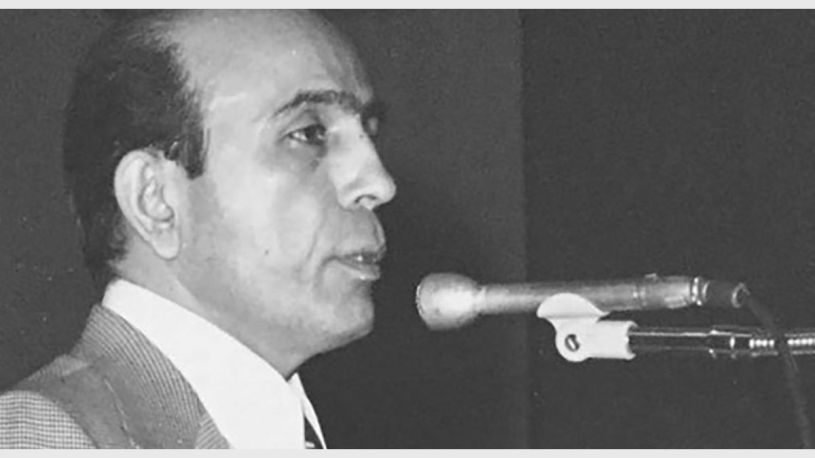
Featured photograph: Habib Davanloo, founder of Intensive Short-Term Dynamic Psychotherapy. Archival photograph from ISTDP Switzerland’s obituary, set in a landscape frame to preserve the full portrait. Photographer and reuse license are not stated on the source page.
Sources and further reading
- Thomas Hesslow, interview with Patricia Coughlin, ISTDP Sweden (2020) — Coughlin on Davanloo, the purpose of challenge, autonomy, sexuality, rivalry and working through.
- Jon Frederickson, Intensive Short Term Dynamic Psychotherapy: An Introduction — feeling, anxiety, defenses and the moment-to-moment clinical focus.
- Patricia Coughlin, Facilitating the Process of Working Through in Psychotherapy (Routledge, 2023) — the middle phase of change, multiple causation, autonomy, repetition, repair.
- Abbass, Town and Driessen, Intensive Short-Term Dynamic Psychotherapy: A Systematic Review and Meta-analysis of Outcome Research (2012).
- Review of mechanisms of change in ISTDP (2020), PubMed — evidence and limitations of proposed mechanisms.
For more about Coughlin’s own contributions, read Patricia Coughlin and Habib Davanloo’s ISTDP: Why understanding your trauma isn’t enough.
Support DEPTH
If this kind of independent, evidence-based writing is valuable to you, you can support more of it through PayPal.

Boost us
If you like our content help us to create more.
$5.00
Discover more from The Confessor
Subscribe to get the latest posts sent to your email.
