
The Confederacy’s greatest strategic mistake may not have been Pickett’s Charge, the invasion of Pennsylvania or the failure to exploit victory at First Bull Run. It may have been allowing Ulysses S. Grant to advance against Forts Henry and Donelson in February 1862 while Confederate soldiers were scattered across an enormous defensive perimeter.
The Confederacy could not conquer the North. It lacked the population, industry, shipping and financial resources to sustain such an undertaking. But conquest was unnecessary. Its political objective was independence: to make the United States abandon the effort to restore the Union and accept a separate Southern republic founded to protect slavery. The problem was not simply to win battles but to inflict defeats that would convince Washington that continued invasion was militarily futile.
For that reason, the Confederacy needed a strategy of concentration, destruction and exploitation. It had to assemble superior forces at a decisive point, defeat a Union army before another could reinforce it, and immediately turn the resulting battlefield victory into control of indispensable territory.
The likeliest place to attempt this was not Virginia. It was the vast region between the Mississippi River and the Appalachian Mountains. And the most favourable moment was not 1863, when Robert E. Lee invaded Pennsylvania, but the winter of 1861–62, before the Union had demonstrated what its armies and gunboats could accomplish together.
1. Why the West mattered more than Virginia
Look at a map of the Confederacy. Virginia contained its capital and attracted enormous political attention. But the Western Theater contained the transportation arteries, agricultural regions and interior communications upon which the whole Confederate war effort depended.
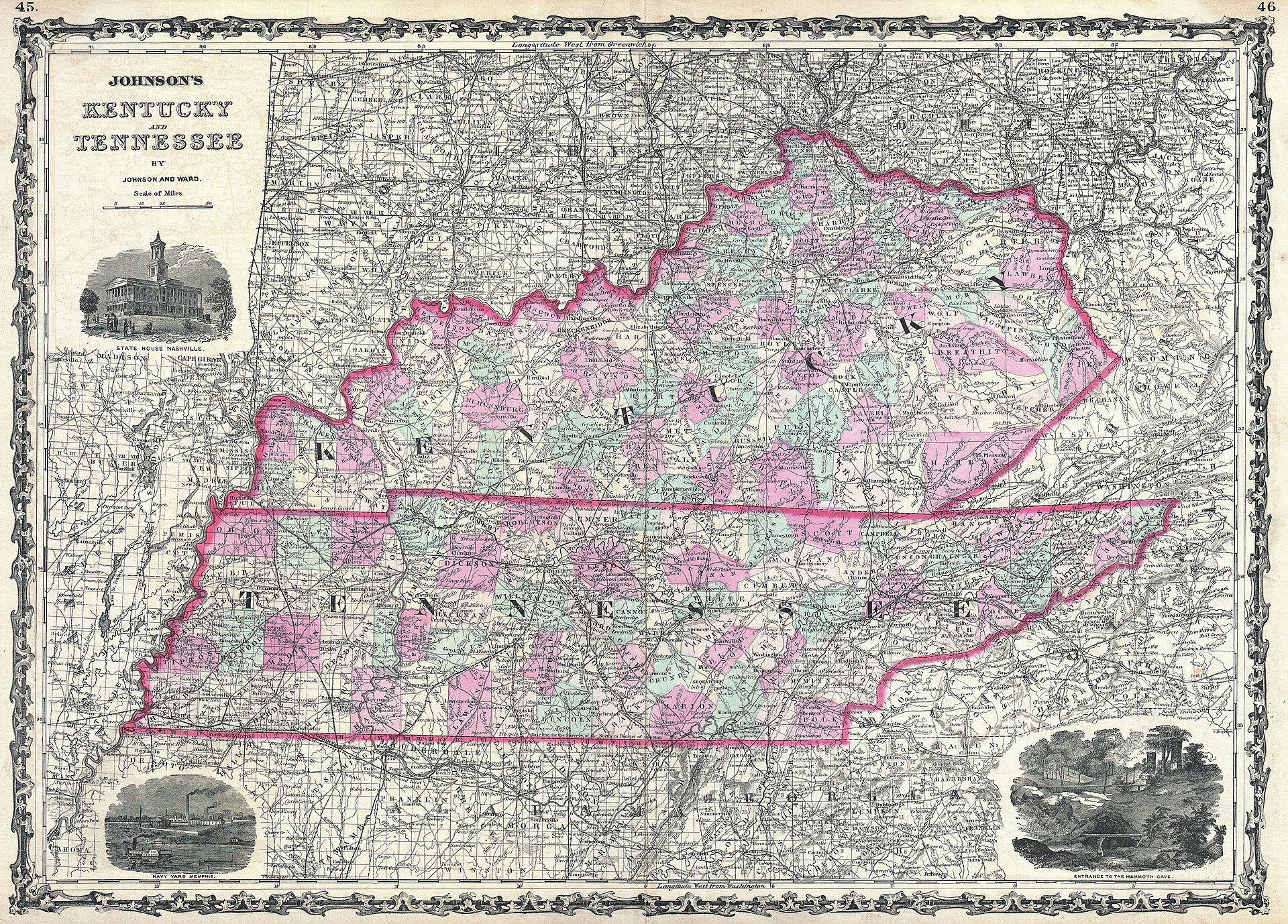
The Ohio River formed the northern frontier of this region. The Mississippi ran south through the continent. The Tennessee and Cumberland rivers penetrated the Confederate interior, while the railroads connecting Memphis, Corinth, Chattanooga and the Atlantic states enabled troops and supplies to move across its territory.
An army advancing from the Ohio River could reach the Confederate interior far more easily by steamboat than a comparable army advancing overland from Washington toward Richmond.
This geography favoured the Union. Federal industrial superiority made possible the construction of river gunboats and the use of transport fleets. Infantry, artillery, ammunition and provisions could move along navigable rivers without depending on the miserable roads of the region.
The Confederacy therefore faced something more dangerous than the loss of isolated territory: the progressive destruction of its internal communications.
Nashville was an industrial and logistical centre. Memphis controlled important connections to the Mississippi. Corinth, Mississippi, stood at the intersection of the Memphis & Charleston and Mobile & Ohio railroads. Chattanooga guarded the passage toward Georgia.
Lose enough of these places and the Confederacy would become a collection of disconnected military regions, each increasingly incapable of helping the others.
The Union would eventually demonstrate precisely this logic. Forts Henry and Donelson fell in February 1862; Nashville was occupied that month; Memphis and New Orleans fell later in the spring; Vicksburg surrendered in July 1863; and Chattanooga opened the way toward Atlanta.
The Confederacy’s territorial collapse began long before the armies confronting Lee in Virginia finally broke through.
2. Albert Sidney Johnston’s fatal deployment
In early 1862, Confederate general Albert Sidney Johnston defended a line stretching hundreds of miles from the Cumberland Gap to the Mississippi.
The distribution of his soldiers illustrates the problem.
According to the US Army’s Shiloh campaign study, by January Johnston had roughly 23,000 men at Bowling Green, Kentucky, 12,000 at Columbus, 6,000 around Somerset and Cumberland Gap, and only about 5,000 guarding the central positions on the Tennessee and Cumberland rivers. These figures describe the principal groupings rather than every soldier in the theater.
Johnston was trying to protect everything. Consequently, he was strong enough to threaten Union commanders at several points but insufficiently concentrated to defeat their armies decisively.
The Union had divided responsibilities between Henry Halleck, based in St. Louis, and Don Carlos Buell, operating from Kentucky. Grant served under Halleck near Cairo and Paducah.
Their commands were not yet fully coordinated. Halleck and Buell answered separately to Washington, and friction between them complicated operations.
Here was the Confederate opportunity: the Union possessed more soldiers in the Western Theater overall, but it had not yet brought them together as one overwhelming operational force.
A Confederate army of 60,000 or 70,000 concentrated around a decisive objective might have fought a succession of Union forces smaller than itself, even though the United States possessed the greater total manpower.
That is the essential distinction between numerical inferiority in a war and superiority at the point of battle.
3. The alternative: make the Western Theater the decisive front in autumn 1861
The counterfactual requires a decision months before the disaster.
Imagine Jefferson Davis deciding in October or November 1861 that Confederate independence depended above all on preserving the Ohio–Tennessee–Mississippi corridor.
Richmond would remain defended, but the government would resist the temptation to make Virginia the principal destination for every available reinforcement.
Instead, it would establish one operational command in the West, give that commander clear authority over subordinate generals, and transfer substantial reinforcements before winter.
The exact numbers matter. Adding 5,000 men to Johnston’s scattered line would accomplish little. Adding perhaps 20,000–25,000 men, then concentrating them with existing forces, could alter the balance against an individual Union field army.
This is not a claim that such numbers were effortlessly available. The Confederacy would have to accept serious risks elsewhere.
Some troops could be drawn from less immediately threatened coastal positions. Others would have to come from Virginia or from forces guarding secondary approaches. Railroads would be crowded, supply depots would need expanding, and troops would arrive in uneven stages.
But these movements were not beyond Confederate capabilities. In March 1862, the government actually transferred Braxton Bragg’s forces from the Gulf Coast and ordered troops from Louisiana toward Corinth. The Army of Mississippi that attacked Shiloh was assembled from widely separated formations.
The historical concentration happened after the Confederate defensive line had collapsed. The alternative is to undertake it before the collapse.
The Western army should not attempt to occupy every vulnerable mile. Its main strength would remain mobile, with sufficient forces holding defensible river positions and guarding the principal rail junctions.
The crucial improvements would be to strengthen the defenses opposite Fort Henry on higher ground, complete the Fort Heiman position earlier, improve coordination with Fort Donelson and preserve a powerful field army capable of striking a Union expedition.
Fort Henry’s low location made it particularly vulnerable to flooding and naval attack. An additional division sitting inside that doomed installation would not solve the problem. A larger mobile force positioned to attack the Federal land army might.
A fortress should support an army’s strategy, not consume an army in an attempt to save the fortress.
4. February 1862: destroy Grant instead of surrendering to him
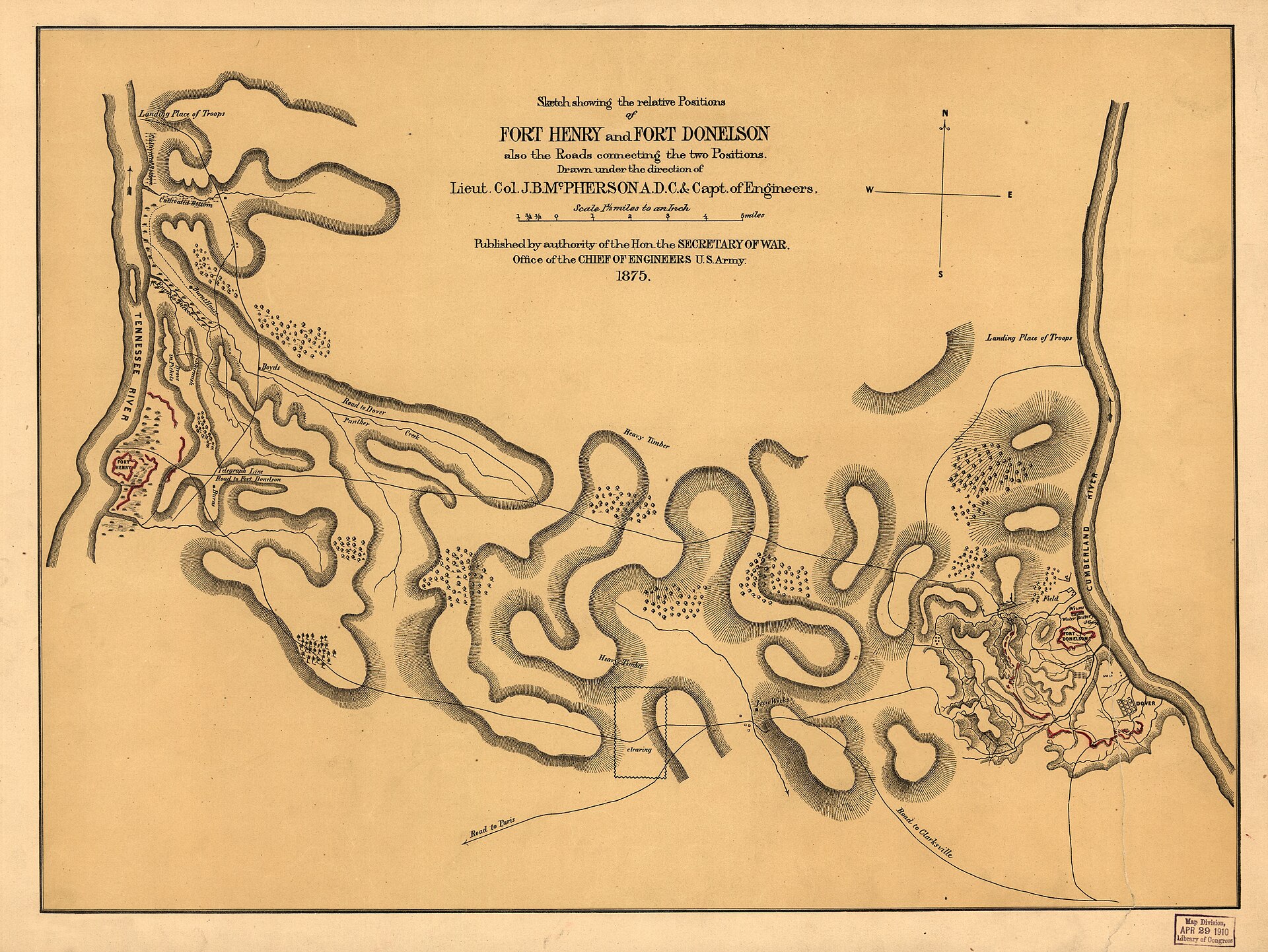
The decisive opportunity would come when Grant moved against the Tennessee and Cumberland rivers.
Historically, Grant captured Fort Henry on February 6, 1862, then marched approximately twelve miles toward Fort Donelson.
The Confederate commanders responded disastrously. Johnston reinforced Donelson but withdrew his main army toward Nashville. Approximately 17,000 Confederates became concentrated inside a defensive position that Grant could surround.
On February 15, Confederate troops actually broke open an escape route during a powerful attack. Yet confused command decisions squandered the opportunity, and on February 16 a large Confederate force surrendered.
The campaign not only destroyed an army-sized portion of Confederate manpower. It compelled Johnston to abandon southern Kentucky and much of Tennessee. Nashville soon fell.
Now change the deployment.
Suppose that, before Grant’s expedition began, Johnston had assembled a substantial mobile army in Middle Tennessee, supported by a strengthened river defense system.
Rather than sending almost every available reinforcement into Donelson and then retiring, he could use the fort’s garrison to hold Grant’s attention while manoeuvring his field army against the Union force approaching from Fort Henry.
The most promising moment would be before Grant received substantial reinforcements and completed his investment.
The objective would not be a glorious frontal assault upon prepared entrenchments.
It would be to defeat Grant’s army while it was still separated from Buell’s, disrupt its supply and retreat arrangements, and compel its destruction or withdrawal.
A coordinated attack by a Confederate field army and the garrison could create a dangerous two-front battle for Grant.
But this is also where the counterfactual encounters its first serious obstacle. Grant had the support of Union gunboats, access to river transport and the ability to receive reinforcements. Confederate marches in February weather would be difficult, and a poorly coordinated attempt could leave Johnston exposed to defeat.
There is therefore no certainty of a Confederate victory.
Still, a substantial Confederate victory at Donelson would have been far more valuable than holding every mile of Johnston’s original perimeter for another few weeks.
Instead of becoming famous as Unconditional Surrender Grant, Grant might have suffered a devastating defeat at the beginning of his career.
More importantly, the Union’s penetration into Tennessee would have been interrupted before the Confederate heartland was opened.
5. The second blow must fall before the Union armies unite
Defeating Grant would not achieve independence. It would create an opportunity for something more difficult and more important: a second campaign.
Buell’s army was positioned in Kentucky. If Johnston had defeated Grant and retained a coherent army, he could attempt to shift his concentration against Buell before the Federals reorganized under a unified command.
This would be an application of the classic principle of operating on interior lines: a force situated between separated enemy armies tries to defeat one, then rapidly turn against the other.
For the Confederacy, speed would be indispensable. A victorious army that remained stationary while Washington assembled another enormous force would squander its advantage.
The objective would be to defeat Buell in Kentucky or southern Tennessee, rather than merely force him to retreat a few miles. Ideally, the Confederates would threaten the Louisville & Nashville Railroad and regain the military initiative in Kentucky without becoming trapped in an unsupported march toward the Ohio River.
A decisive defeat of Buell, following a similar defeat of Grant, could leave the Union without an effective offensive field army in much of the central West.
The South might then be in a position to threaten Louisville, the Ohio River communications and the northern approaches to Tennessee.
But holding Kentucky would require more than military success.
Kentucky had powerful Unionist constituencies. Confederate politicians consistently exaggerated the support they expected to receive there. Even a victorious Confederate army would have to feed itself, protect its communications and govern a divided population.
An advance to Louisville would mean nothing if the Confederates lacked supplies and the local population refused to cooperate.
The meaningful objective, therefore, would be not a symbolic occupation of Northern territory, but the creation of a Western military situation that the Union could not readily reverse.
6. Shiloh demonstrates how close the strategy came to working—and its limitations
On April 6, 1862, Johnston finally attempted something resembling the proposed strategy.
He assembled an army of approximately 44,000 men at Corinth and attacked Grant at Pittsburg Landing before Buell’s army could fully join him.
The Confederates achieved considerable surprise, drove the Federals backward and inflicted enormous losses.
For much of the day, Grant’s men fought with the Tennessee River behind them.
It was precisely the sort of situation in which the destruction of a Union army might have become possible.
But Confederate attacks lost cohesion. Johnston was killed. Grant held a final defensive perimeter near the landing, protected by massed artillery and gunboats. Buell’s reinforcements arrived, and the Union counterattacked successfully on April 7.
The Confederates retreated.
Here is the critical point: Johnston’s army was attacking after it had already lost Kentucky, Nashville and the river forts. The Southern command was attempting to recover a collapsing strategic position.
With additional trained troops, better preparation, more effective coordination and an earlier attack, its chances of defeating Grant might have improved.
Yet even a successful attack at Shiloh would not necessarily have destroyed the Union army. The river, gunboats, approaching reinforcements and Confederate difficulties in directing an offensive through woods and ravines created formidable obstacles.
The stronger argument is therefore not simply that the Confederates needed 20,000 more men at Shiloh.
They needed a concentration strategy before Fort Donelson, so that Shiloh would never have become a desperate attempt to recover the territory already lost.
7. What might have produced independence?
Two major victories in early 1862 could have disrupted the Union’s timetable and raised serious doubts about the feasibility of invasion.
They could have saved Nashville, delayed the fall of Memphis, preserved Confederate communications and forced Washington to divert additional forces into the West.
They might also have prolonged the war enough to change Northern politics, increase economic strain and encourage European governments to reconsider their positions.
But battlefield victories did not automatically produce independence. Lincoln was determined to preserve the Union. The North possessed a far larger population, more industrial capacity and the ability to raise additional armies.
Moreover, concentrating troops in the West would expose other regions. A weaker army in Virginia might allow McClellan to threaten Richmond; withdrawing troops from the Gulf could make New Orleans even more vulnerable to naval attack.
And controlling Tennessee would not neutralize Farragut’s ships or defeat the Union blockade.
The Confederacy would need not only to win battles but to exploit those victories faster than the Union could mobilize replacements.
The historical example of Braxton Bragg’s invasion of Kentucky in 1862 shows the difficulty. Confederate armies temporarily regained the initiative, but their commanders failed to unite their forces effectively, secure sufficient local support or turn their campaign into a lasting strategic victory.
At Chickamauga in September 1863, the Confederates even achieved a major battlefield victory after receiving reinforcements from Lee’s army. Yet they failed to destroy the Union Army of the Cumberland. Two months later, they lost Chattanooga.
A tactical victory is an event. A strategic victory permanently changes what the enemy is capable of doing next.
This distinction is the difference between defeating a Union army and forcing the United States to accept Confederate independence.
8. Why the Confederates did not adopt this strategy sooner
It is tempting to explain Confederate failure as mere stupidity, but the problem was more deeply political and institutional.
Davis had to defend a republic whose member states demanded protection. Governors and citizens wanted soldiers guarding their own communities. Railroads were poorly integrated, supply systems were inadequate, and Confederate generals resisted giving up troops for campaigns elsewhere.
Richmond could hardly be treated as expendable. Its capture might have destroyed the Confederate government’s political credibility even if Southern armies remained in the field.
Nor was the Western army blessed with consistently capable leadership. Johnston had to coordinate independent-minded subordinates over enormous distances, while Confederate logistics could barely supply the forces he already possessed.
The proposed alternative requires unusually disciplined national leadership: a willingness to weaken popular defensive positions, tolerate the political consequences of abandoning territory, and concentrate scarce resources around a strategic objective whose payoff was uncertain.
It also assumes that Confederate commanders would exploit opportunities more effectively than they actually did.
These are substantial assumptions, not minor adjustments to history.
9. The verdict
If I had to choose the Confederate strategy offering the strongest Western prospect for independence, I would choose an early concentration around the Tennessee–Cumberland corridor in late 1861, not a reinforcement of Bragg after Chickamauga or an attempt to relieve Vicksburg once Grant had reached its outskirts.
The operational logic is straightforward.
Concentrate a powerful field army while the Union’s Western commands remain divided. Prepare defensible positions that protect the rivers without imprisoning the army inside fortifications. Strike Grant before his expedition can establish a secure position. Then, if successful, move against Buell before the Federal forces can unite.
If those operations destroyed successive Union armies, the Confederacy might have secured its heartland and created a far more credible military route toward negotiated independence.
But the word might matters. Even two battlefield victories would leave the North’s numerical superiority, navy and industrial resources intact. A larger Confederate army assembled in Tennessee would still need competent leadership, transport, ammunition, food and an answer to Federal naval power.
The Confederacy’s most plausible opportunity was not to defeat the entire Union war machine. It was to destroy separated portions of that machine before they could combine—and then make the resulting advantage irreversible.
In February 1862, the Confederate defensive system collapsed before the Western army had been concentrated for a decisive offensive.
The Confederates subsequently spent much of the war trying to recover positions that an earlier concentration might have enabled them to defend.
That does not mean independence was within easy reach.
It means that, if a serious Confederate military path to independence existed in the West, the decisive decisions had to be made before Grant became famous, before Nashville fell, and before the Union demonstrated that its rivers could carry armies into the heart of the Confederacy.
Sources and further reading
- US Army Center of Military History, The Civil War in the Western Theater, 1862 — deployments, the Tennessee campaigns and the strategic importance of the Western Theater.
- US Army, Shiloh Staff Ride Handbook — Johnston’s forces, the attack on Pittsburg Landing, command decisions and the operational setting.
- National Park Service, The Campaign for Fort Donelson — the February 1862 operations and Grant’s breakthrough.
- American Battlefield Trust, The River War — river logistics, transport and naval power.
- US Army Command and General Staff College, Confederate Strategy in 1863: Was a Strategic Concentration Possible? — the problem of transferring soldiers between theaters.
- Mackubin Thomas Owens, Gettysburg: The Controversies — arguments over the choice between Virginia operations and Western concentration.
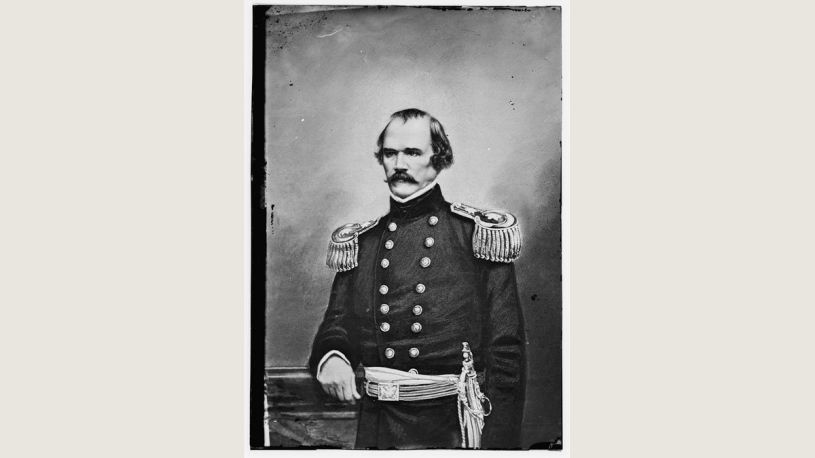
- Library of Congress, Albert Sidney Johnston portrait, 1860–62 — authentic glass negative, no known publication restrictions; this article’s featured photograph.
- Library of Congress period map of Fort Henry and Fort Donelson (via Wikimedia Commons) — public-domain map from February 1862.
Methodological note: The troop deployments, terrain, dates and historical outcomes above are documented. The proposed concentration and successive victories are an analytical counterfactual, not something that can be established as inevitable or agreed upon by historians. The purpose is to test what an alternative Western operational strategy would have required.
Featured photograph: Confederate General Albert Sidney Johnston, in a portrait taken between 1860 and 1862. Library of Congress, Prints and Photographs Division, LC-DIG-cwpb-07469. Original photographic record; no known restrictions on publication. Framed to avoid cropping on the homepage.
Support DEPTH
Independent historical research and writing take time. If you value this kind of long-form analysis, you can support the work through PayPal.

Boost us
If you like our content help us to create more.
$5.00
Discover more from The Confessor
Subscribe to get the latest posts sent to your email.


