
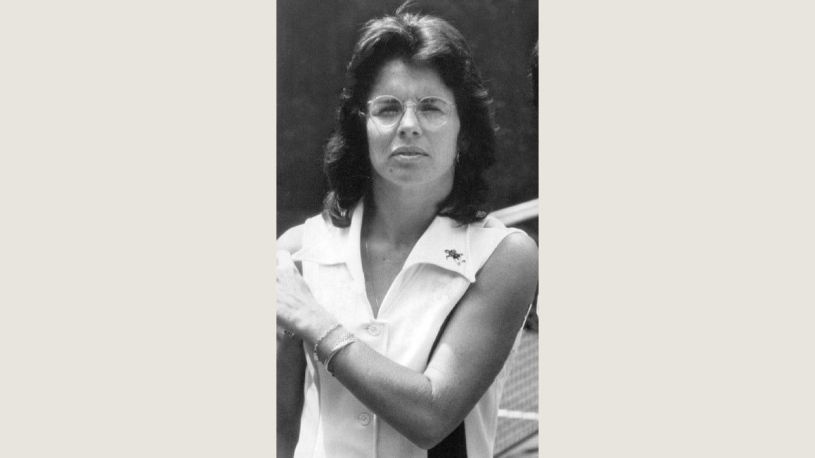
On 20 September 1973, a 29-year-old tennis champion beat a 55-year-old former champion in front of an enormous television audience. Billie Jean King’s victory over Bobby Riggs became known as the Battle of the Sexes. But what many viewers missed was that King had already helped secure something more durable: equal prize money at the US Open.
A spectacle that concealed serious stakes
Riggs was a former top-ranked men’s player who promoted the match with provocative claims about women’s tennis. King entered the Houston Astrodome under enormous scrutiny. An estimated 90 million people watched worldwide as she defeated him 6–4, 6–3, 6–3.
The match was an exhibition, not a professional ranking event. Its symbolic importance was real, but King did not prove that women could defeat all elite male tennis professionals. She defeated Riggs, a skilled but retired 55-year-old player, in a contest that had become a public argument about whether women athletes deserved respect.
The revolution began years earlier
In 1970, King joined eight other women—the Original 9—in signing symbolic $1 contracts to create an alternative women’s professional tennis circuit. Their complaint was not simply that audiences underestimated women. It was that financial arrangements systematically denied female professionals the ability to earn a comparable living.
With more than 60 players gathered in London in 1973, King helped found the Women’s Tennis Association. Establishing the organisation gave women tennis players a collective means to negotiate schedules, tournament status and prizes.
Equal prize money preceded the famous match
At the 1972 US Open, male champion Ilie Năstase won $25,000 and female champion King received $10,000. King threatened not to return unless the imbalance was addressed. The following year, the US Open became the first major tennis tournament to award equal men’s and women’s championship prize money. In 1973, Margaret Court and John Newcombe each received $25,000 for their singles titles.
This happened before King’s televised match against Riggs in September. Her win strengthened the visibility of the campaign but should not be credited with achieving a US Open reform that was already in place.
Why institution-building mattered more than a single score
A sporting event can be watched by millions and forgotten in a week. Organisations create ongoing negotiating power. The Women’s Tennis Association gave players a way to make demands collectively rather than waiting for a sympathetic promoter to recognise the next individual star.
King understood that winning a dramatic public contest and changing the structure of professional sport were different tasks. She achieved both. The September match made a memorable photograph; the years of organising altered how the sport operated.
Sources and image attribution
Women’s Tennis Association: WTA history, 1970–73
US Open: 50 years of equal prize money and Billie’s role
WTA: Billie’s life and prize-money struggle
Original 1973 Billie Jean King press photograph
Authentic archival 1973 press photograph of Billie Jean King; original author unknown. Wikimedia Commons records US public-domain status on the basis of publication without a copyright notice. Framed to 1200 × 675.
Support DEPTH
Help keep sourced, independent history writing available. Support the project if you value these stories.

Boost us
If you like our content help us to create more.
$5.00
Discover more from The Confessor
Subscribe to get the latest posts sent to your email.

