
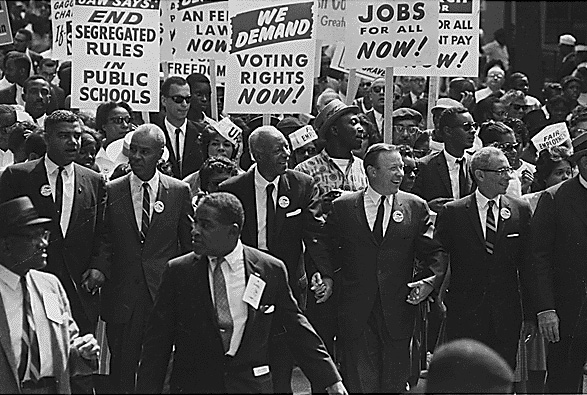
A photograph can be genuine and its caption false. A video can document a real explosion but be filmed in a different country or a different decade. An AI-generated voice can sound like someone you know. The key question is not whether a post looks convincing. It is how anyone knows the claim is true. In 1963, photographers documented the civil rights March on Washington; the image is evidence of a march, but a caption still needs checking before we use it as evidence of any wider claim.
A five-check method anyone can use
- Stop. Strong anger, fear and excitement make a claim more shareable, not more reliable.
- Find the original source. Who first published the quotation, video, document or statistic? A screenshot of a screenshot is not a source.
- Check context and date. Where and when was the material made? Has a clip been cut short or translated inaccurately?
- Look sideways. Search reputable independent reporting and original documents rather than staying inside the same account’s feed.
- Match evidence to claim. A photograph of damage does not, by itself, establish who caused it or what their intentions were.
This approach resembles the SIFT method taught by digital-literacy researcher Mike Caulfield: stop, investigate the source, find better coverage, and trace claims to original context. A reverse-image search, a transcript, an archived webpage, or a primary document can settle questions that hundreds of comments cannot.
What you should do when the answer is still unclear
Distinguish confirmed, plausible but unverified, and disputed. Sometimes an event is real while the circulating explanation is unsupported. Share the uncertainty, not only your confidence. Be willing to correct a post publicly: credibility is built by changing your mind when evidence changes.
The skill that matters most in an information-saturated world is the ability to say: I do not know yet. Then find out. This matters especially when the subject is war, where misleading images can erase victims or manufacture blame.
Sources and further reading
- Mike Caulfield: SIFT and the four moves
- UNESCO: media and information literacy
- Explore DEPTH’s essential reading
Historical featured photograph: a real archival image from the year specified in its caption. It illustrates the historical background, not a modern 2026 event.
Discover more from The Confessor
Subscribe to get the latest posts sent to your email.
