
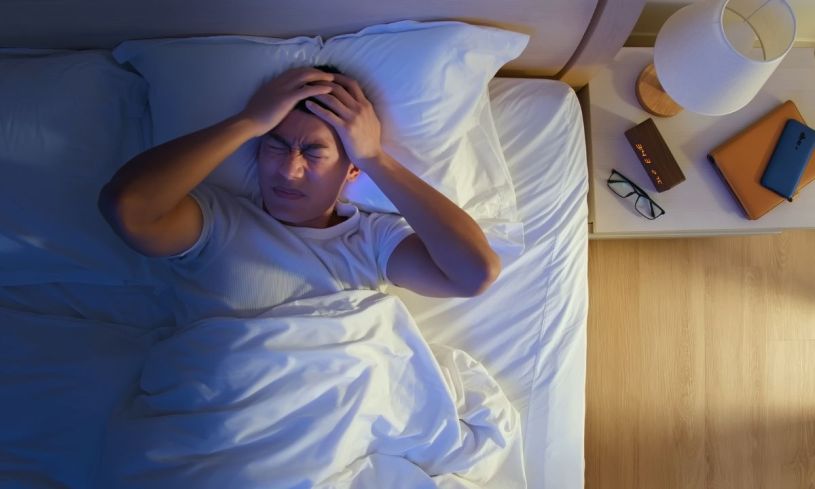
The Sleepless Nights and Racing Thoughts
You lie awake at 3 AM, your mind cycling through the same worries for the hundredth time. Your heart races. Your chest feels tight. You tell yourself to relax, to breathe, to just let it go—but the anxiety keeps buzzing like static electricity beneath your skin. So you reach for something to quiet the noise. Maybe it’s a drink. Maybe it’s a pill. Maybe it’s something else entirely. And for a little while, it works. The volume turns down. You can finally breathe.
But here’s what nobody tells you when you’re just trying to survive another anxious day: that temporary relief can become a trap that makes everything worse. The relationship between anxiety and substance use isn’t simple, and it’s definitely not something you should feel ashamed about. Understanding how these two challenges intertwine is the first step toward finding real, lasting peace.
Why Anxiety and Substances Become Tangled Together
Your brain is constantly working to maintain balance. When anxiety floods your system with stress hormones and uncomfortable physical sensations, your brain searches desperately for a way to restore equilibrium. Substances—whether alcohol, prescription medications, or other drugs—can temporarily alter your brain chemistry in ways that provide relief from anxious feelings.
This isn’t a character flaw. It’s your brain doing exactly what it evolved to do: seeking relief from distress. The problem is that this relief comes with a hidden cost. When you repeatedly use substances to manage anxiety, your brain begins to rely on that external chemical intervention rather than developing its own healthy coping mechanisms.
Over time, three things happen that make the situation more complicated. First, your tolerance increases, meaning you need more of the substance to achieve the same calming effect. Second, your brain’s natural ability to regulate anxiety diminishes because it’s outsourced that job to the substance. Third, and perhaps most frustratingly, the substance itself begins to create anxiety through withdrawal effects, creating a cycle where you feel anxious without it.
The Anxiety That Hides Behind Withdrawal
Here’s something that might surprise you: much of what you experience as anxiety might actually be withdrawal symptoms in disguise. When your body becomes dependent on a substance—even one you started using to feel better—it adapts its chemistry around that substance. Remove it, and your system goes haywire trying to rebalance.
Withdrawal-induced anxiety can feel identical to your original anxiety disorder, but it’s often more intense. Your hands might shake. You might experience panic attacks that seem to come from nowhere. Sleep becomes impossible. Your thoughts race faster than ever. These aren’t signs that you’re weak or that your anxiety is “too severe” to overcome. These are signs that your body needs support to safely restore its natural balance.
The challenge is that many people don’t realize they’re experiencing withdrawal anxiety rather than their baseline anxiety. This confusion can lead you to believe that you absolutely cannot function without the substance, when in reality, your body just needs time and proper support to heal. The physical dependence has created a new layer of anxiety on top of whatever you were originally dealing with.
When Professional Support Becomes Essential
If you’ve been using alcohol, benzodiazepines, or opioids regularly to manage your anxiety, stopping suddenly can actually be dangerous. Your body has adapted to having these substances in your system, and abrupt cessation can trigger severe withdrawal symptoms—including seizures in the case of alcohol and benzodiazepines.
This is where medically supervised care becomes not just helpful, but potentially lifesaving. Programs like medical detox portland provide 24/7 monitoring and medication support to safely manage withdrawal symptoms while your body adjusts. This kind of care isn’t about willpower—it’s about giving your brain and body the medical support they need during a vulnerable transition period.
Medical supervision also addresses something crucial: the mental health symptoms that emerge or intensify during early recovery. When substances are removed, you might experience a temporary increase in anxiety, depression, or other mental health symptoms. Having professionals who understand this process and can provide appropriate psychiatric support makes an enormous difference in your comfort and safety.
Breaking the Cycle Without Breaking Yourself
You might be thinking: “If I stop using substances to cope with my anxiety, won’t I just be overwhelmed by anxiety all the time?” It’s a legitimate fear, and it’s one of the main reasons people hesitate to address substance use even when they know it’s become problematic.
The truth is more hopeful than you might expect. Yes, you’ll need to learn new ways to manage anxiety. Yes, it will be uncomfortable at first. But your brain has an remarkable capacity to heal and relearn healthy regulation once substances are removed from the equation. The anxiety that feels permanent right now is often being amplified and perpetuated by the very substances you’re using to manage it.
Think of it like this: imagine you’re trying to heal a wound, but every day you’re also irritating it. The wound never fully heals because you keep disrupting the healing process. Substances work similarly with anxiety. They provide temporary relief while simultaneously preventing your brain from developing its natural resilience and regulation abilities.
What Actually Helps: Building Your Anxiety Toolkit
Once you’re no longer relying on substances, you need real tools to manage anxiety. This isn’t about positive thinking or just trying harder—it’s about understanding how anxiety works in your body and brain, then using specific techniques to work with that biology rather than against it.
Cognitive behavioral therapy teaches you to identify and challenge the thought patterns that fuel anxiety. When you catch yourself catastrophizing or assuming the worst, you learn to pause and examine whether those thoughts are actually accurate or just anxiety talking. This isn’t about forcing yourself to think positive thoughts—it’s about developing a more realistic, balanced perspective.
Somatic practices help you work directly with the physical sensations of anxiety. Your body and mind aren’t separate systems—they’re constantly communicating with each other. When your body is tense and your breathing is shallow, your brain interprets this as danger and ramps up anxiety. By learning to release physical tension and regulate your breathing, you can actually send calming signals to your brain.
Mindfulness meditation isn’t about emptying your mind or achieving some zen state. It’s about learning to observe your thoughts and feelings without getting swept away by them. When anxiety shows up, instead of immediately trying to escape it or fight it, you practice just noticing it: “There’s anxiety. It’s uncomfortable, but it’s not dangerous. It will pass.” This simple shift in relationship to anxiety can be transformative.
The Role of Medication in Anxiety Recovery
Let’s address a common concern: if you need to stop using substances to cope with anxiety, does that mean you can’t use any medication for mental health? Absolutely not. There’s a crucial difference between medication-assisted treatment prescribed and monitored by a psychiatrist and self-medicating with substances.
Certain medications can be incredibly helpful for managing anxiety disorders when used as part of a comprehensive treatment plan. SSRIs and SNRIs, for example, can help regulate the brain chemistry underlying anxiety without creating the problematic cycles that substances create. The key differences are medical supervision, appropriate dosing, and integration with therapy and other coping strategies.
If you’ve been using benzodiazepines long-term for anxiety, you might need a carefully managed taper under medical supervision. Stopping suddenly is dangerous, but continuing indefinitely can perpetuate problems. A good treatment team will help you gradually reduce your dependence while building other coping skills and potentially transitioning to medications that don’t carry the same risks.
Why Treating Both Issues Together Matters
For years, the addiction treatment field and the mental health field operated separately. If you had both substance use issues and anxiety, you might be told to “get sober first” before addressing your mental health, or to “stabilize your mental health” before addressing substances. This approach left people stuck in an impossible situation.
We now understand that integrated treatment—addressing both substance use and mental health simultaneously—produces much better outcomes. Your anxiety and your substance use aren’t separate problems that happen to coexist. They’re intertwined, each influencing and perpetuating the other. Treating one while ignoring the other is like trying to bail out a boat without plugging the leak.
Integrated care means you work with professionals who understand both issues and how they interact in your specific situation. Your treatment plan addresses the physical aspects of withdrawal and dependence while also providing therapy for anxiety. You learn coping skills that work for both challenges. You’re not bounced between different providers who don’t communicate with each other—you have a coordinated team approach.
What Recovery Actually Looks Like
If you’re imagining recovery as some perfect state where you never feel anxious again, let’s adjust those expectations right now. That’s not realistic, and it’s not even the goal. Anxiety is a normal human emotion that everyone experiences. The goal isn’t to eliminate anxiety—it’s to reduce it to manageable levels and develop the skills to cope with it effectively when it arises.
In the early weeks and months, recovery can feel like a rollercoaster. Some days you’ll feel surprisingly good. Other days, anxiety might feel overwhelming. This isn’t failure—it’s the normal process of your brain and body recalibrating. The key is having support during this period and trusting the process even when it’s uncomfortable.
As time passes, most people notice that their baseline anxiety decreases significantly. The panic attacks become less frequent and less intense. You start having days, then weeks, where anxiety doesn’t dominate your experience. You develop confidence in your ability to handle anxious feelings without needing to escape them through substances.
Recovery also means learning to be gentle with yourself. You’ll have setbacks. You’ll have days where old coping mechanisms seem really appealing. This doesn’t erase your progress. Recovery isn’t a straight line—it’s a process with ups and downs, and each challenge you navigate teaches you something valuable about yourself.
Building a Life Worth Protecting
Here’s something that often gets overlooked in discussions about recovery: as you address substance use and anxiety together, you create space in your life for things that actually matter to you. When you’re caught in the cycle of anxiety and substance use, so much energy goes into just getting through each day. You’re surviving, not living.
As you heal, you get that energy back. You can invest it in relationships that nourish you. You can pursue interests and goals that give your life meaning. You can be present for the people you love instead of being mentally and emotionally absent. These positive experiences become their own form of motivation—you protect your recovery because you’re protecting this life you’re building.
This doesn’t mean life becomes perfect or easy. You’ll still face challenges and stressors. But you’ll face them with a clearer mind, healthier coping skills, and a support system you’ve built along the way. The anxiety that once felt like it would swallow you whole becomes something you can acknowledge, work with, and move through.
Taking the First Step Forward
If you’re reading this and recognizing yourself in these words, you might be feeling scared about what comes next. That’s completely understandable. Change is frightening, especially when you’re being asked to let go of something that’s been helping you cope, even if it’s also been hurting you.
You don’t have to have everything figured out right now. You don’t need to commit to a specific treatment plan or make any huge decisions this moment. What you can do is reach out. Talk to someone—a doctor, a therapist, a trusted friend, a crisis line. Just saying out loud that you’re struggling with both anxiety and substance use can be incredibly powerful.
Ask questions. Learn about your options. Find out what kind of support is available in your area. Many treatment programs offer free consultations where you can discuss your situation and learn about different approaches without any pressure to commit. Knowledge is power, and understanding your options can make the path forward feel less overwhelming.
Remember that seeking help isn’t a sign of weakness—it’s a sign of wisdom. You’re recognizing that what you’ve been doing isn’t working anymore, and you’re willing to try something different. That takes courage. You’re not giving up on yourself; you’re fighting for yourself in a new way.
You Deserve Peace
Living with anxiety is exhausting. Living with substance dependence is exhausting. Living with both is overwhelming in ways that people who haven’t experienced it can’t fully understand. But here’s what you need to know: you don’t have to live this way forever. Recovery is possible. Peace is possible. A life where anxiety doesn’t control you and substances don’t control you is absolutely possible.
The journey won’t always be comfortable. There will be moments when you question whether it’s worth it. But on the other side of this challenge is a version of yourself who can handle difficult emotions without needing to escape them, who has genuine confidence in their resilience, and who experiences joy and connection in ways that substances could never provide.
You deserve that life. You deserve to wake up without immediately feeling dread. You deserve relationships that aren’t strained by your struggles. You deserve to pursue your goals without anxiety and substances standing in your way. And most importantly, you deserve compassionate, comprehensive support as you work toward that life.
The connection between anxiety and substance use is complex, but it’s not insurmountable. With the right support, proper treatment, and your own willingness to try something different, you can break free from the cycle that’s been keeping you stuck. Your story doesn’t have to end here. In fact, this could be exactly where your real story begins.

