
Israel would attack Egypt. France and Britain would order both sides to retreat. Nasser would refuse. France and Britain would then a have a casus belli to bomb Egypt. On 30 October 1956, Britain and France issued an ultimatum to Egypt and Israel. Stop fighting, withdraw your armies from the Suez Canal, or we will intervene to restore peace. Sounds ever so benign, right? Or ever so cunning. They had secretly arranged the war themselves. A few months earlier, Egyptian president Gamal Abdel Nasser had nationalised the Suez Canal Company, which had been controlled by British and French interests.
The canal was on Egyptian territory, but Britain and France were used to deciding what happened there. Nasser wanted the canal’s revenues to help finance the Aswan High Dam, after the USA and Britain withdrew their offers to help finance its construction. London was furious. Paris was ‘pas amusé’ either to say the least. French elites had special beef with Nasser over his support for the Algerian struggle against French colonial rule. Israel had its own reasons to confront Egypt, including Egyptian restrictions on Israeli shipping and violent cross-border conflict. Three governments with different grievances came together in one of history’s most cynical ways. On 22 October 1956, senior representatives of Britain, France and Israel gathered secretly at Sèvres, outside Paris. Among the Israeli participants were Prime Minister David Ben-Gurion, Moshe Dayan and Shimon Peres.
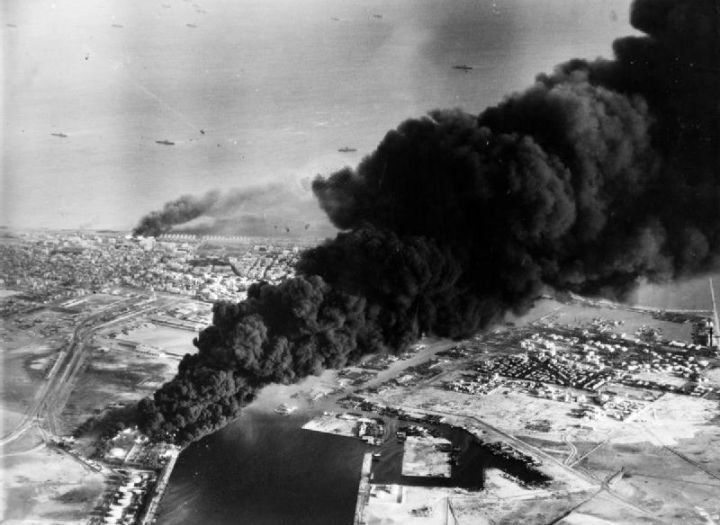
Over the following days they worked out a devious plan. Israel would invade Egypt’s Sinai Peninsula. Britain and France would then demand that both sides withdraw from the Suez Canal. Egypt would have to withdraw its forces from part of its own territory and allow foreign troops to occupy strategic positions along the canal. The planners expected Nasser to refuse. That refusal would give Britain and France their excuse to attack Egypt. The agreement was signed on 24 October. Five days later, Israel invaded. On 30 October, Britain and France delivered their ultimatum. The following day, British and French aircraft began bombing Egyptian targets. Port Said got treated to bombardment, fighting and civilian casualties. But then the plan ran into obstacles. American president Dwight Eisenhower refused to support the operation. Washington applied enormous diplomatic and financial pressure.
The Soviet Union threatened intervention. Britain and France accepted a ceasefire on 6 November. The invasion became a political humiliation. Nasser remained in power, and Egypt retained control of the canal. It wasn’t bad enough. Officials had to add shameless hypocrisy to the mix. On 20 December 1956, British Prime Minister Anthony Eden told the House of Commons that his government had possessed no foreknowledge that Israel would attack Egypt. Yet British representatives had participated in the negotiations specifying precisely when Israel would attack. The British diplomat who signed the secret agreement, Patrick Dean, had even returned to Paris the following day in an effort to destroy copies of the document. Mortifying. Israel had to add sickening cruelty to the stinking cocktail.
On 3 November 1956, during Israel’s invasion of Egypt, Israeli troops occupied Khan Yunis in Gaza. There 275 Palestinians were reported killed, according to the UN. Palestinian witnesses described the killing of unarmed civilians, while Israel claimed its soldiers had encountered armed resistance. Abdel Aziz al-Rantisi, 9 at the time, could hear the whole town wailing and wailing. Joe Sacco and Chris Hedges spoke to him decades ago and recently mentioned this haunting detail at a talk about their new book, Requiem for Gaza.
That’s how it goes. Elites hatch neat plans in warm rooms with delicious food, apathetic to who will be squished.
In the picture:
Port Said, Egypt, 5 November 1956. Smoke rises from oil tanks struck during the Anglo-French assault. Photograph by a British Fleet Air Arm photographer. Public domain.
Some sources:
The story is exceptionally well documented, including by the countries involved. Three particularly strong sources:
US State Department’s historical record of the secret Sèvres agreement — names, dates and the precise sequence agreed. https://bit.ly/4yF9dkK
Israeli Ministry of Defense archives — explicitly acknowledges the arrangement and its intended pretext. https://bit.ly/3UiwkU3
Hansard, 20 December 1956 — Eden’s actual denial of foreknowledge, recorded in Parliament. https://bit.ly/4yEaKHJ

